NEW YORK–A new report by Accenture suggests that despite the expansive efforts by banks to support consumers and businesses during the COVID-19 pandemic, the level of customer trust in banks has remained flat, and that the best “answer” in moving forward and growing revenue lies in “purpose-driven banking.”

Fresh Today
NEW BUFFALO, Ind.–Indiana’s largest credit union is looking to expand further into multiple contiguous states to become a “Midwest powerhouse,” according to a new report.
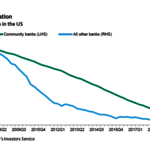
NEW YORK–The effects of interest rate cuts and the pandemic just beginning to show up in the financial performance data of community banks, according to Moody’s Investor’s Service.
WASHINGTON–A consumer group is blasting the CFPB’s announcement it has launched a pilot advisory opinion (AO) program to “publicly address regulatory uncertainty” in its existing regulations.
MARLBOROUGH, Mass.–The Global Women’s Leadership Network New England Chapter hosted its first virtual meeting of the year via video, with representatives from numerous U.S. states being joined by their counterparts in Brazil.
NEW YORK–Credit unions will want to keep an eye on a prediction that a “wave of bankruptcies” among large companies is on its wave, as it will affect both employees and perhaps other types of smaller businesses traditionally served by credit unions.
NEW YORK—Cross-border payments continue to be an immense portion of the international economy, clocking in at $29 trillion in 2019, a figure projected to balloon to an estimated $39 trillion in the next two years.
WASHINGTON–In the wake of a Supreme Court decision that effectively stops a banking industry challenge to NCUA’s field of membership rules, one banking group is suggesting the ruling will have a “discriminatory impact” and lead to “redlining.”
Today Is Last Day to Apply for PPP Loans, But Plenty of Proposals Remain; GAO Offers Recommendations
WASHINGTON–Today is the last day for companies to apply for loans as part of the Paycheck Protection Program. According to the SBA, although the second round of available funds was expected to be depleted as quickly as the first, there is approximately $100 billion still available.
WASHINGTON–When Congress passed the $2.2 trillion dollar Coronavirus Aid, Relief, and Economic Security Act (CARES) in late March, lawmakers said it would not be a repeat of the 2008 bailout, which largely went to help powerful banks on Wall Street, and would instead benefit those smaller companies most in need. But a new analysis suggest that has not been the case.