

MADISON, Wis.—As credit unions turn the page to 2026 planning, the economic outlook remains mixed.
TruStage Chief Economist Steve Rick expects slower growth, stubborn inflation, and only gradual relief on interest rates—raising key questions for lenders and members alike: Will the U.S. economy cool into recession or continue a muted expansion? How far will the Federal Reserve go in easing policy? And will inflation finally settle near target, or remain a persistent headwind?
A new TruStage forecast offers answers.
“We expect real GDP to expand 1.5% in 2026, below the 1.8% pace for 2025, and lower than the 2% long run trend growth rate. Growth will be slightly weaker than normal due to tariff policy uncertainty, restrictive monetary policy and slower labor force growth,” stated Rick.
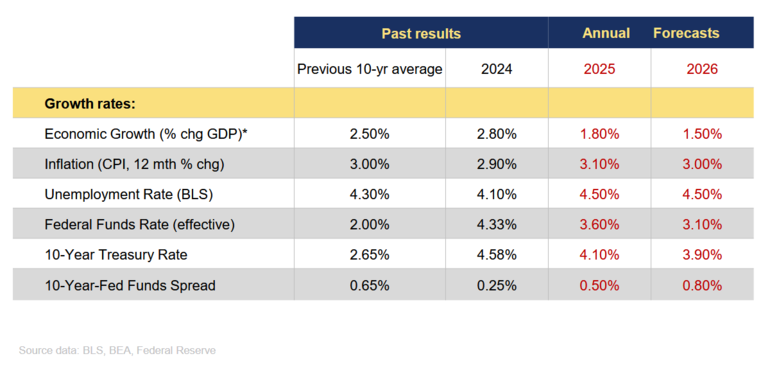
Inflation is expected to be 3% in 2026, only falling slightly from the 3.1% pace this year, Rick noted.
“We expect inflation to run above the Federal Reserve’s 2% target as firms pass through any additional tariff costs and the slow growth in labor force will keep upward pressure on wage growth. This stubbornly high inflation will ensure monetary policy stays restrictive for most of 2026,” he said.
The unemployment rate is expected to rise to 4.5% by the end of 2025 and remain there for all of 2026. Uncertain tariff policies and restrictive monetary policy will slow the rise in the demand for labor. Meanwhile restrictive immigration policy and deportations will slow the rise in the supply of labor, Rick said.
“So, we expect monthly nonfarm payrolls to rise approximately 50,000 per month in 2026, which is the new breakeven jobs growth needed to keep the unemployment rate constant,” Rick explained. “We expect the Federal Reserve to lower the Federal Funds interest rate 50 basis points in the fourth quarter of 2025, and another 50 basis points during 2026. This will bring the Federal Funds interest rate close to the 3% neutral interest rate by the end of 2026, which is the rate the Federal Reserve has neither restrictive nor expansionary monetary policy.”
Expect long-term interest rates, the 10-year Treasury yield, to fall to 3.9% by the end of 2026, as short-term rates fall, and inflation begins to head down. This will pull down the 30-year mortgage rate to around 6%, Rick said.