

WASHINGTON–Credit unions gathered here last night for the very highest honors that are presented in the U.S. movement: the Herb Wegner Awards.
The three individuals who won had stories that were, as always, inspirational, but also included a cautionary warning from one of the winners that credit unions are running the risk of becoming too bank like and abandoning the kind of work recognized by the Wegners.
Below is a look at each of the four winners, along with remarks that were offered where appropriate:
Herb Wegner Award for Outstanding Program: to the CU 4 Reality Program from America’s Credit Union Museum, Manchester, N.H.

Launched in 2004, the CU 4 Reality Financial Literacy program has grown from one school with 220 students into a program that reached 32,000 students across 150 schools and a dozen states in 2015.
Wegner Award for Outstanding Individual Achievement: Dan Egan, Jr., former president of the Massachusetts, New Hampshire and Rhode Island CU Leagues.
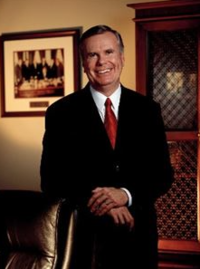
Dan Egan
Egan was recognized for a multitude of accomplishments during his three-decade career, including overseeing the first multi-state league agreement, and helping steward the creation of America’s Credit Union Museum in Manchester, N.H.
Egan’s remarks: First of all, I’m honored and humbled to be here tonight. When I look back on my career I think of two things: One is the credit union credo of people helping people. We take that for granted. But as I look back that’s really the way I would describe credit unions, because so many people had an impact on my life. The second issue is cooperation, especially cooperation among cooperatives, is a principle I think we need to reinforce every single day.
The other thing is we all have in our work lives are people who have influenced and inspired us. For me, working 32 years at the league, I had the opportunity work with many, many people. They were always dedicated to doing the right thing. I’ll be forever thankful for them.
My bosses came in the form of three separate state league boards, all of whom I loved equally, by the way. As I look back on it I really enjoyed going to board meeting. People think I was crazy or it’s a reflection of my own shallow social life, but people on my boards were so committed to doing the right thing.
The second real focus is cooperation, which is the cornerstone of credit unions. When we were looking at America’s Credit Union Museum, nobody believed that was a possibility. It just didn’t have any sort of draw or any ability to connect. And yet the three boards of directors of the three leagues all backed it. CUNA Mutual gave a loan to the Museum, and later they forgave that loan.
I always felt an additional obligation because credit unions started in New England. I always wished if I could have the opportunity to speak with Edward Filene and Roy Bergengren to see how they came up with such a great idea and the will to see it through.
When we look back, our success is based on our ability to reach people in a very, very dramatic way. The story is told over and over again of what individual CUs do for their members, and it’s a story that needs to be told over and over again. It’s a great American success story.
Wegner Award for Outstanding Individual Achievement: C. Alan Peppers, former president of Westerra Credit Union.
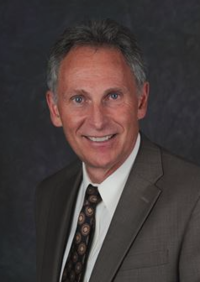
C. Alan Peppers
Peppers started with credit unions in 1976 and over the career that followed oversaw ten-fold growth at the credit union, the creation of shared branching in Colorado, and was active in numerous CU-related organizations, including serving as chair of CUNA Mutual Group.
Peppers’ remarks: You need to know I have never been so proud to be part of the credit union system as I am today. I see in this room all the incredible leaders, and I look at the next generation that will take credit unions to new heights. You will take the torch and serve members better for many years to come.
It’s hard to capture those 40 years in four minutes. Credit unions over the past 40 years have grown and grown up. They’ve been innovative and offered new services to better serve members. I got to stand in that first shred branch and make one of the first shared branch transactions, and banks were amazed at how cooperative we could be.
I’d be remiss if I didn’t point out the Credit Union Membership Access Act of 1998. Today, because of that act, we have more than 100 million members of credit unions. You know what I can’t wait for: I can’t wait for every American to be a member of a credit union.
I’d like to pass on some words of wisdom shared with me early in my career. First, stand up to be seen, get involved, be part of the process. Second, speak up to be heard, be part of the solution, share your ideas and thoughts and wisdom. And third, sit down to be appreciated.
Wegner Award for Outstanding Individual Achievement: William J. Bynum, president and CEO of HOPE Credit Union in Mississippi.
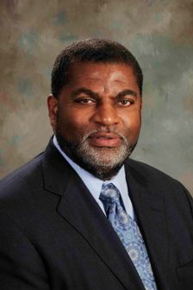
William Bynum
In one of the poorest and underserved regions of the Midsouth, including numerous African-American communities, Bynum led the start-up of HOPE Credit Union, and has overseen growth from $2 million in assets to $175 million, with 26 branches across four states with 30,000 members.
Bynum’s remarks: The Wegner Awards recognize leadership and risk taking, and it’s risk taking leadership I’d like to briefly touch upon. It’s a particular honor to be here as the steward of a movement who go quietly unrecognized, but who bring economic dignity to places many people have never heard of. My family is from Bynum, N.C., which is named after the people who owned my people at one time. We have moved into towns that banks left, but people didn’t suddenly stop needing financial services, and they shouldn’t have to rely on payday lenders and predators. I am here standing on their shoulders.
A 100-year-old woman came in and opened a checking account. Forty percent of our members never had a bank account before joining HOPE Credit Union. The fact that it took an entire century for a black woman in the Mississippi delta to get a checking account is a sober reminder of how far we have to go in this nation on issues of equity. It’s also a reminder of our responsibility to our neighbors, who are marginalized by too many financial institutions.
And I hate to say it, this risk is not limited to banks. The greatest risk to our industry isn’t regulatory burden; regulation is not the enemy. We’ve seen what lack of regulation has done. Smart regulation is what we need to emphasize. I know it’s the easy battle cry, but it’s the cost of doing business. We have the privilege of being the stewards of other people’s money. I don’t think it’s the regulator who is our greatest risk, or banks lobbying against tax status. Our greatest risk is abandoning our heritage. We put our institutions at greatest risk when we operate like banks in credit union clothing. We put ourselves at risk when we prioritize profits over people. So as we come together tonight I ask that we recommit to our legacy of being financial providers born from the struggle of every day working people. Remember what it is that sets credit union people apart. We are the best and sometimes people’s only hope for economic opportunity.