

By Ray Birch
MILWAUKEE—Amid significant ambiguity coming out of Washington, credit union leaders and analysts are raising numerous questions about the economy and the industry's future. But the most pressing question credit unions must answer for themselves is whether their earnings model is suited for these uncertain times, Raddon is saying.
Raddon, a Fiserv company, is also emphasizing that it’s also not the time to speculate about bringing back an emphasis on overdraft and NSF fees, even as the CFPB is pushed to the sidelines by the Trump Administration.
Bill Handel, Raddon chief economist, said economic data on the surface seems reasonable. GDP growth for 2024 was above two percent and unemployment relatively low at slightly more than four percent. To someone looking at these aggregate numbers, it seem to indicate a reasonable level of growth and a stable economy.
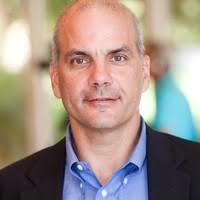
Bill Handel
“But it is really what's underneath all that data that we need to pay attention to,” Handel said. “The demographic issues facing credit unions are pretty significant. We're still working our way through all these demographic challenges that are out there—attracting and retaining Gen Z and Millennials. So, there's a lot of factors that credit unions should be focusing on.”
Top on Handel’s list is making sure the credit union has a strong earnings model.
“Is your earnings model strong enough to carry you in any type of political environment, in any type of economic environment, in any type of operating environment? Is your earnings model really sufficient?” he said.
Underneath those questions lies another, Handel said.
“Am I really effective at pricing in different interest rate environments? We're probably not today as good as we should be,” he said. “We're probably not as good today at pricing as we were 20 years ago. Part of that is just because for so many years we've been in a low-rate environment. We've lost that muscular ability, that capability we used to have. That's something that the industry has to regain. We have to be better about how we price.”
Don’t Rely On OD
Handel also warned credit unions not to consider relying more on NSF and overdraft fees with the weakening, or demise, of the CFPB.
“One of the initial thoughts is maybe we can look at NSF's differently. Maybe we can make that a bigger part of our model, with the major threat from the CFPB being gone,” Handel said. “However, I don't think the industry can think that way. I think overdraft and NSF fees are something that are, essentially, permanently gone.”
Handel said what the CFPB started, forcing OD fees down nationwide, cannot be stopped.
“It’s more about market pressures now,” he explained. “The ball is already rolling downhill. There's already enough people competing on overdraft fees. If that became too great a focus of your earnings model, I’m afraid you probably couldn't succeed.”
Handel said credit unions need to get back to where their margin income is sufficient to cover operating expenses.
“That is good place to be. We haven't been there as an industry for about 10 years,” he said. “Again, credit unions’ earnings model has got to be very solid. Too many credit unions do the tactic du jour—reacting to what other people are doing. You have to build a fundamental base of strategy—what your business model is based upon. And it really should be built in a way that margin earnings can offset your operating expense. That's a combination of a couple of things—more effective pricing on the deposit and loan side. And that means relationship pricing.”
Pay Closer Attention To Expenses
Then, Handel added, credit unions must become better about managing expenses.
“Which means we have to look at things like AI and how can it assist and support us so we can streamline operations. The significant need in the industry is process improvement, both for member-facing as well as back-office operations. When we focus on profit improvement we can both bend the cost curve down and improve member experience,” he explained.
It won’t mean cutting jobs, Handel said, but it will mean slowing hiring in the future.
“Long term, if you could double your size as an organization, double your assets, double your membership but keep staff from expanding greatly…We need to use AI to augment the productivity of our people, not replace our people,” he said. “We need to begin thinking this way we and start deploying those tools to help us become much more efficient.”