

WASHINGTON—Senators Alex Padilla (D-CA) and Kevin Cramer (R-ND) have introduced legislation—the NCUA Central Liquidity Facility Enhancements Act—to make permanent the temporary enhancements Congress made to NCUA’s Central Liquidity Facility during the COVID-19 crisis.
The Defense Credit Union Council responded with a letter to the senators supporting the bill.
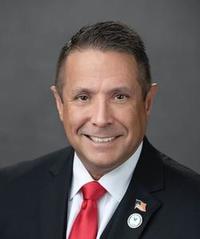
“I am writing to express the Defense Credit Union Council’s strong support for the NCUA Central Liquidity Facility Enhancements Act,” wrote DCUC President and CEO Anthony Hernandez. “I want to underscore that DCUC has championed this initiative as one of our top advocacy priorities. We have been at the forefront of industry advocacy on this issue since the early days of the pandemic, recognizing that these enhancements are essential for the stability of credit unions and the financial readiness of military families.”
Hernandez pointed out that early in the pandemic, DCUC strongly encouraged its member credit unions to join the NCUA’s Central Liquidity Facility to bolster their ability to serve hard-hit military communities.
“We commend each of you for your bipartisan leadership in advancing this critical legislation, and we urge all senators to support its swift enactment,” Hernandez stated. “The NCUA’s Central Liquidity Facility, managed by our federal regulator, is a vital liquidity backstop for credit unions of all sizes. It provides emergency lending to help credit unions meet unexpected liquidity needs, ensuring they can continue serving their members during times of financial stress.”
Hernandez reminded that during the COVID-19 crisis, Congress temporarily enhanced the CLF’s authorities (through the CARES Act), allowing corporate credit unions to act as “agent members” and purchase CLF capital stock on behalf of the smaller credit unions they serve.
“These temporary enhancements proved enormously successful: as a result, over 4,100 credit unions gained access to the CLF, up from only 283 before the pandemic,” he wrote. “This dramatic expansion in CLF participation – a testament to the cooperative nature of the credit union system – provided hundreds of small credit unions with a lifeline to weather the crisis.”
By enabling broader access to liquidity, the CLF enhancements helped credit unions remain resilient and continue lending to their communities (including on-base military communities) when members needed them most, Hernadez noted.
“The experience of the past few years leaves no doubt that making these enhancements permanent is necessary to maintain credit union financial stability and readiness for future crises. Unfortunately, the temporary CLF enhancements expired at the end of 2022, and Congress has yet to enact a permanent solution. When these authorities lapsed, 3,322 credit unions – mostly smaller institutions under $250 million in assets – lost access to the CLF, causing the facility’s available liquidity capacity to contract by nearly $10 billion. In other words, without this legislation, roughly three out of every four credit unions, including most minority-designated credit unions, have lost access to an important liquidity backstop that proved its worth during the pandemic,” Hernandez said.
“This outcome is untenable, especially amid today’s economic uncertainties. Rising interest rates and inflation have increased liquidity pressures on financial institutions of all sizes,” continued Hernandez. “Now is not the time to cut a liquidity lifeline for community-based lenders, as former NCUA Chairman Todd Harper warned. This bipartisan bill directly addresses this issue by restoring and extending the CLF enhancements, allowing corporate credit unions to once again purchase CLF stock for a subset of their members over the next several years. Importantly, this bill’s reforms have been scored by the Congressional Budget Office at no cost to the taxpayer.
“In short, it offers a commonsense, zero-cost solution to strengthen the credit union system’s safety net before the next crisis hits. It is also fully aligned with the NCUA board’s own unanimous request that Congress make these CLF authorities permanent. DCUC and the broader credit union industry have advocated for this since 2020, and we are hopeful that Congress will finally codify these needed improvements into law,” concluded Hernandez.
Corporate CU Alliance Supports Bill
The Corporate Credit Union Alliance (CCUA), an association of eleven corporate credit unions nationwide providing liquidity and payment services to nearly 4,500 credit unions that serve the borrowing and saving needs of approximately 143 million consumers, commended Padilla and Cramer for their legislation in a letter to the senators.
The group called the CLF an "important pillar of any stable and well-functioning financial system."
"The CCUA has consistently supported the ongoing efforts by NCUA to persuade Congress to permanently modernize the ability of the CLF to serve as an efficient liquidity backstop. If successful, this important initiative by NCUA would improve overall systemic safety and soundness and better provide credit unions, particularly those under $250 million in assets, with an essential additional liquidity resource in the event of future strains on the U.S. financial system," CCUA wrote.
"In particular, the CCUA strongly supports NCUA’s requests to Congress for statutory changes that would allow corporate credit unions, as agents, to buy the CLF capital stock required for membership for a subset of their members versus their entire membership," the group continued. "This makes membership more affordable and efficient for the over 2,900 credit unions under $250 million that do not have immediate and ready access to emergency liquidity through the CLF. Additionally, statutory changes that would allow corporate credit unions to directly borrow from the CLF for their own needs would also support the overall liquidity position of the credit union industry given the important role that corporate credit unions play in providing liquidity to credit unions across the nation. Importantly, NCUA board members have previously noted that the CLF improvements they are requesting Congress to approve would impose no cost on the American taxpayer."