

WASHINGTON — The Consumer Financial Protection Bureau has proposed an interpretive rule in which it states that many paycheck advance products, sometimes marketed as “earned wage” products, are consumer loans subject to the Truth in Lending Act.
According to the Bureau, the guidance is designed ensure that lenders understand their legal obligations to disclose the costs and fees of these credit products to workers.
In addition, the CFPB has published a report examining employer-sponsored paycheck advance loans, which found workers using these employer-sponsored products take out an average of 27 such loans per year and that the typical employer-sponsored loan carries an annual percentage rate (APR) above 100%.
“Almost three-quarters of workers receive their wages every two weeks or monthly,” the CFPB said. “One major source of demand for consumer credit stems from the mismatch of when people receive compensation for the work they perform and when they incur expenses. While lenders have long offered credit for consumers to pay expenses in advance of a payday, a new market for paycheck advance products has emerged and is growing rapidly.”
New Products Offered
According to the CFPB, in recent years financial providers have been developing new products in the worker-credit marketplace.
“Typically offered online, these products provide paycheck advances before payday. Paycheck advance products are offered through two primary models: employer-partnered and direct-to-consumer,” the CFPB said. “While employers can often make these fee-free, some of these products can come with fees for expedited service, subscriptions, or requested ‘tips’,” the CFPB explained.
The Findings
The CFPB said analyzed 2021-2022 data from eight companies that partner with employers to offer loans based on earned wages. The eight companies represent slightly less than 50% of the employer-partnered market, according to the Bureau.
Among the findings:
- More workers are paying fees to get wages early. “More than 90% of workers paid at least one fee in 2022 when employers do not cover the costs. Most fee revenue, 92.5%, was for expedited transfers. Expedited fees range from $1 to $5.99, with an average fee of $3.18. Workers who use direct-to-consumer paycheck advance products may pay monthly subscription fees (as much as $14.99) and often make payments that providers characterize as ‘tips’.”
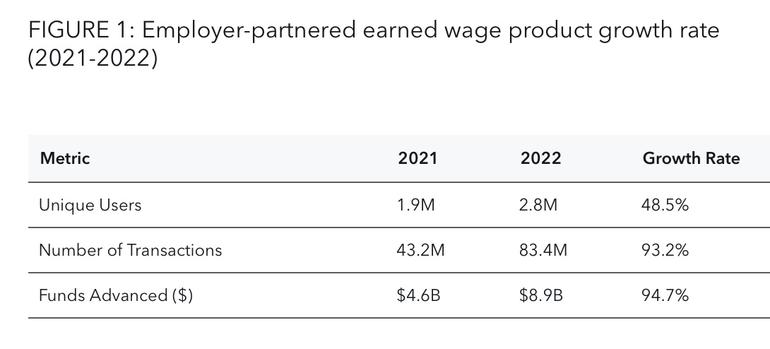
- The market for employer-partnered paycheck advance products is growing rapidly. The CFPB said it estimates that the number of transactions processed by these providers grew by over 90% from 2021 to 2022, with more than seven million workers accessing approximately $22 billion in 2022.
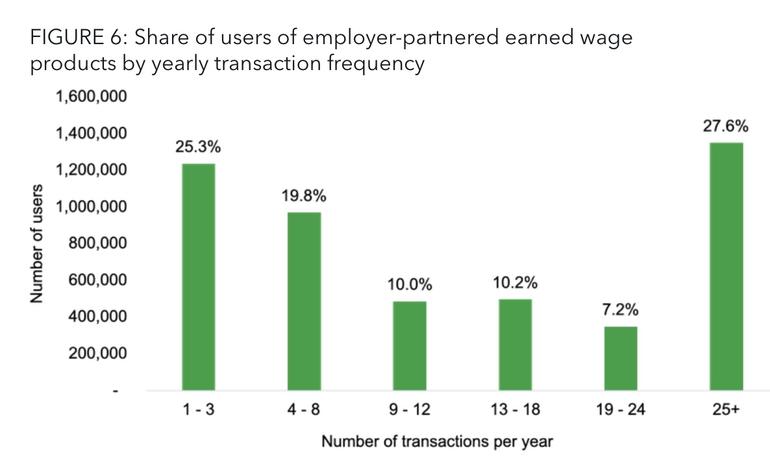
- Workers access paycheck advance loans frequently and repeatedly. Workers took out an average of 27 loans per year. The average transaction amount was $106, the CFPB said.
- Paycheck advance product’s cash advances can be costly. The APR for a typical employer-partnered earned wage cash advance is 109.5%.
Proposed Rule
“To ensure fair competition in this market, the proposed interpretive rule explains how existing law applies to this emerging product market, and replaces a 2020 advisory opinion that addressed a very specific paycheck advance product that is not common in the real market,” the CFPB said. “The proposed interpretive rule makes clear that many paycheck advance products – whether provided through employer partnerships or marketed directly to borrowers – trigger obligations under the federal Truth in Lending Act.”
Additional Clarifications
In addition, the CFPB said its proposed interpretive rule makes clear that:
- Many loan costs are finance charges. “Fees for certain ‘tips’ and expedited delivery meet the Truth in Lending Act’s standard for being finance charges. When the paycheck advance product is no-fee and truly free to the employee, many requirements would not apply.”
- Borrowers must receive key disclosures. “Among other requirements, earned wage lenders must provide workers with appropriate disclosures about the finance charges. Clear disclosures help borrowers understand and compare loan options, sharpens price competition, and ultimately benefits companies that offer competitive products.”
Read the CFPB’s interpretive rule.