

LEXINGTON, Ky.–A credit union CEO told a field hearing held by the House Financial Services subcommittee on Financial Institutions and Monetary Policy that fintech partnerships are key to smaller institutions being able to provide services, and that regulators need to proceed cautiously.
Karen Harbin, president and CEO of Commonwealth Credit Union in Frankfort, Ky., who reminded in her prepared remarks that the vast majority of CUs are small “with limited resources” and that the three largest banks in the U.S. earned more than the entire credit union industry did in 2023, said credit unions have turned to fintech for a variety of reasons.
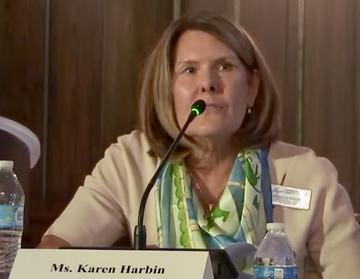
The hearing was titled, “Financial Institution-Fintech Partnerships: Leveraging Third-Party Relationships to Increase Access to Financial Services” and was held in Lexington, Ky.
In Commonwealth CU’s case, said Harbin, in 2019 the CU was seeking to make better lending decisions and to confidently lend down the credit spectrum through more accurate, unbiased decisioning that would not increase risk, and it turned to fintech for a solution. In its case, it chose Zest AI and its underwriting tool.
Filling Gaps
“Zest AI was ready to fill in the gaps with increased automation, accuracy, and the ability to aid our new underwriting team in focusing on members who need more support,” Harbin testified. “Zest AI’s technology has allowed Commonwealth Credit Union to say yes to more members while not negatively impacting our charge-off and delinquency ratios.”
Since 2021, Zest AI has helped Commonwealth approve more than $372 million in consumer loans, amounting to more than 21,500 loans, with below trend delinquencies, Harbin added.
The CEO added that by using automated underwriting Commonwealth Credit Union has more than doubled its approval rate for auto loans to minority borrowers.
About the Regulatory Environment
When it comes to the regulatory environment for fintech, Harbin told the committee, “Regulators frequently recognize the advantages of technological collaborations, yet they have also voiced apprehension that certain technologies, like AI, may be functioning in ways that neither they nor consumers fully understand.”
As an example, Harbin cited statements from the Treasury Department that both highlight the “favorable” outputs from using fintech while simultaneously cautioning over potential downsides.
“Regulatory skepticism towards AI could result in decreased competition if the economies of scale required to meet excessive compliance expectations are possessed only by the largest financial institutions or the largest vendors,” Harbin said. “A stringent stance on AI usage in the financial sector could disproportionately harm credit unions and smaller institutions while benefiting the largest incumbents. It is reasonable to expect explanations about the outputs and decisions an AI system can generate.
‘Significant Burdens’
“However, demanding a detailed inspection of source code, algorithmic weights, or other technical aspects underlying AI models would impose significant and impractical burdens on credit unions that rely on proprietary models from fintech partners,” she continued. “Such requirements could divert scarce in-house developer resources towards compliance activities, which larger institutions can more readily afford.”
Similarly, Harbin said statements from the CFPB suggesting that AI algorithms function as opaque "black boxes" introduce “uncertainty about the level of regulatory scrutiny required for algorithmic processes, especially in the absence of evidence of harm to consumers. This skepticism puts credit unions and other community institutions at a significant disadvantage.”
Clear Rules May be Necessary
In conclusion, Harbin again noted credit unions do not boast the massive earnings of big banks, but their “impact lies in our genuine commitment to serving communities. Every step we take is in line with our primary mission to better the lives of those we serve. As we adapt to the ever-changing economic landscape, our focus remains consistent—prioritize our members and their needs in order to help move communities forward…While clear rules of the road may be necessary, it is important that regulators not create expansive requirements or new hurdles that threaten the ability of credit unions to take advantage of successful partnerships…”