

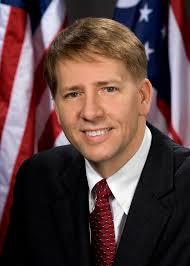
Richard Cordray
WASHINGTON—The CFPB Wednesday issued a report that found that attempts by online lenders to debit payments from a consumer’s checking account add a steep, hidden cost to online payday loans.
According to the Bureau, half of online borrowers rack up an average of $185 in bank penalties because at least one debit attempt overdrafts or fails. And one-third of those borrowers who get hit with a bank penalty wind up having their account closed involuntarily. The study also found that despite this high cost to consumers, lenders’ repeated debit attempts typically fail to collect payments.
“Taking out an online payday loan can result in collateral damage to a consumer’s bank account,” said CFPB Director Richard Cordray. “Bank penalty fees and account closures are a significant and hidden cost to these products. We are carefully considering this information as we continue to prepare new regulations in this market.”
The report can be found here.
The report is based on data from an 18-month period in 2011 and 2012 that looked at online payday and certain online installment loans made by more than 330 lenders. It is a continuation of the CFPB’s reports on payday loans and deposit advance products, some of the most comprehensive studies ever undertaken on the market. Previous reports have raised questions about the lending standards and loan structures that may contribute to the sustained use of these products.
The report examines the ways that online lenders attempt to recover their money by debiting a consumer’s checking account. Online lenders often use an automated network to deposit the loan proceeds into borrowers’ checking accounts. They collect money by submitting a payment request to the borrower’s depository institution through the same system, the CFPB said.
“Borrowers facing financial difficulties are often hit by multiple, costly debit attempts. If a debit attempt fails, lenders often follow up with repeated attempts against a consumer’s account. Many lenders also split a single payment into multiple smaller debits in the hopes that the consumer’s account will contain enough money to fulfill one of the attempts,” the CFPB stated. “They can do this, for example, by submitting three $100 requests on a day the borrower is due to pay $300.”
When an account lacks sufficient funds, the bank or credit union may fulfill the debit and charge the consumer an overdraft fee or the debit attempt could fail and the bank or credit union will reject the payment request and charge a non-sufficient funds fee. The typical fee for both overdraft and non-sufficient funds was $34 in 2012. If the debit attempt is rejected, the lender may also charge the borrower a late fee, a returned payment fee, or both. Negative account balances are a significant contributor to involuntary account closures at many banks and credit unions, the Bureau said.
NAFCU and CUNA both responded to the report.
“The CFPB’s report today highlights the concerns credit unions have been voicing to the bureau about when consumers are forced to turn to inferior products such as less, or nonregulated, online payday lenders,” said CUNA president and CEO Jim Nussle. “As opposed to offshore, or online payday lenders, credit unions know their members and work with them to navigate through difficult financial situations. It is essential that CFPB rulemakings do not stand in the way of credit unions’ ability to continue to offer the diverse products and services that consumers want and need such as free checking accounts, so that consumers can turn to their local credit union – not predatory lenders – during times of distress.”
Nussle added that Cordray has repeatedly publicly stated that credit unions are the “responsible lenders and the responsible financial institutions in the industry,” adding that Cordray made remarks about the value of CU payday lending during the 2016 CUNA Governmental Affairs Conference in Washington.
NAFCU President and CEO Dan Berger noted that the trade association has been actively engaged with CFPB on the issue of payday lending.
“We appreciate that in his recent testimony before the House Financial Services Committee and the Senate Banking Committee, Director Cordray recognized that the credit union payday alternative loans are a ‘good product,’” said Berger. “We hope that, going forward, CFPB exercises its exemption authority to exclude credit unions from any payday lending rulemaking from the bureau. We want to ensure credit unions are not lumped into rules designed to control bad actors.”
NAFCU’s dialogue with the agency has included discussion of the many credit unions that responsibly offer short-term, small-amount loans and financial education resources designed to help members avoid the traps of predatory payday lenders. The programs developed by each credit union vary as they are specifically tailored to their individual fields of membership.
NAFCU stated that in a conference call Wednesday the CFPB reiterated it expects to issue a proposed rule later this spring on payday lending practices.
The CFPB began its supervision of payday lenders in January 2012. In November 2013, the Bureau began accepting complaints from borrowers encountering problems with payday loans. Last month, it began accepting complaints about online marketplace lenders.