

WASHINGTON— Credit union trade groups on Monday recognized the industry’s strength and influence, as the movement successfully defended its federal tax exemption.
As CUToday.info reported, President Donald Trump signed H.R. 1 Friday, preserving the CU tax break.

Jim Nussle
“America’s Credit Unions and the 142 million Americans who rely on credit unions thank President Trump and Congress for recognizing the credit union difference," said Jim Nussle, America’s Credit Unions President/CEO. "With the President’s signature, H.R. 1 preserves the credit union tax status and our ability to strengthen communities throughout the country. Credit unions stand ready to help even more people reach their American dream, and America's Credit Unions will continue to work with Congress and the Administration to enact policies that empower our industry.”
Nussle said with the latest credit union tax fight now completed (see related story), America’s Credit Unions is turning its focus to further sharpening its advocacy efforts—both offensively and defensively—as it prepares to tackle upcoming legislative priorities.
“That means stronger messaging at both the grassroots and ‘grasstops’ levels,” Nussle said during a call with the media Monday.
Industry’s Strength Is Clear
Defense Credit Union Council Chief Advocacy Officer Jason Stverak acknowledged the tax fight was tough this year.

Jason Stverak
“We were pleased to see H.R. 1 pass without any changes to the credit union tax status, and we absolutely celebrate that as a victory,” he said. “That outcome highlights just how strong we can be as an industry when we focus on the name on the front of the jersey—not the back. This effort is a powerful reminder that when credit unions unite—alongside their trade associations and advocacy partners—there’s nothing we can’t accomplish, whether in Washington, D.C., or in state capitals across the country.
But while this is a significant win, it’s not the end of the fight to protect credit unions’ tax status, Stverak said.
“Banks and other opponents will continue trying to chip away at the foundation of congressional support that has upheld our nonprofit status for decades,” Stverak noted. “That’s why our ongoing efforts to educate members of Congress and their staff about the vital role credit unions play in their communities must not stop here. This advocacy must continue.”
Stverak said the National Defense Authorization Act (NDAA) is now a focus of the trade group. As CUToday.info reported, DCUC’s look at a leaked early draft of the House NDAA legislation shows no provisions that would negatively impact the credit union movement.
DCUC Monday sent a letter to the Senate Armed Services Subcommittee on Personnel outlining its top legislative priorities for inclusion in the NDAA.

Carrie Hunt
“These priorities reflect over 60 years of DCUC’s expertise in representing and championing its member credit unions’ service to more than 300 military installations and surrounding communities worldwide,” DCUC wrote. (Read the letter here).
Not Just One Battle
ACU Chief Advocacy Officer Carrie Hunt, acknowledging the huge tax fight win, reminded that America’s Credit Unions has not just been focused on that single fight.
“We’ve been hard at work on a wide range of other issues, both regulatory and legislative,” she said.
Hunt added that one item top of mind for many of its members is how the remittances provisions in H.R.1 will ultimately be implemented.
“That’s an important service that many credit unions offer, and we’re watching closely,” she said.
Hunt, too, added that ACU is closely watching NDAA legislation for any amendments that could impact credit unions.
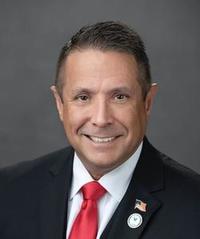
Anthony Hernandez
CHOBAT Act
Separately, DCUC Monday sent a letter to Treasury Secretary Scott Bessent regarding the CHOBAT Act—a provision of H.R. 1 creating $1,000 government-funded custodial accounts for every newborn starting in 2025.
The “Trump Accounts" will be administered by private financial institutions, and DCUC is urging Treasury to include credit unions in the implementation process—especially credit unions serving military families.
“At many U.S. bases and overseas installations, the on-base credit union is the only banking option available,” said DCUC President/CEO Anthony Hernandez. “Including credit unions ensures military families and other underserved communities aren’t left behind.”