

WASHINGTON— U.S. consumer confidence edged higher in March, but the underlying message was less reassuring, as Americans grew more worried about inflation, interest rates and recession risks even as they felt slightly better about current business and labor market conditions.
The Conference Board said its Consumer Confidence Index rose 0.8 points to 91.8 in March from 91.0 in February, with gains in its Present Situation Index offset by a decline in expectations for the months ahead.
The Present Situation Index climbed 4.6 points to 123.3, reflecting improved views of current business conditions and a labor market that remains relatively stable. But the Expectations Index fell 1.7 points to 70.9, a level that continues to signal growing unease about future income, employment and broader economic conditions.
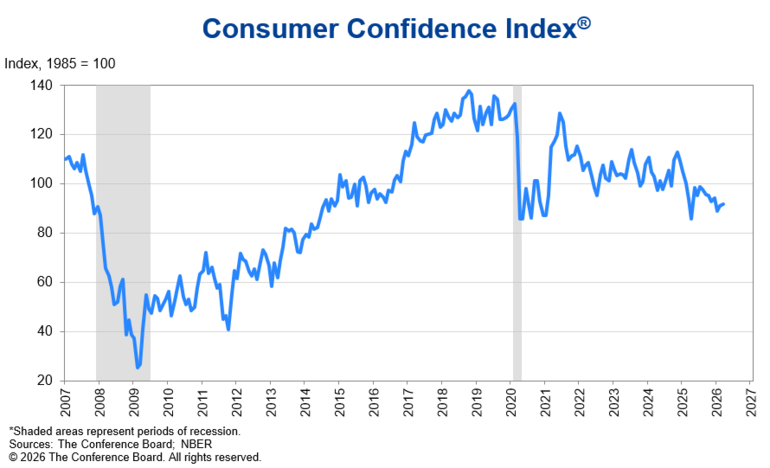
Dana M. Peterson, chief economist at The Conference Board, said confidence “ticked up again in March” as better views of current conditions outweighed “a slight downshift in expectations for the future,” while noting the broader measure has remained on a general downward trend since 2021.
The report suggested rising costs tied to tariff passthrough and higher oil prices are increasingly weighing on households, even if those pressures were not fully visible in the headline index. The Conference Board said consumers’ average and median 12-month inflation expectations surged in March to their highest levels since August 2025, while the share expecting interest rates to rise over the next year jumped sharply to 42.4% from 34.9% in February. Consumers also became more pessimistic about the stock market and more likely to say a U.S. recession in the next 12 months is “very likely.”
That caution is beginning to show up in spending intentions. Consumers shifted their plans for big-ticket purchases and services from “yes” and “maybe” toward “no” in March, even though used cars, furniture and restaurants remained among the most likely future spending categories. Homebuying expectations weakened, foreign travel plans dropped sharply and anticipated spending on most service categories declined, suggesting households are becoming more selective as they navigate persistent cost pressures and heightened uncertainty.