

WASHINGTON—The Fannie Mae Home Purchase Sentiment Index (HPSI) decreased 1.1 points in July to 71.5, as an overall lack of affordability continues to hamstring consumer sentiment toward the housing market, according to the company.
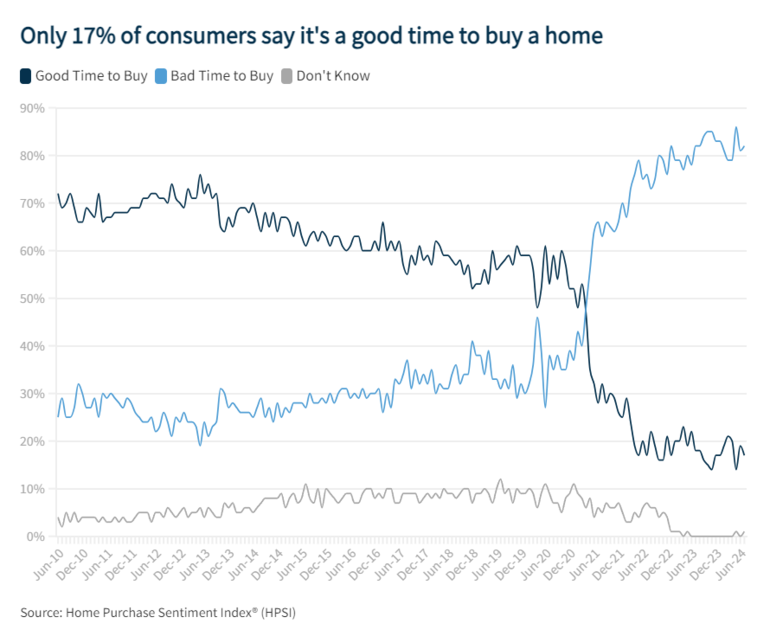
During July just 17% of consumers indicated it’s a good time to buy a home, down from 19% in June, while the share believing it’s a good time to sell decreased from 66% to 65%.
“The shares expecting home prices to rise versus fall over the next 12 months converged but remain some distance apart at 41% and 21%, respectively,” Fannie Made said. Twenty-nine percent of consumers expect mortgage rates to decrease over the next 12 months, while 31% expect them to increase.
The full index is up 4.7 points year over year.
Households Remain ‘Stretched’
“While we’re seeing signs that affordability may be improving in certain parts of the country as supply slowly comes online, household incomes remain stretched relative to would-be mortgage or rent payments, and our latest survey once again reflects real consumer frustration with the housing market,” Doug Duncan, Fannie Mae senior vice president and chief economist, said in a statement. “Our recently published Mortgage Understanding Study reaffirmed what we’ve long known: that a significant majority of consumers want to own a home.
“However, 82% told us in July that it’s a ‘bad time’ to buy, a share that’s remained consistent since January 2023, and these particular respondents continue to point to elevated prices and mortgage rates as the primary reasons for that belief,” continued Duncan. “Meanwhile, there seems to be little expectation among the general population that homebuying conditions will improve in the near future: More consumers than not see home prices rising further; and slightly more consumers think mortgage rates will increase, rather than decrease, over the next 12 months.”
The Forecast
Duncan is forecasting home price growth to decelerate through next year and mortgage rates to average 6.2% by the fourth quarter of 2025.
“And, like consumers, we continue to view affordability as the primary constraint to home sales activity,” Duncan said. “One data point we think bears monitoring: The share of respondents who say they would rent, rather than buy, on their next move has been trending slowly upward of late. Right now, it’s difficult to tell if this reflects simple buyer fatigue or a greater sense of disenchantment with the market, but we think it could have important implications should the trend continue.”