

WASHINGTON—U.S. consumers added $16 billion in credit card debt during the third quarter of 2025, a significantly slower pace of borrowing than a year earlier, according to an inflation-adjusted analysis by WalletHub of the Federal Reserve’s latest Consumer Credit report released Friday.
The Q3 increase was about 27% smaller than the debt growth recorded in the same quarter of 2024, signaling some moderation in consumer reliance on revolving credit. On an inflation-adjusted basis, total U.S. credit card debt stood at roughly $1.33 trillion at the end of the third quarter, about 13% below the all-time peak, WalletHub said.
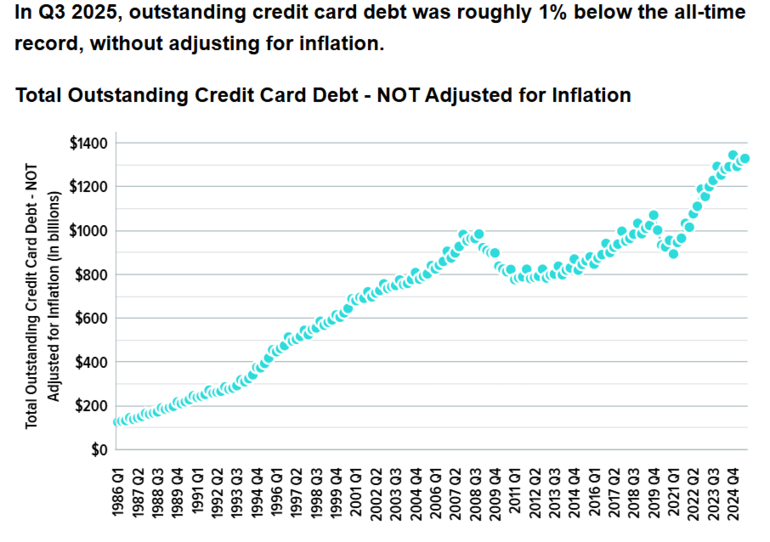
Household balances also remain below record levels. The average household credit card balance was approximately $11,019 at the end of Q3, which is $2,065 below the inflation-adjusted high, according to the study, WalletHub said.
Early signs from the fourth quarter suggest continued restraint. Preliminary October data shows a 0.2% year-over-year decline in credit card debt, indicating that balances may already be edging lower heading into the holiday spending season, WalletHub said.
“Consumers are getting their act together ahead of the holidays, like kids on their best behavior with Santa and the Elf on the Shelf watching,” said WalletHub Editor John Kiernan, who cautioned that history still points to a late-year surge in borrowing.