

WASHINGTON— With the Big Beautiful Bill, H.R. 1, passed last week and the credit union tax status left untouched, the Defense Credit Union Council and America’s Credit Unions each stated they’re stepping up efforts to protect the industry's tax exemption, even as Congress is in recess.
H.R. 1 has moved to the Senate.
ACU said it is spending this Memorial Day recess, together with leagues, contacting senators in their districts, urging them to support the movement’s tax break as the upper chamber goes through its reconciliation process.

Jim Nussle
“We're using our grassroots campaigns and the similar way that we did during the House process, sharing a positive message about the credit union difference and how our mission is based on the special status the tax code affords to us,” said ACU President and CEO Jim Nussle.
In addition to the tax fight, America’s Credit Unions has launched grassroots efforts to combat Sen. Roger Marshall’s (R-KS) attempt to add language from the Big Box Bailout bill (Credit Card Competition Act) to the Guiding and Establishing National Innovation for U.S. Stablecoins (GENIUS) Act (S. 1582).
America’s Credit Unions Chief Advocacy Officer Carrie Hunt reminded that ACU has consistently advocated against the interchange bill, as it would “drive up costs for Main Street America—consumers, small businesses and small financial institutions, including credit unions.”
Hunt noted the GENIUS Act is the first bill coming out of the Senate Banking Committee to be considered on the Senate floor in years.
“And it's becoming a vehicle for lots of other financial services related amendments,” Hunt reminded. “First and foremost the Durbin-Marshall Act relative to interchange, clearly we oppose that and have expressed that opposition to the Senate. It remains to be seen how they will address amendments post recess. There are a number of senators who are threatening to vote against the GENIUS Act should poison pill amendments, like interchange, be added.”

Carrie Hunt
Hunt added that ACU is also opposing Senator Josh Hawley’s (R-MO) amendment that would cap credit card interest rates at 10%.
“This is certainly something that is not a new idea. But credit unions, with our usury cap, already have limits on how credit is implemented on the credit card side,” Hunt said.
DCUC Steps Up Efforts
If enacted in its current form, H.R. 1, DCUC stressed, would reinforce credit unions’ ability to return value to their members through lower loan rates, higher savings yields, and improved services; protect financial access to credit for service members, veterans, and working-class Americans; and sustain the integrity of the credit union model amid ongoing scrutiny from for-profit banking interests/lobbyists.

Jason Stverak
“We still caution that while the House version contains no provisions that threaten the credit union tax status, the possibility of changes in the Senate remains,” said DCUC Chief Advocacy Officer Jason Stverak. “Congress’s decision to preserve the credit union tax exemption is a win for military families and communities nationwide. However, this is not a break — we’re doubling down in preparation for its review in the Senate.”
Stverak said DCUC will be closely monitoring any developments and continue to proactively engage lawmakers, join coalition advocacy efforts, and mobilize its grassroots advocacy resources.
“We're also intensifying our advocacy against harmful interchange legislative proposals at both the state and federal levels; opposing the Credit Card Competition Act (CCCA) and similar legislation that would significantly disrupt secure electronic payment systems,” he said.
“The CCCA, under the guise of promoting competition, would force credit card issuers to route transactions through additional networks— less secure, untested, or foreign-controlled systems,” noted Stverak. “DCUC has firmly opposed CCCA and similar interchange legislation, especially in light of the risks it poses to data privacy, financial security, and even national security, particularly for the military and veteran communities credit unions serve.”
“The CCCA threatens to weaken financial protections for those who serve our country, all while enriching large retailers that are unlikely to pass savings to consumers,” said DCUC President/CEO Anthony Hernandez. “Our member credit unions remain committed to defending the financial well-being of their communities and we will continue to highlight the risks these type of proposals bring to the integrity of the payment ecosystem.”
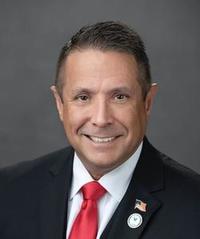
Anthony Hernandez
In addition to interchange, DCUC added it continues to raise concerns about proposed federal interest rate caps—including those advanced by Senators Hawley and Bernie Sanders.
“The proposed cap could restrict credit access for those who need it most,” added Stverak. “We're advocating for policies that support—not limit—responsible lending by credit unions. Through our letters and calls to lawmakers, coalition advocacy, media outreach, and mobilization of our Military Advocacy Committee, DCUC is ensuring that the voices of defense credit unions—and the communities they serve—are heard clearly both in Washington and beyond.”