

SANTA MONICA, Calif. —Credit unions should expect more of their members to show up at the auto loan desk already underwater on their existing loans, a new report suggests.
A growing—and alarming—share of car owners are finding themselves underwater on their auto loans, according to new data from Edmunds.
Q2 2025 data from Edmunds reveals:
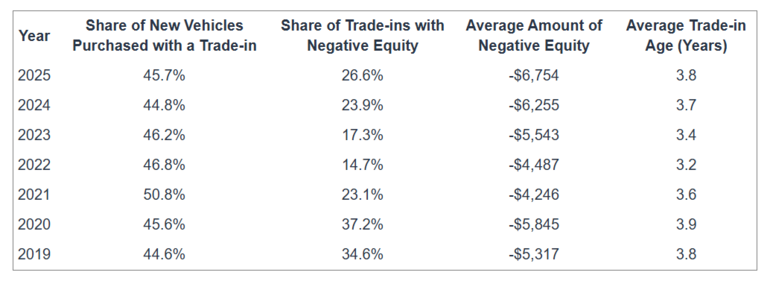
- More than one in four new vehicle trade-ins are underwater, a four-year high. 26.6% of trade-ins toward new-car purchases had negative equity, up from 26.1% in Q1 2025 and 23.9% in Q2 2024. This is the highest share Edmunds has on record since Q1 2021, when 31.9% of new-car trade-ins were upside down.
- Many Americans with upside-down car loans are thousands in the red. The average amount owed on upside-down loans was $6,754, down slightly from Q1 2025's $6,880 but up from Q2 2024's $6,255.
- A growing share of underwater car owners are dragging major debt into their next vehicle purchase.
- 32.6% of underwater trade-ins had between $5,000 and $10,000 in negative equity, compared to 31.9% in Q1 2025 and 30.2% in Q2 2024.
- 23.4% owed more than $10,000, compared to 24.5% in Q1 2025 and 20.7% in Q2 2024.
- 7.7% owed more than $15,000, compared to 8.4% in Q1 2025 and 6.8% in Q2 2024.
"Consumers being underwater on their car loans isn't a new trend, but the stakes are higher than ever in today's financial landscape," said Ivan Drury, Edmunds' director of insights. "Affordability pressures, from elevated vehicle prices to higher interest rates, are compounding the negative effects of decisions like trading in too early or rolling debt into a new loan, even if those choices may have felt manageable in years past. And as buyers take on new loans with much higher interest rates than those from just a few years ago, even potential tax deductions can't meaningfully offset the thousands more they'll pay in interest. With a growing share of upside-down owners thousands of dollars in the red, many are at risk of getting stuck in a cycle of debt that only grows harder to break over time."
To highlight the financial impact of rolling negative equity into a new vehicle purchase, Edmunds said its analysts compared the costs for consumers who financed a new vehicle involving a trade-in with negative equity in Q2 against the industry average for all financed new vehicles. The average monthly payment for buyers who rolled negative equity into a new loan climbed to $915 in Q2 — the highest Edmunds has on record for this group and $159 more than the overall industry average of $756. They also financed $12,145 more than the typical new-vehicle buyer.