

By Ray Birch
WASHINGTON—At midnight Tuesday, the federal government shutdown will officially become the longest in U.S. history—and credit unions on the front lines say the financial and emotional toll on families is growing by the day, particularly among military households and low-income members relying on SNAP benefits.
While faint signs of progress emerged in Washington in recent days, the uncertainty—especially surrounding food assistance—is fueling anxiety across communities.
“We’ve seen a huge increase in stress,” said Sara Firestone, vice president of community and public relations at Members 1st Federal Credit Union. “With the holidays coming up and now the pause in SNAP benefits, families are worried. We’re just trying to do our small part to take a little bit of stress off.”

The Enola, Pa.-based credit union this week donated $2,500 to food banks in each of the 11 counties it serves, totaling $27,500, alongside hardship loans and skip-a-pay programs.
“It really comes back to the credit union philosophy of people helping people,” Firestone told CUToday.info. “We know many families—including our members—rely on SNAP. We want to make sure they have support, especially right now.”
Members 1st, founded on a Navy depot in Mechanicsburg, Pa., still serves a large military population.
Military Communities Feeling The Sharpest Pain
In Biloxi, Miss., Keesler Federal Credit Union is reporting the same story—just louder.
“We have a really large base of military and government employees in our area,” said Samantha Bignell, community development officer. “A ton of people are directly impacted by the shutdown.”
Keesler Federal has launched paycheck-relief programs, expanded food distributions in partnership with Feeding the Gulf Coast, and increased support for food pantries and child-welfare agencies needing diapers and formula.
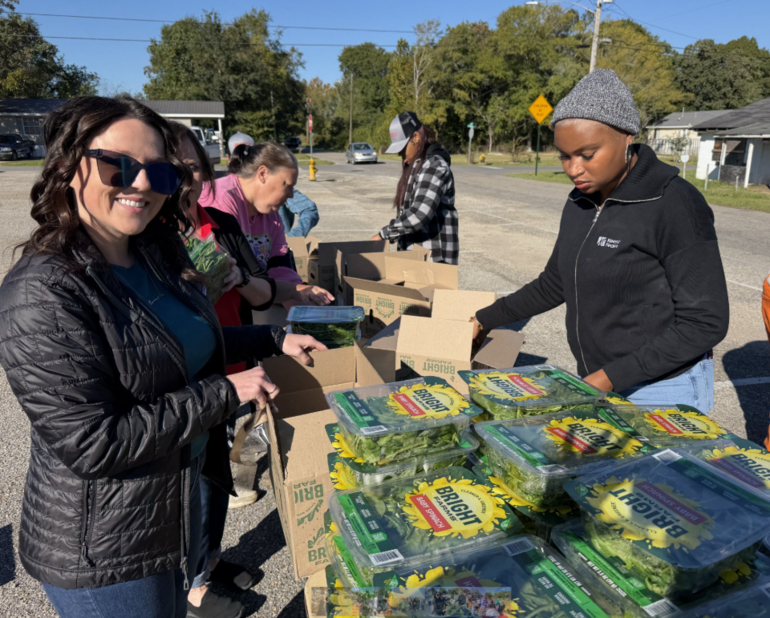
Keesler FCU's recent food drive.
Fresh food—milk, meat, produce—is a priority, she said.
“Canned goods help, but they don’t really feed the need,” Bignell said. “A real meal matters—especially for families.”
Bignell, who has spent more than a decade serving the region and grew up in a Navy family, said this shutdown feels different.
“People were already struggling with high prices. And with the holidays here? We’re really seeing an impact,” she explained.
The credit union also has volunteers supporting the VA and stands ready to maintain programs if the shutdown drags into December, Bignell said.
SNAP Food Benefits Hit Crisis Point
The strain on food assistance programs has triggered national concern. As The Hill reported, two federal judges last week ordered the administration to tap emergency funds to partially cover November SNAP benefits for more than 42 million Americans. But that funding still falls short.
“Thousands of military families…are facing a food insecurity cliff,” The Hill noted, warning that younger service members—already living tight—may be hit hardest.
President Trump signaled he would release emergency funds but also requested guidance from the courts, deepening uncertainty.
For credit unions rooted in military communities, that uncertainty is personal.

Jason Stverak
“People Helping People”—On Display
For defense-member credit unions, the shutdown has become a defining moment, said Jason Stverak, chief advocacy officer at the Defense Credit Union Council.
Members 1st and Keesler didn’t wait for someone else to act—they stepped forward,” said Stverak. “This is what makes credit unions different.”
Stverak noted the shutdown’s historic duration.
“If you’re counting, as of tomorrow at midnight it will become the longest shutdown in U.S. history,” he reminded, pointing to recent movement in talks.
“We’re hearing there has been movement since late last week…there may be greater willingness—particularly among Senate Democrats—to reach an agreement and reopen the government,” he said.
But Stverak warned even a deal may only offer brief relief.
“The current House-passed CR only funds government for another two to two-and-a-half weeks…meaning another potential shutdown the week of the 20th,” he said.
Credit union advocates pointed to a glimmer of hope.
“Even though the federal government seems stuck in park right now…we’re seeing some early attempts at negotiations in the Senate — people are trying to find a path forward,” Mesack said. “There’s a desire to resolve this, but they just don’t yet know how to get it done.”
Senate discussions have restarted, and after key state elections Tuesday, negotiators may feel freer to strike a compromise. But as DCUC’s Stverak cautions, “credit unions, as always, will be ready” if this repeat shutdown comes quickly.
Communities Wait, Credit Unions Show Up
For now, uncertainty rules—especially for those counting on food assistance or delayed paychecks. Firestone said call volume from struggling members has begun rising.
“Every household’s situation is different,” she said. “But we are here to support our members in the ways that we can.”
Bignell echoed the resolve from Mississippi’s Gulf Coast.
“We are prepared to step in with our community if this lasts,” she said.