

LONDON–As cyber security becomes more complex due to machine learning, AI and blockchain, fraudsters are likely to refocus on low-tech methods when targeting consumers in the future, according to a new analysis.
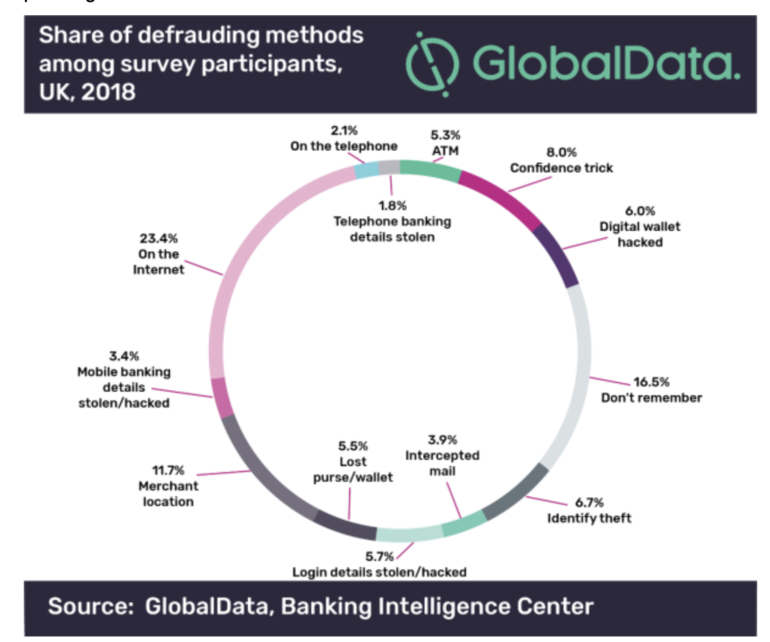
GlobalData said its new Consumer Payments Survey highlights just how diverse and spread out the methods of defrauding accounts are. The most prevalent is Internet fraud, with 23% of respondents falling victim to it, however most other methods are quite varied as well.
“Almost 17% of respondents did not know how their account had been compromised, showing that avenues to gain access to somebody’s bank account are much broader and more diverse than just stealing a credit card,” said Vlad Totia, payments analyst at GlobalData. “Some more old-school techniques are less popular among fraudsters, but are still used successfully. For example, 8% of respondents’ accounts were compromised through a confidence trick such as phishing.
‘Quite Inventive’
“Fraudsters are quite inventive when it comes to breaching security methods,” continued Totia. “There are many ways to gain access and they do not all involve hacking login information. Sometimes, data can be taken from potential victims through social engineering. Either way, each avenue for potential malicious access is a threat.”
Totia noted Visa, Mastercard, Square, and Ingenico have all been experimenting with biometric login via selfies. GlobalData said fingerprint login is already widespread and has seen success in preventing malicious login. Facial recognition payment to date has only been embraced by a companies, including Alipay and CaixaBank, the report added.
Other Points
Other points made in the GlobalData report:
- PayPal and Amazon are using machine learning and AI to establish a predictive analysis method of identifying fraudulent transactions by learning the usual spending habits of customers. In this case, even if a bank account is compromised, suspicious transactions can be flagged, blocked or even reversed.
- All of these security features are essential, however, most of today’s banks, payment providers and financial services companies are experimenting with the strong encryption provided by blockchain. For example, Visa offers a business-to-business (B2B) sensitive data transfer platform for large corporate clients called Visa B2B Connect, which is built on blockchain architecture.
‘Permanent Arms Race’
“The permanent arms race between hackers and security systems is a reality, but as biometric, machine learning, AI and blockchain-based security become more widespread, fraudsters will naturally move on to the point of least resistance,” said Totia. “If they can’t trick the system, they could trick the people. Social engineering, phishing, or simply fooling somebody by handing out login information is often far more effective than hacking. The paradox of advanced defense mechanisms for payments systems could be that fraud ultimately becomes prevalent through low-tech methods.”