

WASHINGTON—The Defense Credit Union Council recently sent letters to Pennsylvania House and Senate leaders and New York Senate leaders urging opposition to proposed interchange-fee legislation.
In the letters, DCUC warned the measures would impose state-specific operating mandates on the national payments system and create unintended consequences to the communities credit unions serve and support, including military and vulnerable populations.

Jason Stverak
In Pennsylvania, DCUC urged lawmakers not to advance HB 2090 or SB 1202 as drafted.
“These bills are often described as narrow fee-relief measures, but their actual effect is broader: they would impose Pennsylvania-specific operating rules on a national payments system,” said Jason Stverak, DCUC chief advocacy officer.
DCUC voiced how the Pennsylvania legislation goes beyond pricing adjustments by requiring changes to payment settlement, dispute handling, fee structures, merchant-credit workflows, and tax documentation processes. DCUC warned the proposals would create new compliance costs and reduce card-program revenue for not-for-profit credit unions, with downstream effects on member pricing, rewards programs, fraud prevention tools, and credit availability.
DCUC also stressed the connection between financial readiness and military readiness, citing Military OneSource and the 2024 Active-Duty Spouse Survey, which found financial stress influences retention decisions among servicemembers and their families.
The letter further noted that prior interchange regulation has not consistently produced lower consumer prices. DCUC cited findings from the Richmond Fed showing 75% of merchants reported no price changes after federal debit interchange regulation, while only 2% reported decreases. DCUC also referenced an April 2026 OCC determination concluding federal law preempts Illinois’ similar interchange law for national banks and federal savings associations due to operational complexity and cost concerns.
Separately, DCUC urged New York lawmakers to oppose S5587A, the Interchange Fee Prohibition Act, and related interchange-fee legislation pending in the state.
“These bills would not operate as a simple pricing correction. They would instead impose state-specific operating rules on a national payment system, with material risk for consumers, smaller financial institutions, and military households,” the letter states.
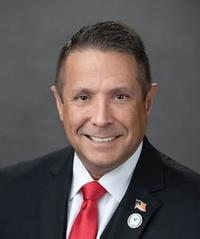
Anthony Hernandez
DCUC warned the proposal would create new requirements for authorization, settlement, reconciliation, compliance, and data governance across the payments system, and a state-by-state carveout approach would fragment national payment rails, increase operational complexity, and create litigation and compliance risks.
In April 2026, the Office of the Comptroller of the Currency reached a determination regarding Illinois’ interchange law, which warned multiple state-level carveouts could create a “complex, potentially unworkable, and destabilizing standard” for the payments system.
“The agency warned that the problem would be worse if multiple states adopted similar or conflicting rules. The OCC further estimated that, absent preemption, OCC-supervised institutions would face more than $232 million in one-time system-upgrade costs, about $145 million per year in manual documentation processing costs for the first several years, and around $200 million in lost issuer revenue. New York should not invite the same operational chaos, charter-based patchwork, and litigation risk,” DCUC stated.
The letter also cited research indicating interchange regulations have not reliably produced lower consumer prices and may instead shift costs to consumers through higher fees, reduced rewards, or reduced credit access.
“DCUC will continue forcefully advocating against harmful policies that would weaken the ability of credit unions to serve military families, local communities, and the broader economy, while fragmenting the integrity of the national payments system,” said Anthony Hernandez, DCUC president/CEO, ret. U.S. Air Force colonel. “Credit unions are mission-driven institutions built to serve people, not shareholders, and lawmakers must ensure public policy strengthens that mission instead of undermining the financial stability, access, and support millions of Americans rely on every day.”