

WASHINGTON–The Department of Education has enacted new regulations that prohibit fees such as overdraft fees and transaction swipe f
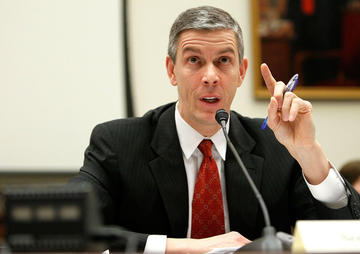
Arne Duncan
ees for bank or prepaid card accounts offered by academic institutions or any contractors that work with them, and which prohibit academic institutions from requiring students or parents to open an account at a specific institution that may have a financial relationship with their school to receive student aid refunds.
Citing GAO numbers, the DoE said nine-million college students, or approximately 40% of the total, have debit or prepaid card agreements and that $25 billion in Pell Grant and Direct Loan program funds are annually released to students at institutions using these accounts.
"Since day one, protecting students and borrowers has been a key priority for the Obama Administration," said Secretary of Education Arne Duncan. "The two final rules published today represent a continuation of our efforts. These regulations will help make sure student loan debt is affordable for all borrowers and bring overdue reforms to campus cards, a sector that too often puts taxpayer dollars and student consumers at risk."
Under the new Cash Management regulations, students will be able to freely choose how to receive their federal student aid refunds; students will be given objective and neutral information about their financial aid disbursement options, and “they will no longer be forced to pay excessive fees to access their Federal student aid, including Pell Grants.”
The DoE said the new rules will also “prohibit institutions from requiring students or parents to open a certain account into which their student aid refunds are deposited,” and will require “institutions to ensure that students are not charged excessive and confusing fees (e.g., overdraft fees and transaction-swipe fees) if a student selects an account offered directly or indirectly by contractors that assist institutions in making direct payments of Federal student aid.”
The new rules further:
- Require institutions to ensure that electronic payments made to a student's preexisting account are made as timely as, and no more onerous to the student than, payments made to accounts marketed through the institution.
- Allow institutions to share limited student information with third-party servicers that offer financial products to allow the continued functioning of disbursement processes, while also protecting private student information, such as Social Security numbers or portions thereof.
The new rules follow a June 2014 Presidential Memorandum from President Obama directing the Department of Education to propose regulations to ease the burden of student loan debt.
“Today's publication of the Revised Pay As You Earn (REPAYE) Plan regulations responds to that directive by expanding repayment options to allow five-million more Direct Loan borrowers to cap their monthly student loan payment amount at 10% of their annual income allocated per month, without regard to when the borrower first obtained their loans,” the DoE said.
Meanwhile, the DoE also noted that final rules that will go into effect in 2016 include:
- An expansion of the circumstances under which institutions may challenge or appeal a cohort default rate that appears artificially high because of a corresponding low rate of student borrowing.
- Starting July 1, 2016, new procedures for FFEL Program loan holders to identify servicemembers who may be eligible for a lower interest rate under the Servicemembers Civil Relief Act (SCRA), enabling these borrowers to receive this important benefit automatically.
- A requirement that guarantors provide information to FFEL Program borrowers on repayment plans available to them after they rehabilitate their defaulted loans, to help ensure that borrowers have a smoother transition to regular repayment. This section of the regulations will be implemented July 1, 2016.
- And a provision will go into effect to allow lump-sum payments made on behalf of borrowers through student loan repayment programs administered by the Department of Defense to count toward Public Service Loan Forgiveness, similar to the application of lump sum payments for Peace Corps and AmeriCorps volunteers. This action assures that these borrowers benefit more fully from their public service employment.
The new REPAYE repayment plan will be available to borrowers starting this December.