

MADISON, Wis.—“Imagine a world where intelligence is no longer scarce—but free, limitless, and available to all,” that’s the future Zack Kass sees unfolding.
The advisor, futurist, and former head of Go-To-Market at OpenAI told attendees of TruStage’s Discovery 2025 virtual conference the nation is rapidly approaching an era of unmetered intelligence—a time when advanced AI will make human-level thinking not only replicable but abundant and nearly costless.
“We’re not just making software faster or more efficient,” Kass said. “We’re building machines that possess human intellectual equivalence—and superiority.”
The implications, he warned—and celebrated—are profound: a redefinition of work, identity, and human potential on a global scale.
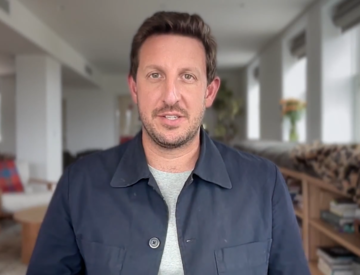
Zack Kass
AI is doubling in capability each year, Kass explained—far outpacing Moore’s Law. With models that can now beat humans at pure mathematics, generate entire films, or pass bar exams, the era of AI as a novelty is over.
“We’re not in the ‘look what AI can do’ phase anymore,” he said. “We're now seeing it as infrastructure—like electricity or the Internet.”
This rapid scaling, Kass said, has a key consequence: cost collapse.
“When intelligence becomes cheap,” he argued, “we get economic explosions like we did with food, water, and energy.”
That’s why Kass believes AI’s impact on global productivity, economics, and society will be even more disruptive—and positive—than many can imagine.
Kass outlined three major phases of AI integration:
Enhanced Applications – Where the nation is today. “ChatGPT wasn’t launched to be a killer app,” Kass said. “It was a marketing tool to showcase what GPT-3.5 could do.” But it accidentally became the most important consumer app of our time—and a gateway to a flood of AI-augmented tools.”
Autonomous Agents – Coming fast. “Here, machines execute goals on our behalf—browsing the web, booking appointments, managing tasks. Apple and OpenAI are already racing to build devices without screens that prioritize voice and intent over clicks,” he said.
Natural Language Operating Systems – The future. “We will wear our devices,” Kass said. “They’ll know what we want before we ask.” The digital divide dissolves. His own mother—“a smart woman who struggled with technology”—began using ChatGPT daily once she could interact in natural language. That, Kass said, was his epiphany: “The future of computing isn’t smarter machines. It’s more human interfaces.”
Kass didn’t shy away from challenges ahead. He broke them into four categories:
Idiocracy – As critical thinking becomes less necessary, some may choose not to use it. “But we’re also seeing an explosion of genius,” he noted. High schoolers are publishing research once reserved for PhDs. Companies like Palantir are hiring straight from high school. “You can now be smart if you want to be,” he said. “Choice—not IQ—is the new divide.”
Dehumanization – Kids and adults alike are retreating into screens. “We were never meant to live this way,” Kass warned. The solution? Invest in physical communities—parks, sidewalks, third spaces that pull people out of the virtual and back into the real.
Bad Actors – From scammers to nation-states, AI enables unprecedented scale. “The low-resource criminal is now more dangerous than the Bond villain,” he said. Kass praised Florida’s new extradition laws targeting AI-driven financial crime, especially against seniors.
Job Displacement – The real crisis, Kass said, isn’t economic—it’s identity. “When work goes away, who are we?” He recalled interviewing union dockworkers whose main concern wasn't money, but meaning, tradition, and community. “The emotional grief of losing work will be our biggest hurdle,” Kass warned.
A Future Full Of Promise
But Kass is not a pessimist.
“We are already seeing GDP gains. One person today does 75% more than they could in 1995. With AI, that multiplier effect will be logarithmic,” he explained.
The breakthroughs are arriving: AI-discovered antibiotics, gene editing, material science revolutions. Kass believes cancer could be cured in 25 years—and maybe not by pharma giants, but garage savants.
He foresees falling prices across most industries—“a deflationary miracle—if we let AI tackle bloated sectors like healthcare, housing, and education.”
Most radically, Kass believes humans may stop working altogether.
“We may actually have the time and resources to rediscover who we are beyond our jobs,” he said. “And that, more than anything, scares people.”
But it doesn’t scare him.
“Tomorrow will be even better than today,” he closed. “Optimism isn’t naive. It’s a strategy.”