

MADISON, Wis.–The leaders of three of the largest organizations in credit unions shared their thoughts on their short-term and long-term focus as well as other issues during a panel discussion.
The discussion took part during TruStage’s Discovery Conference and featured TruStage CEO Terrance Williams, America’s Credit Unions CEO Jim Nussle, and Velera CEO Chuck Fagan. It was moderated by Lauren Culp.
Here is a look at what was discussed.
Q: Your organizations have all undergone tremendous change, including all having new names in the last few years. Tell us more about where you are focused in the short term?
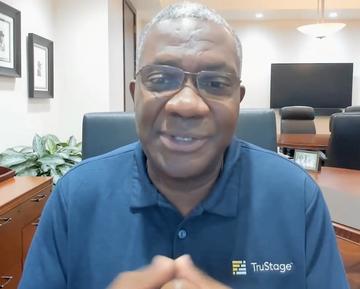
Terrance Williams
Williams: The word I would use is alignment. And I use that word because I think it really is meant to represent how do we ensure that within the walls of TruStage that we are operating as one organization, that we're aligned around taking care of the needs of that middle market consumer.
Now, there's a lot that goes underneath that. It means that we need to find ways to drive our digital maturity efforts, it means we need to find ways to serve members in unique ways, that we know their expectations are evolving. There's a lot of double-clicks under that, but overall, it really is about alignment and creating just a oneness around how we think about the middle market consumer.
Nussle: It with our mission statement. It’s what we're about and that is to advocate and advance an environment where credit unions thrive. So, I’ll take your word, alignment, Terrance, and I’ll relevance, because I think for the future, in addition to making sure that we're aligned and we're using our cooperative superpowers, we've got to make sure that credit unions continue to be relevant for the members today. but also the members of the future if they're going to thrive.
And thriving is certainly something that organizationally credit unions need to be able to do. But we do it on behalf of the people we serve. We want them to be able to deal with the mud puddles of financial life that they go through.
But we also want them to be able to dream and to be able to grasp the future for themselves and their families and their communities, and credit unions help them do that.
So, advancing an environment where credit unions can continue to do that for their members far into the future is probably the most important job, one that we're working on and that's typically through advocacy but in a number of ways certainly also with the gentleman on these on this call and with other partners throughout the movement.
Fagan: We’re starting by bringing Co-op and PSCU together. That’s certainly going to take a few years and that's obviously a high priority.
As it relates to the industry and the movement itself, it’s about alignment, relevancy and I'll add velocity to that. I think credit unions need to be leading edge, they don't need to be bleeding edge. I don't think that's a sweet spot for us. Let’s let the fintech community do the startup kind of thing, let's let them play the bleeding edge game.
But in order to get that alignment, in order to get that relevancy, I think we’ve got to be leading edge. You can't be inferior with the digital offerings that Terrence referenced as we make our efforts to support credit unions in that endeavor.
If they're a consumer member like me, I probably have a bit more loyalty to that just because I've been part of the system since 1988. But for my daughters, I don't think that same loyalty exists in the teenagers, or those in their 20s and even 30s. They'll move to get the technology they want. They trust companies like Apple and Amazon and others. So, I think credit unions have to be on that leading edge.
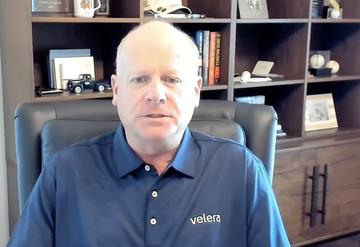
Chuck Fagan
Q: How does the consolidation in the industry affect competition and choice within credit unions? What do you say to credit union leaders concerned about having fewer options?
Nussle: It takes an entire movement to be good at advocacy. That takes our lead partners that represent the 50 states, and it takes the credit union leaders who are leading not only at their credit unions but leading the way in their communities. They're the ones that are looked to now for that local leadership, whether it's in fundraising or in making sure that community development is happening or making sure that we're reaching out to underserved areas.
So, advocacy is about that story where we're serving the people that walk through the front doors of the credit union. It's the people helping people in a new way. which is through their financial well-being and their wellness. Once that's done that story becomes a lot easier for us to use and mold as we approach policymakers and say this is what we do, this is what's working, this is the data behind what's working and showing the proof point of how it's affecting the lives of the people we're serving. We want to do more of that and it's a lot easier to do that advocacy within that kind of influence equation today than ever before. But it's not just Jim that does that or America's Credit Unions or a few leagues that do that. It’s everybody making sure we're growing and developing the crop of voices for advocacy into the future. and that's not something that one entity can do all by itself.
Fagan: It's unbelievable in our payment space that four or five years ago we had six really strong public company payments providers and they consolidated down to three and now obviously, PSCU and Co-op Solutions came together in January of this year. I think yes, there are fewer options; clearly, you can do the math on that. But you also have considerably stronger organizations with dramatically increased scale.
Look at Velera. We have now 94 million debit and credit card accounts, so we're rooting for Jim to keep that 140-million credit union consumers growing at a nice clip. You've got more than 4,000 financial institutions that we touch and when I think about the fintech community wanting to build distribution channels to get at our space, it's much easier for them to come to Velera that has that distribution network…and can represent a lot of those products and solutions to our credit unions.
I think scale more than ever matters, especially in our space, and scale also matters in our ability to invest back in the business. I mean we own more technology, and I think Terrence would say the same, that TruStage owns more technology today than ever before. That is going to continue. That's part of our model and in order to do that you have to have scale to be able to build off and keep that consistent investment going.
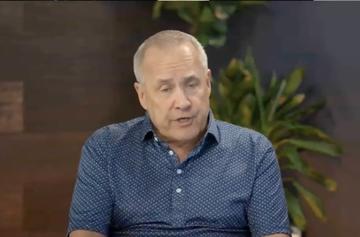
Jim Nussle
Q: How will you continue to change and evolve?
Williams: I think it’s important to also address what is not changing. At TruStage, yes, we’re flying under a new brand name and brand to unite our organization, but what's not changing is our commitment to the movement, our commitment to the credit union system.
I never stand on the stage without talking about the fact that we are committed to ensuring that everyone has access to a brighter financial future and those words have existed before I arrived at TruStage and they will continue to exist. But what we do have to figure out, and I'll go back to the word that I heard Jim say earlier, is that I talk a lot inside the walls of TruStage about relevance. What are the things we're doing today to prepare for tomorrow?
One of the things that we have to evolve to ensure we maintain the relevance that exists for us today as an organization is we want to be the most trusted and accessible provider of financial solutions. That means…we have to continue to strengthen our partnership with credit unions we have to find ways to meet members where they are and we have to find ways to serve them throughout all of their life cycles.
Again, I could double-click on any of those things and talk for 30 minutes. But there's a lot required for us to be able to kind of serve member needs throughout all of their life stages and we recognize that a lot of this is about how we think internally. How do we eliminate the thinking of silos across the company?
I often talk about the importance of horizontal thinking across the company, meaning that we are not looking at things based on our department, based on the boundaries that might exist from an organizational structure. We're looking at things through the lens of serving that end-member and if we were able to do that I think we will execute against all the things needed for us to remain relevant not just today, but 10, 20 or 50 years from now.