WASHINGTON—The Federal Reserve has released the hypothetical scenarios for its annual stress test, which helps ensure large banks can lend to households and businesses even in a severe recession.
Additionally, the Fed released two hypothetical elements designed to probe different risks through its "exploratory analysis" of the banking system. The exploratory analysis will not affect bank capital requirements, the Fed stated.
The annual stress test evaluates the resilience of large banks by estimating losses, net revenue, and capital levels—which provide a cushion against losses—under hypothetical recession scenarios that extend two years into the future.
“This year, 22 banks will be tested against a severe global recession with heightened stress in both commercial and residential real estate markets, as well as in corporate debt markets. The scenarios are not forecasts and should not be interpreted as predictions of future economic conditions,” the Fed said.
The Fed explained that in the 2025 stress test scenario, the U.S. unemployment rate rises nearly 5.9 percentage points, to a peak of 10%. The unemployment rate increase is accompanied by severe market volatility, a widening of corporate bond spreads, and a collapse in asset prices, including about a 33% decline in house prices and a 30% decline in commercial real estate prices.
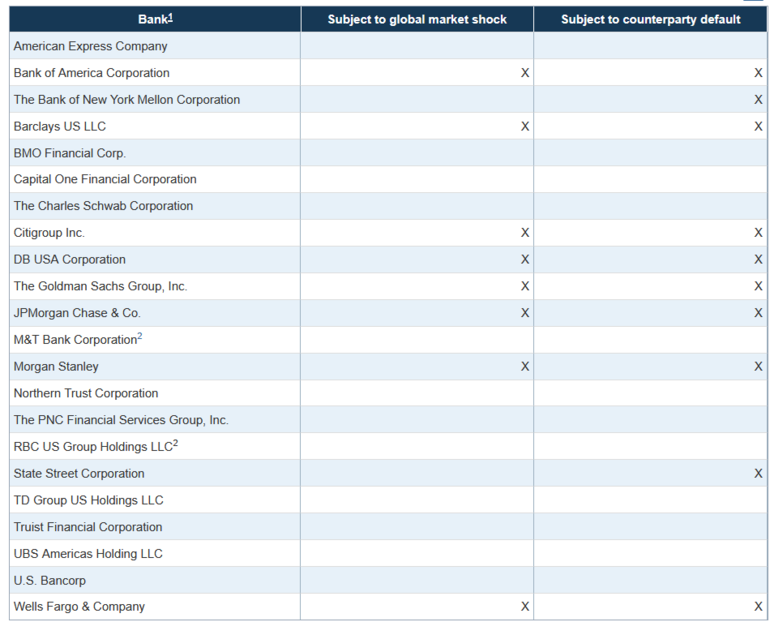
“Large banks with substantial trading or custodial operations are also required to incorporate a counterparty default scenario component to estimate potential losses from the unexpected default of the firm's largest counterparty amid an acute market shock. In addition, banks with large trading operations will be tested against a global market shock component that primarily stresses their trading and related positions,” the Fed said.
Assess Resilience
This year's exploratory analysis includes two separate hypothetical elements that will assess the resilience of the banking system to a wider range of risks, the Fed explained. One of the hypothetical elements examines how banks would react to credit and liquidity shocks in the non-bank financial institution sector during a severe global recession.
“The second element of the exploratory analysis includes a market shock that will be applied only to the largest and most complex banks. This shock hypothesizes the failure of five large hedge funds with reduced global economic activity and higher inflation,” the Fed stated.
The exploratory analysis is distinct from the stress test and will explore additional hypothetical risks to the broader banking system, rather than focusing on firm-specific results. The Fed said it will publish aggregate results for the exploratory analysis alongside the annual stress test results in June 2025.
The table below shows the components of the annual stress test that apply to each bank, based on data as of the third quarter of 2024.