

WASHINGTON—The problem of small credit unions lacking practical access to the Central Liquidity Facility (CLF) was moved back into the spotlight Tuesday as NCUA Chairman Kyle Hauptman acknowledged during a House Financial Services Committee oversight hearing that thousands of CUs remain effectively shut out of the system meant to serve as their emergency backstop.
The exchange came when Rep. Young Kim (R-CA) pressed Hauptman on what tools smaller institutions truly have at their disposal during a liquidity crisis. Many small and associate credit unions, she noted, still cannot easily tap the CLF—an issue that drew fresh urgency following last year’s industry-wide liquidity concerns.
Kim asked, “Right now, some associate credit unions lack access to the Central Liquidity Facility. What are some of the barriers that credit unions face in accessing the CLF, and how can we ensure that more credit unions have access to CLF?”
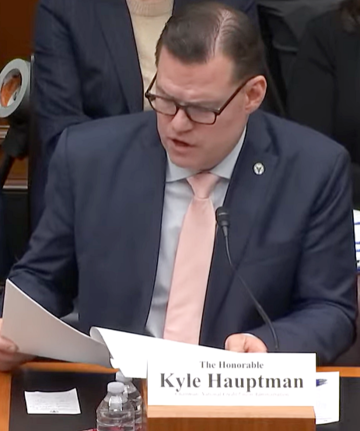
Hauptman’s answer, credit-union observers stated, cut to the heart of why the issue persists.
“The vast majority of credit unions, over 3,000 are below $250 million in assets. For the small ones, the median number of employees is one,” Hauptman told lawmakers. “There’s a lot that have zero, like church credit unions… We have done everything we can to make [applying] easy… That said, the reality is, most of the small credit unions do not have access to it. They haven't gotten around to it for a variety of reasons.”
For a period, he noted, Congress allowed corporate credit unions to act as agents, enabling small CUs to access the CLF without handling the full application process themselves. That authorization has since lapsed—leaving small institutions responsible for individual applications, asset pledging, and ongoing compliance.
Defense Credit Union Council Chief Advocacy Officer Jason Stverak said the exchange underscored a risk the movement has warned about for years.
“Many credit unions could face this problem if there is another run on liquidity within the system,” Stverak said. “The CLF is the fire department being built before you have the fire. It is the backstop that ensures credit unions will have the resources they need to weather whatever comes over the horizon.”
Stverak said Hauptman’s testimony should be a wake-up call.
“It was incredibly important that Chairman Hauptman was asked the question by Congresswoman Kim,” he said. “He laid out the facts: thousands of smaller credit unions—many with one employee, some open only a few hours a week—simply do not have the staff or bandwidth to apply for and manage CLF membership on their own.”
Allowing corporates to serve as CLF agents, he added, would make participation dramatically easier.
“Is it realistic for a church credit union that’s only open Sunday after Mass to manage CLF planning, monitoring, and applications?” he asked. “Or is it better for them to focus on serving their members while relying on their corporate to ensure access to liquidity when needed?”
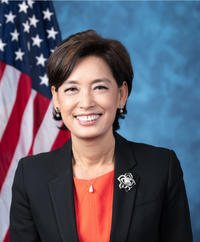
Young Kim
NDAA Amendments Could Restore The Fix
The solution, Stverak stressed, is already written—and currently attached to the Senate version of the National Defense Authorization Act (NDAA).
“It’s a very simple fix,” he said. “The language in the NDAA—the Padilla/Cramer bill text—would allow corporate credit unions to set their membership so credit unions of any size can access the CLF through them. They wouldn’t have to navigate the application process or pledge assets individually. They could rely on their corporate.”
DCUC, he said, played a central role in getting the language into the Senate bill.
“We worked closely with the offices of Senators and (Alex) Padilla (D-CA) and (Kevin) Cramer (R-ND) to keep this issue alive,” Stverak explained. “With our grassroots support across the industry, the Senate added the provision unanimously. Now we’re hoping the House agrees to include this common-sense reform in the final bill.”
Will It Survive Negotiations?
The NDAA is expected to reach final negotiations in mid-December, though Stverak cautioned the timeline could slip into the third week as lawmakers sort through various disputes.
“We’re at the inflection point,” he said. “There are other issues affecting the banking section of the bill—CDFI concerns, housing provisions, and so on. We continue to urge lawmakers: don’t let unrelated disputes derail the entire banking package.”
If the CLF provision is jettisoned in the final hours?
“That would be sad,” Stverak said. “This is a reform that has universal support—from the NCUA to both sides of the Senate. If you polled the House, I believe you’d find the same. But if it does fall out, we’re prepared to continue making the case on behalf of all credit unions until this legislation passes.”
In New York, Mira Ness, CEO of the $73-million New York University FCU, said she is keeping an eye on the CLF discussions in the NDAA, agreeing that liquidity needs can shift rapidly.
“I think this would be very helpful for the small credit unions, although our credit union is and has not been in need of liquidity for about 10 years now,” Ness said, adding, “but I know that situation can change.”
Latest Reports
News reports Wednesday stated that NDAA negotiations are entangled in a late-stage push to attach the Senate’s bipartisan ROAD to Housing package, with the White House, Senate leaders, and the bill’s sponsors all backing its inclusion. The housing package, already approved unanimously by the Senate Banking Committee, is seen by the Administration as a key vehicle for addressing rising housing costs, giving it priority as NDAA talks enter their final stretch. At the same time, progress on releasing the NDAA’s final text has slowed as congressional Republicans continue to hash out internal disagreements. A central sticking point is ongoing resistance from House Financial Services Committee Chair French Hill, who maintains that any housing legislation must have his committee’s support before being folded into the defense bill.