

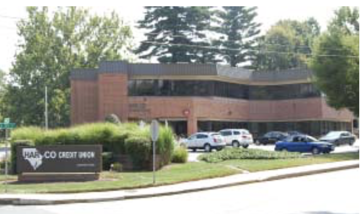
BEL AIR, Md.–The $188-million HAR-CO Credit Union here is seeking to again convert to a mutual savings bank charter.
In a Notice of Consideration to Convert from a Maryland-Chartered Credit Union to a Maryland-Chartered Mutual Savings Bank, HAR-CO stated that while it would be FDIC-insured, it would be “mutually owned by its membership and would continue to have no stockholders.” It said the move will allow it to be open to anyone in the community, which would eliminate the “restrictions on banking” with HAR-CO.
This is the second time the credit union has sought to move to a mutual savings bank charter. It dropped an earlier bid in 2011. The reasons it is citing in 2016 for seeking to convert are similar to those it cited in 2011.
In its Notice of Consideration, HAR-CO stated that the conversion to a bank charter would allow it “to offer loan and deposit services to anyone, something it cannot currently do as a credit union. Existing branch locations would, as bank branches, be permitted to serve and attract more citizens than they can now as credit union branches. The board believes this would enable HAR-CO to preserve its tradition of competitive pricing, plus make it easier to cost-justify adding branches. As a bank with the increased ability to add customers, we believe HAR-CO would be able to generate substantially greater revenues. The board of directors believes that greater revenues would help support and expand the types of products and services offered to the membership.”
HAR-CO CU, founded in 1955 to serve teachers in the Harford County Public Schools, reported $500,228 in net income at year-end 2015. It’s net worth ratio is 9.52%, and it has 16,735 members.
The credit union’s Notice of Consideration for the charter change goes on to state that “Conversion to a mutual savings bank would also give HAR-CO additional business flexibility that the board believes it will need in order to continue to operate as a first-rate financial institution and meet the needs of its current and future members. For example, as a credit union, HAR-CO cannot raise capital to support or expand its operation other than by retaining net earnings.”
HAR-CO’s Notice states that the credit union “would have the option to raise additional capital by changing from the mutual to the stock form and selling stock to members and the public, although a change to stock form is not part of the current conversion proposal.”
Credit unions that have converted charters in the past and become banks have first converted to mutual stock ownership, and then later converted to commercial banks. HAR-CO’s Notice makes clear it could pursue a similar path. “In the event of a future conversion to the stock form, ownership and control of HAR-CO would be transferred from its current members to those who purchase HAR-CO’s stock, including any current members who purchase and pay for the stock,” the credit union said in its Notice. “A change to stock form would require separate approvals in the future from the then current HAR-CO board, HAR-CO members, and bank regulator.”
In its Notice HAR-CO also addresses the taxation issue, noting that “a conversion to a mutual savings bank will end HAR-CO’s tax exemption. As a credit union, HAR-CO is not subject to any federal, state or local taxes, other than real estate property taxes and payroll taxes. Based upon our analysis and meetings with consultants, the board of directors believes that the tax impact should be more than offset by the enhanced earnings capacity under the mutual savings bank charter and the ability to more effectively serve HAR-CO’s current and future members. We further believe this change would improve our ability to sustain a competitive pricing philosophy while continuing to increase our convenience and service to members.”
The credit union told members in the Notice that its existing pricing on loans and term deposits would not change, but also added, “In prior credit union conversions some commentators have observed that rates and fees for new loans and deposits have been less favorable to members following the conversion, in keeping with data showing credit unions offer, on average, more favorable rates on loan and deposit products than banks. However, our board believes that the conversion would not adversely affect our ability to continue to offer attractive loan and deposit rates and fees following the conversion.”
HAR-CO said a conversion could affect surcharge-free ATM arrangements it has with a number of other credit unions.
The Notice also addresses the issue of compensating board members. “The directors of HAR-CO currently do not receive compensation for their services, although HAR-CO is authorized under Maryland law to provide compensation to its directors with the approval of the members. HAR-CO has no plan for changing its director compensation policy following the conversion. However, as a Maryland savings bank, HAR-CO would not be required to seek the approval of its members before providing compensation to its directors for service on the board. There would be no economic benefit to senior management as a result of the proposed conversion.”
The comment period from members has already closed and HAR-CO’s board has adopted a plan of conversion. The credit union said it could be several months before members see new materials related to the conversion, and that once submitted to membership for a vote, it will provide a notice period of no shorter than 90 days.
The credit union and state CU regulator did not return calls from CUToday.info Tuesday seeking comment on the conversion.