BROOKFIELD, Wis.– A new survey has found that while the majority of U.S. adults is satisfied with their primary financial provider, they give their own financial management skills mixed marks.
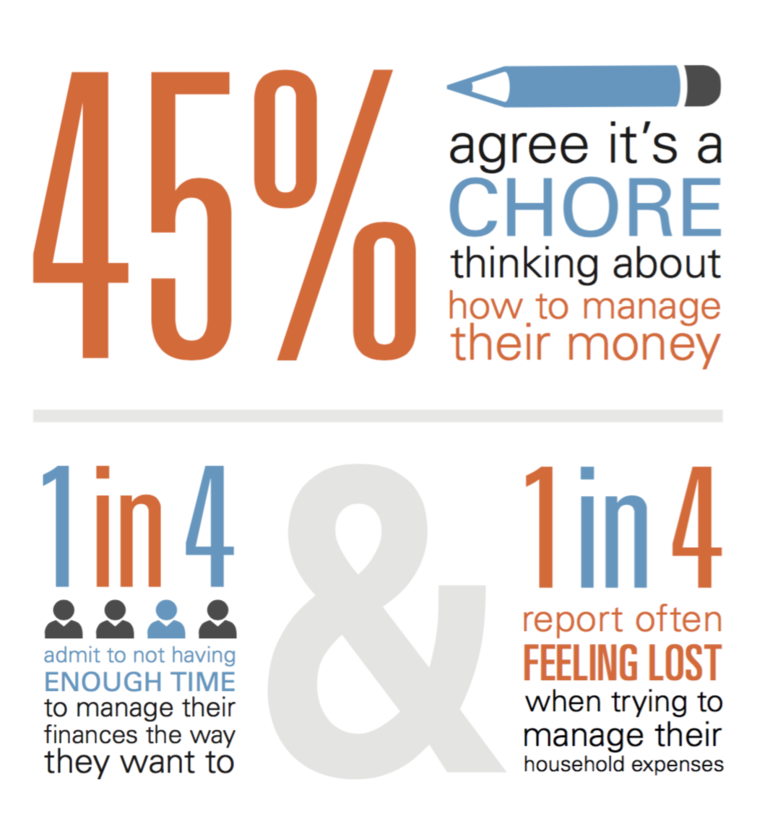
The findings are part of a study of more than 3,000 U.S. adults conducted by Fiserv as part of its Expectations & Experiences: Household Finances quarterly consumer trends survey. It found that 60% view financial management as a “must do” versus a “want to,” with Fiserv adding that there are signs that many consumers would benefit from outside help, revealing an opportunity for financial institutions to provide advice and tools that enable consumers to take control of their financial lives.
Expectations & Experiences: Household Finances was conducted by Harris Poll on behalf of Fiserv. A paper summarizing the findings is available at fisv.co/expectations.
“Tasks such as paying bills, budgeting or saving for retirement are a fundamental part of people’s daily lives,” said Mark Ernst, chief operating officer, Fiserv. “Most consumers look to their bank or credit union as a partner, and financial institutions have a significant opportunity to provide the financial advice and tools they need to help them achieve their dreams.”
Long Tenure, High Satisfaction Characterizes Most Financial Institution Relationships
Most American households have longstanding relationships with their financial institutions. According to the survey, 52% of consumers have had an account with their primary financial institution for a decade or more.
Seventy six percent give their primary financial organization an eight or higher on a satisfaction scale of zero to 10, with 28% giving a “perfect 10.” The higher overall satisfaction ratings are tempered by lower satisfaction among the newest households: 65% of early millennials rated their primary financial organization an eight or higher on a scale of zero to 10.
Consumers are increasingly seeking to customize multiple services that meet their financial needs. If everything they desire is not available within one financial institution, consumers have shown a willingness to work with many, and the survey showed consumers have relationships with an average of 3.7 financial organizations. Working with multiple institutions generally reflects a focused strategy intended to maximize rewards, rates and results.
The Opportunity for Financial Institutions
Despite the seeming savviness of managing accounts at multiple financial institutions, there are many signs that households need more support when it comes to managing their household finances. On average, U.S. adults rate themselves a “B” for short-term responsibilities like paying bills and sticking to a budget, but this drops to a “C+” for long-term goals like saving for college or retirement. This is perhaps not surprising, as 48% admit that they do not have anyone they rely on for advice on managing their household finances.
However, 53% of consumers view financial institutions as partners in managing their finances, indicating that banks and credit unions have an opportunity to fill this gap. Households identified a wide variety of tools, support, information and strategies that would be very helpful in navigating the necessary – but cumbersome – financial management task.
The Future of Consumer Banking & Household Finances
The way consumers manage their finances has shifted. The consumer’s primary financial organization’s website is by far the most common method to track and access financial information, and online and mobile banking continue to grow. Only 49% of consumers say they use a checkbook to keep track of their finances, the Fiserv survey found. However, many people still rely on time-tested services like the branch for actions they perceive to be more complex, such as account opening.
When it comes to financial tools and services, people are clear – make it fast, easy to use and secure. Three in four households want real-time balances on all their accounts and 72% want instant posting of transactions. The need for speed is even more pronounced among Millennials, with 80% of early Millennials and 83% of late Millennials desiring real-time balances, and 84% of early Millennials and 86% of late Millennials wanting instant posting of transactions. Early Millennials are defined as ages 18 to 24 and late Millennials are defined as ages 25 to 35.'