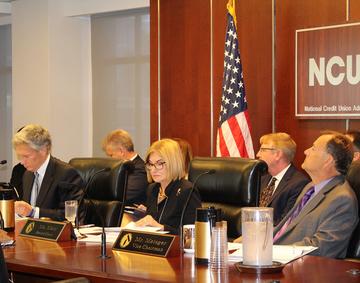
L-R: Mark McWatters, Debbie Matz, Rick Metsger
ALEXANDRIA, Va.–At its mid-year budget review this morning the NCUA board approved a number of changes, the net of which is a $1.3-million reduction in the agency’s 2015 budget.
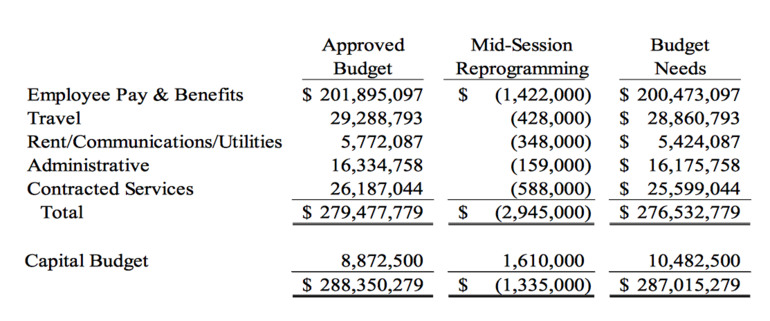
The operating fund budget has been reforecast and reduced by $2.9 million, while the capital budget has been reforecast and increased by $1.6 million. Overall, it represents less than a one-half of 1% reduction from the original 2015 NCUA budget of $276 million.
While, as expected, Board Member Mark McWatters cast the dissenting vote in the 2-1 vote, with Chairman Debbie Matz and Board Member Rick Metsger voting in favor, McWatters did acknowledge a “dramatic improvement” has been made on some of the budget-transparency issues he identified as issues in remarks made at the November 2014 board meeting, when he also voted against the 2015 budget and read a long statement sharply critical of NCUA’s budget process.
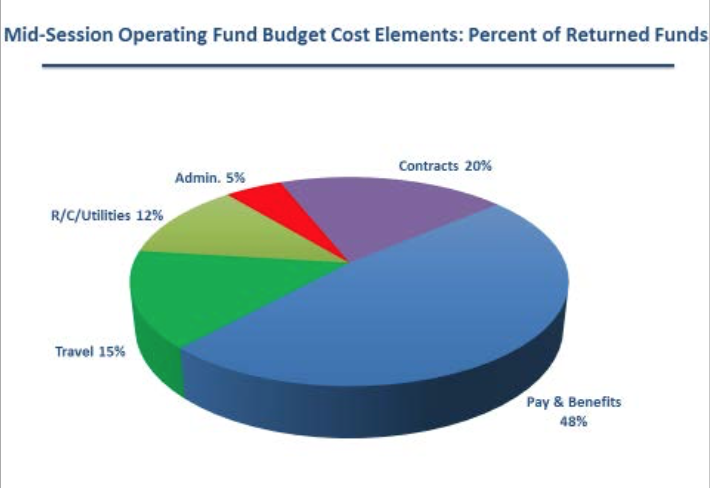
The mid-year budget savings are primarily the result of nearly $2 million in personnel-related cost savings, including 30 unfilled full-time employee positions that will remain vacant. Other savings are also the result of NCUA’s recently completed, five-year collective bargaining agreement with its unionized employees. Other reductions include travel ($428,000), rent, communications and utilities ($348,000), administration ($159,000), and contracted services ($588,000).
But those savings are being offset in part by significant new, unbudgeted expenses, the bulk of which are in technology, including $746,800 in new spending aimed at bolstering NCUA’s “cybersecurity posture.”
NCUA CFO Rendell Jones said the agency has identified 10 “time-sensitive items that cannot wait until 2016.” It is also moving its data center to a leased, off-site, commercial facility. The changes are being driven in part by NCUA’s new chief technology officer, Ed Dorris.
NCUA is also budgeting $150,000 for a new public address system, and $160,000 for new tablets for its decentralized employees, saying they can “work more efficiently in places where it is unsuitable or inconvenient to use laptop computers.”
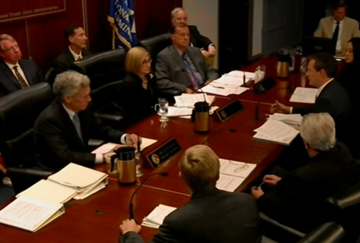
The July 23 NCUA board meeting.
An additional $50,000 has also been allocated to the Office of Small Credit Union Initiatives.
In her remarks on the budget, Matz noted that the agency began the year with the smallest budget increase in eight years (4.2%), and said that for the sixth straight year the agency’s mid-year review has led to more than $1 million in savings that NCUA is returning to credit unions. She called the savings part of a “concerted effort by every NCUA office to reduce line item budgets and achieve efficiencies wherever possible.”
But Matz said the investments in technology are necessary. “As credit unions have been growing in size and complexity, I have often said NCUA should not be holding credit unions back, and as CUs have grown in size and complexity we need to stay on top of that,” Matz said. “NCUA remains committed to providing the flexibility and sophisticated tools that credit unions need to stay competitive in the complex financial services industry.”