

ALEXANDRIA, Va.—The NCUA board has voted in favor of putting out for 30-day comment a proposal to do away with the 5% of assets cap on ownership of fixed assets by federal credit unions of more than $1 million in assets.
At its meeting this morning the board heard from agency staff that said the percentage of fixed assets held by a credit union has not had any material effect on how a credit union performs, including whether it fails. The new proposal, however, will not eliminate the need for a credit union to be able to document analysis of financial projections and an understanding of the future impact on the earnings stream as the result of changes in ownership if fixed assets.
According to NCUA, the change will provide relief to more than 3,700 FCUs and eliminate 2,500 hours of paperwork as part of its Regulatory Modernization Initiative.
The proposed change in Part 701.36 of NCUA’s rules and regulations affects not just property the credit union may own, but also regs related to partial and fully occupied properties on which a credit union may make a loan.
In addition to eliminating the current 5% cap, the proposed rule would
- Eliminate provisions in the current rule relating to waivers from the aggregate limit.
- Simplify the rule’s partial occupancy requirements by establishing a single six-year period and removing the current 30-month requirement for partial occupancy waiver requests.
- Move oversight of federal credit union fixed-assets ownership from regulation to the supervisory process.
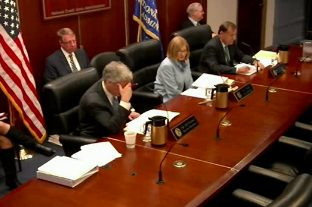
The NCUA Board meets on March 19.
Larry Fazio, director of Examination and Insurance for NCUA, said agency staff had concluded there was a need for additional regulatory flexibility in the area of fixed assets held. The 5% cap, which was enacted 36 years ago, had been based on safety and soundness concerns, said Fazio, but those concerns have proven to not represent a “significant risk” to the insurance fund.
Although supportive of the proposal, Fazio added, “I would note that high levels of fixed assets can present a risk to credit unions by weakening earnings and (potentially) leading to failure. An increase in fixed assets almost always requires increase in maintenance and depreciation expenses." NCUA said that in 16% of cases of FCU failures since 2009 high concentrations of fixed assets were a contributing factor.
Structurally weakened earnings ability, said Fazio, can often lead to taking more risks in lending in order to compensate.
Nevertheless, Fazio and other members of the E&I staff said their study of the past 10 years had found CUs that exceeded the 5% cap had a slightly higher survival rate, and that their average ROA was also higher. The agency has provided waivers to exceed the cap more than 500 times over the past 10 years, including to a few CUs that had 20% of assets invested in fixed assets.
“Spending time putting together waiver applications is not a good use of credit unions’ time and reviewing those waiver applications is not a good use of our time,” said NCUA Chairman Debbie Matz. “There is not a need here for regulatory micromanagement and needless red tape.”
Fazio said that if the proposed change is approved, NCUA will be distributing guidance to examiners to ensure credit unions have plans in place for accounting for any changes in fixed assets.
NCUA Vice Chairman Rick Metsger said the comment period is a short 30 days because proposals related to fixed assets have already been out for comment three times in the past two years.
Following the board vote, NAFCU's Director of Regulatory Affair, Alicia Nealon, said, "We welcome NCUA’s effort to make the cap more flexible, a move that NAFCU has long sough.However, NAFCU firmly believes that to achieve true regulatory relief in the fixed-assets rule NCUA needs to eliminate the rule’s partial occupancy requirements. NAFCU urges the agency to finalize this proposal as quickly as possible because credit unions need relief to manage their fixed assets investments based on their business needs rather than an arbitrary cap."
Status of Temporary Corporate Stabilization Fund
Separately, the NCUA board this morning heard from the agency’s chief financial officer on the year-end report of the Temporary Corporate Stabilization Fund. That value of the assets that comprise that fund continue to improve and, as a result, no assessment will be charged to CUs in 2015, nor will there be any distribution fo funds to the TCSF from the National CU Share Insurance Fund.
NCUA CFO Rendell Jones said the estimate is that the Stabilization Fund will be able to recover $2.6 billion from the asset management estates, and that amount has improved by approximately $250 million over the past year due to an increase in the value of assets held, nearly all of which is real estate related. The Fund has also seen approximately $2.5-billion in funds provided through settlements with various Wall Street banks; NCUA currently has 16 such lawsuits still in the courts.
The Fund still owes the Treasury $2.6-billion for a loan provided during the height of the Great Recession. It is paying an interest rate of 12.2BPs on the Treasury loan, an interest rate that is adjusted annually.
Matz asked Jones the question she said she receives most often from credit unions: When might CUs see a rebate?
Jones said the positive numbers do not mean funds are available currently for a rebate, as the NCUA Guaranteed Notes (NGNs) must still repay the Treasury loan.
The legacy assets held by NCUA are currently valued between $700 million and $2.5 billion, assets that cannot be sold (leading to any potential rebates) until 2021.
When NCUA Board Member Mark McWatters asked Jones what the plan is for distribution of any potential rebate, the CFO responded that an oversight committee is in place and it is discussion whether to sell, hold or resecuritze those assets, and that a distribution plan for claimants is in place.