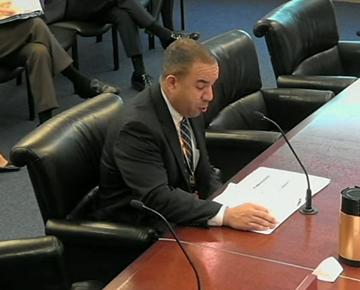
Rendell Jones, NCUA
ALEXANDRIA, Va.–NCUA again stated that there should be no more Corporate Stabilization Fund assessments, and confirmed that federally insured credit unions will not pay a Share Insurance Fund premium this year—and possibly next.
Separately, the NCUA board voted 2-1 to approve its annual performance plan for employees, indicating that there will be no change in the annual exam cycle in 2016—but an 18-month exam cycle may be considered in following years.
“We have calculated various scenarios and recommend a range of zero to six basis points for 2016,” said CFO Rendell Jones. “In the most optimistic scenario, there would again be no need for a Share Insurance Fund premium next year. However, in the most pessimistic scenario, federally insured credit unions would need to pay a premium of six basis points.”
Jones said that by November NCUA will know whether or not it will be necessary to charge a Share Insurance Fund premium in 2016.
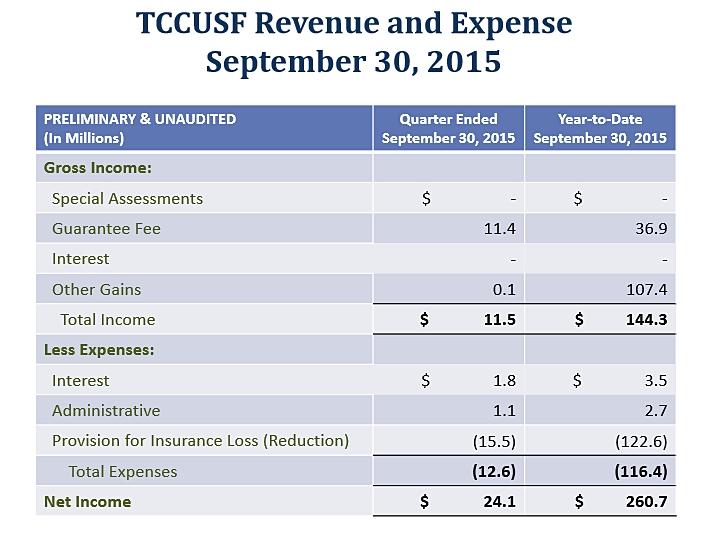
The Temporary Corporate Credit Union Stabilization Fund reported $24.1 million in net income for the quarter ended Sept. 30, and $260.7 million income year-to-date. The Q3 number received a boost from a $15.5-million reduction in the provision for insurance loss, a reflection of fewer troubled credit unions. The numbers also do not reflect settlements NCUA has come to with several big banks.
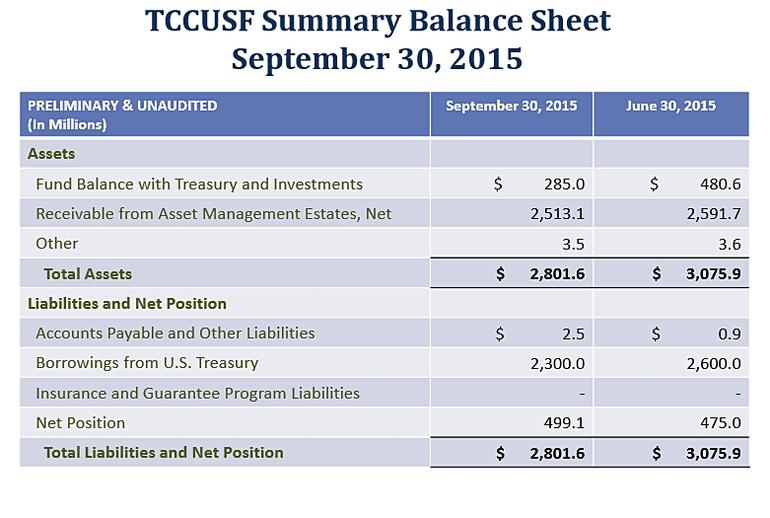
Jones said that during Q3 NCUA made an additional $400 million payment to Treasury, reducing outstandings to $1.9-billion.
Meeting Notes
In other business, NCUA’s 2016-17 Annual Performance Plan was approved on a 2-1 vote.
Matz said neither she nor the agency is “locked into” an annual exam schedule and that in future years it could move to an 18-month exam cycle. But that will not be coming in 2016.
As Matz has stated previously, she said during the board meeting, “This is an issue in our annual performance plan, and I want to address this head on. We are providing a lot of regulatory relief in 2016, and we need to see how this is working in the field. I think it would be irresponsible to provide all this regulatory relief and examine less often at the same time.”
Board member Mark McWatters said he disagreed. “I think we should investigate moving to an 18-month examination cycle immediately for certain low-risk credit unions, with the emphasis on low-risk. I cannot accept the excuse that regulatory relief should keep us from more regulatory relief.”
McWatters said he also disagrees with his fellow board members on the issue of broad-based vendor authority. “I simply don’t agree with it, and I don’t think the agency needs it. That said, targeted vendor authority, such as cybersecurity issues, if there is a blind spot, I think we should deal with that.”