Rendell Jones
ALEXANDRIA, Va.—The Corporate Stabilization Fund received a clean audit for a seventh consecutive year, leading NCUA to confirm that no more assessment are coming—and to again address the possibility of a rebate.
“We don’t project any more assessments, but we do continue to pursue legal recoveries against Wall Street firms that contributed to the corporate crisis,” said Board Chairman Debbie Matz at NCUA’s open board meeting Thursday, noting that NCUA has already recovered more than $2.4 billion. “And we still have 13 lawsuits pending.”
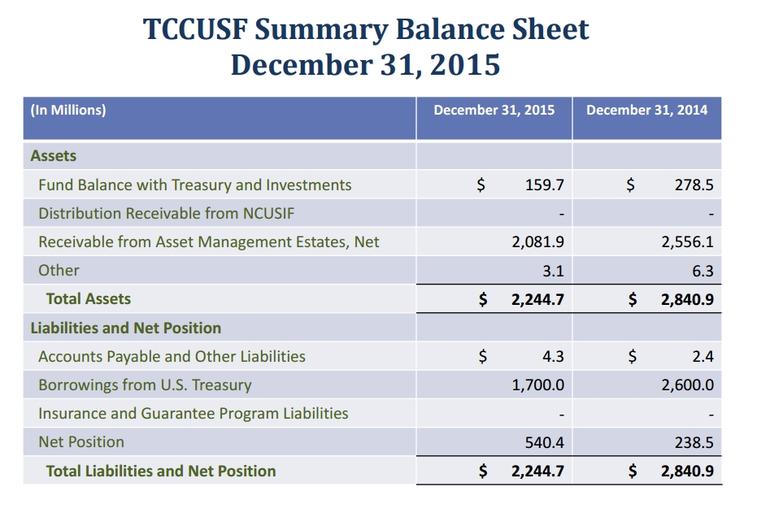
Net proceeds from recoveries will continue to pay down Treasury borrowings, which stand at $1.7 billion remaining. “The best news,” said Matz, “is that any final surplus may be used toward a future rebate.”
But the agency stated that decision is years away, although Matz said there is a “very good likelihood” of such a rebate.
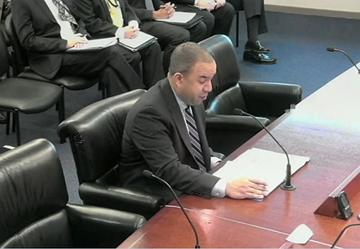
CFO Rendell Jones explained to the board that if the Stabilization Fund has a positive net position at its sunset date on June 30, 2021, then credit unions would be eligible for a rebate.
“There is not enough cash flow available to refund credit unions now,” said Jones. “While improving values of legacy assets are the main factor behind the positive net position, they are not available for NCUA to pay out, as they continue to secure the NCUA Guaranteed Notes.”
Jones added that credit unions should keep in mind that future changes in the economy or the performance of the legacy assets could alter the net position. “So we’ll have a clearer indicator of the potential rebate as we move closer to 2021.”
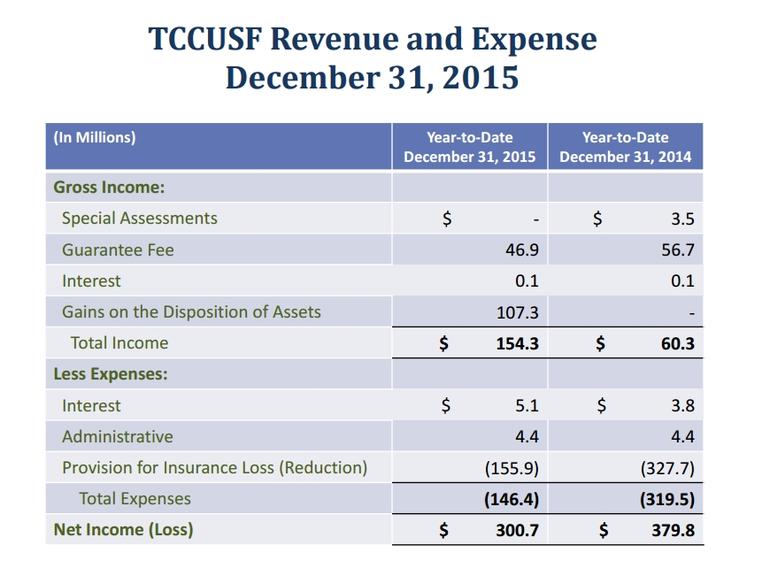
In a follow-up Q&A, NCUA Board Member Mark McWatters asked Jones to clarify why the disposition of $107 million, and which assets were sold.
“They were assets in the trust that NCUA as guarantor purchased from the Trust,” responded Jones. “The gain is the net proceeds we received in selling those securities.
McWatters: Why did we sell the assets?
Jones: The decision was based on the value we could get for those specific securities. We saw it as an advantage for the fund, and those proceeds were used to pay down the $900 million to Treasury.
McWatters: Could you go over the change in provision for insurance loss?
Jones: The provision is based on the changes for the allowance that’s on the balance sheet. When there is a change or improvement in the underlying legacy assets, that contributes to us believing we will be able to collect more.
Other Fund performance data as of Dec. 31, 2015:
- The Fund had revenues of $154.3 million, mainly from recovery of several corporate assets.
- Interest income was approximately $140,000.
- The interest expense increased to $5.1 million from $3.8 million one year earlier due to interest rates increasing to 29.8 basis points from 12.2 basis points.
- There was a net reduction in insurance losses of $155 million in 2015.
- The largest asset held by the fund remains the corporate CU management estates.
- Treasury borrowings were reduced by $900 million, with $1.7 billion outstanding in Treasury borrowings.
- The net position of the Fund is $540.4 million.