

WASHINGTON — A new infographic warning consumers about the increasing threat of cryptocurrency investment scams has been released by the ABA Foundation.
The ABA Foundation said it worked with the FBI, Commodity Futures Trading Commission, SEC, IRS, Criminal Investigation, Department of Homeland Security, U.S. Secret Service, FinCEN and Financial Industry Regulatory Authority in creating the infographic.
In releasing the infographic, the ABA Foundation cited new data from the FBI showing an estimated $5.6 billion was lost to cryptocurrency-related scams in 2023, a 45% jump from the previous year.
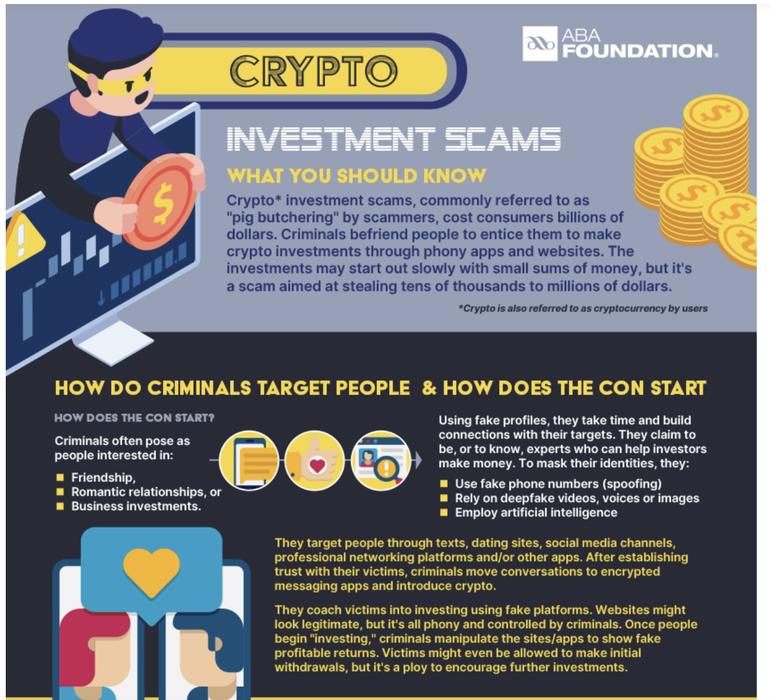
How Victims are Targeted
“As a part of these scams, criminals target victims through texts, dating sites, social media platforms, professional networking channels or other apps,” the foundation said. “They may build fake profiles or use technology to mask their identity, all while working to establish a connection and trust with their victims. Criminals will then introduce cryptocurrency and coach victims into investing using fake platforms that can look legitimate.”
After victims “invest” their money into cryptocurrency, the criminals will manipulate the sites to show fake profitable returns, often encouraging further investment, the foundation added.
“Ultimately, when the victim goes to withdraw the funds, they may be told there are taxes or fees to pay but even after doing so, they learn there is no money to be withdrawn,” the foundation explained.
Five Warning Signs
The infographic details five warning signs of cryptocurrency investment scams that consumers should look out for, including:
- Unexpected contact by an unknown person.
- Requests to limit contact with financial institutions or advisors.
- New online friends sharing “can’t-miss” investment opportunities.
- A sense of urgency to invest more money or pay fees.
- Misspelled web links.
Tips Shared
It also identifies tips for protecting oneself from these types of scams and steps to take if a consumer believes they may be a victim, including, most urgently, filing a report with the FBI Internet Crime Complaint Center at IC3.gov.
The infographic can be found here.