

WASHINGTON—The Supreme Court on Monday declined to hear the petition filed by former NCUA Board Members Todd Harper and Taya Otsuka, in their removal-from-office lawsuit—an action that keeps the matter in the U.S. Court of Appeals for the D.C. Circuit and places renewed attention on a separate, high-stakes Supreme Court case that could upend the foundation of independent federal agencies, including the NCUA.
The D.C. Circuit had previously paused the Harper/Otsuka case while awaiting the Supreme Court’s decision (Dec. 8) in Trump v. Slaughter, a case that directly challenges Humphrey’s Executor, the 1935 precedent that shields leaders of independent agencies from at-will removal by the president.

Ann Petros
America’s Credit Unions said the Court’s move this morning puts even greater significance on the outcome of Trump v. Slaughter.
“We saw the order released early this morning in which the Supreme Court denied review of the petition filed by plaintiffs Harper and Otsuka,” said Ann Petros, vice president, policy engagement and credit union operations at America's Credit Unions. “That means the lawsuit remains pending before the D.C. Circuit. However, the D.C. Circuit had previously stayed that case while waiting for the Supreme Court’s decision in Trump v. Slaughter.”
Petros underscored the December argument is the real hinge point for credit unions.
“Trump v. Slaughter directly challenges the longstanding precedent set by Humphrey’s Executor—the 1935 decision that established limits on the president’s ability to remove the heads of independent agencies,” she explained. “In many ways, that case created the modern independent-agency framework we rely on today.”
High Stakes For The NCUA And All Independent Agencies
Legal analysts and industry observers widely expect the Court to show deep skepticism toward Humphrey’s Executor—and potentially overturn it. The Court has already weakened similar principles.
“It is widely anticipated that the Supreme Court will be very critical of Humphrey’s Executor and may even overturn it outright,” Petros said, noting a decision is likely this spring and “certainly by the end of June.”
If that happens, she said, “overturning Humphrey’s Executor would effectively moot the Harper/Otsuka case.”
Petros acknowledged that a ruling striking down Humphrey’s Executor would open a new era in federal governance, possibly creating a new environment in which agency leadership—and therefore agency direction—could swing dramatically with each presidential administration.
“Such a decision would fundamentally reshape the administrative state and the very concept of independent agencies,” she said.
For credit unions, she emphasized, the potential impact is significant.
“This is an issue we’ll need to discuss more fully with our membership,” Petros said. “We’ll need to determine the best path forward to preserve clarity, consistency, and ensure the NCUA board is able to take effective action on behalf of the industry.”
Anthony Hernandez
DCUC: Stability For Military-Serving CUs Is Critical
The Defense Credit Union Council said the Supreme Court’s decision to pause action on the Harper/Otsuka case while proceeding with oral arguments in the Humphrey’s Executor challenge highlights that the future structure and leadership of the NCUA board remain uncertain and continue to evolve.
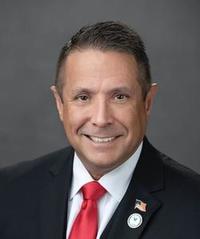
"For credit unions serving military families, veterans, and DoW communities, regulatory stability remains important," said Anthony Hernandez, DCUC president/CEO. "Regardless of potential changes involving individual board members, DCUC is focused on ensuring that any future appointments or administrative actions support NCUA’s independence, mission clarity, and its ability to maintain a strong and competitive credit union system.
“We are closely monitoring the legal and constitutional issues involved and consulting with experts to understand the broader implications,” continued Hernandez. “Our priority is to support continuity, predictability, and sound governance at the agency responsible for overseeing more than 144 million credit union members nationwide. DCUC will continue to advocate for stable, mission-driven leadership at NCUA on behalf of all credit unions as developments unfold."