

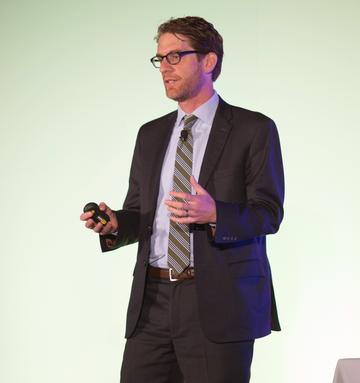
George Hofheimer
SAN DIEGO–Predictions about the future can be an iffy business at best, acknowledged George Hofheimer here.
But there are certain, broad trends and developments credit unions should be watching if they expect to be around in a decade.
Hofheimer, chief knowledge officer at the Filene Research Institute, shared insights from Filene’s “Trending: Credit Unions in 2025” research report during CO-OP Financial Services’ THINK 16 event here.
Among the trends that are driving the market toward 2025, according to Filene:
- Remote delivery excellence will be one of the success factors going forward. “The table stakes now are that you need to be excellent around this concept, even if we don’t know what it’s going to look like,” said Hofheimer.
- It’s going to be a multi-channel world. “When people have problems and need advice, they want to come and talk to people. So it’s not just going to be this amazing technological experience, even though that will be absolutely critical. In 2025 the call center and branches may look different, but you’re going to need them.”
- Table stakes vs. advisory services. The table stakes for credit unions will remain the bread-and-butter transactional accounts, although the expectations of consumers are going to rise. The more complex things, the advice side, could be an advantage in the future for credit unions, said Hofheimer.
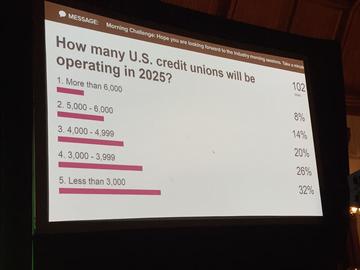
- There will be a smaller number of larger, complex credit unions (and banks).
- Wild card events will impact financial services. “This is the big asterisk,” observed Hofheimer, noting that these types of events just can’t be predicted.
In terms of living the credit union “promise,” which was the theme of the THINK meeting, Hofheimer offered these points:
- Collaboration is key for both “bigs” and “smalls.” In other words, CUs of all sizes will need to collaborate in order to be successful and thrive, “and you need look no further than this organization, CO-OP Financial Services, for an example. It’s going to be very difficult to make the kinds of investments needed even with the scale of the largest credit unions.”
- Establish a love-hate paradox in your strategy. “This all has to do with the concept of differentiation. Credit unions often look at benchmarking data, which is important from an operational perspective. But we seldom talk about what is the distinguishing factor that makes someone pay attention to us. If we can get 15% of the market to love us, and 85% to either hate or be indifferent to us, I would submit that is a pretty good strategy.”
- Building a Testing Mindset. “Coming up with new ideas is not that hard,” said Hofheimer, before adding, “Actually making them happen is extremely difficult.” Filene has worked to find interesting ideas that have worked on a very small scale and introduce them to more institutions and say, ‘This is what we have learned,’” Hofheimer said. “The problem we have is trying to get a credit union to take a product that has worked in another area to just test with 250 members. They say, ‘We have to go to compliance. We have to go through the board. We have to have an Act of Congress.’ There would be a benefit to the industry if we could establish this testing mindset. We don’t have to introduce a new product or service to all the members at once.”
- Continue to be the consumer-friendly option. “As a differentiating factor, this really does still distinguish us,” said Hofheimer. “And our ability to tell that story does continue to improve. With technology more and more a part of the consumer world, having that soft touch is more and more important.”
- Hammer on “local,” whatever that means to your credit union. “Each of us has this hyper-local knowledge of our marketplace, and when the larger operators try to replicate that, most of the times they fall flat. So find those nooks and crannies, and it could be underserved populations that relate to small business. There are thousands of small businesses taking advantage of Kabbage, which charges a very high rate of interest.”
- What got you here won’t get you there. “This is a fluid situation in which we are operating. What got you here may not be successful in getting you to the future. As we think about differentiating between table stakes (such as good service) to moving toward a skilled financial advisor, think about that.”