

DAVOS, Switzerland— President Donald Trump renewed his push for a 10% credit card interest-rate cap Wednesday, calling on Congress to impose a one-year limit during remarks at the World Economic Forum in Davos.
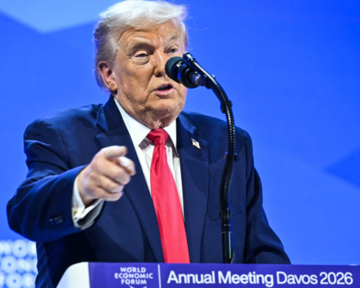
Trump tied the proposal to broader affordability concerns, arguing that rising credit card debt has become a barrier for Americans trying to save for home down payments.
The renewed call comes even as congressional leaders and financial-services executives continue to cast doubt on the proposal’s viability. House Speaker Mike Johnson has previously signaled that Congress is unlikely to act, warning that efforts to reduce costs can carry unintended consequences, Axios reported. Economists and bankers have similarly cautioned that while a cap could provide short-term relief to borrowers carrying balances, it would significantly pressure bank earnings and restrict access to credit.
Trump’s Davos remarks build on a campaign that began earlier this month, when he publicly urged card issuers to comply with a 10% cap by Jan. 20. As CUToday.info has reported, that deadline came and went without an executive order, enforcement guidance, or penalties, leaving the proposal in what industry observers describe as a gray zone defined more by political pressure than legal authority.
The White House has acknowledged the lack of a clear enforcement mechanism, framing the cap as an expectation rather than a mandate. That posture was reinforced Tuesday when the administration released a list titled “365 Wins in 365 Days,” highlighting what it described as accomplishments from the first year of Trump’s second term. One entry — Win No. 88 — cited the president’s effort to “direct credit card companies to cap interest rates at 10% to provide Americans needed relief.”

Jason Stverak
Absent legislative action, uncertainty continues to cloud the outlook. Trade groups and analysts told CUToday.info that regulators currently lack authority to impose such a cap without congressional approval, leaving financial institutions preparing for continued political pressure without clarity on next steps. For now, Trump’s latest comments at Davos have re-energized the debate — but not resolved the fundamental questions around how, or whether, a 10% credit card cap could take effect.
The Defense Credit Union Council Wednesday quickly pushed back on the news. Jason Stverak, DCUC’s chief advocacy officer, voiced strong concerns that a blanket 10% rate ceiling would harm military families and working Americans by reducing access to responsible credit and producing serious unintended consequences. DCUC, he said, has a long history of opposing one-size-fits-all interest rate caps and is urging policymakers to consider smarter alternatives that protect consumers without jeopardizing financial access. See full story here.
ACU Reacts

Scott Simpson
America's Credit Unions, again, pointed to the negative effects of a 10% cap.
“While credit unions uphold a shared desire with the President to make life more affordable for American households, a one-year, 10 percent government induced cap on credit card interest rates would have the opposite effect on affordability for many consumers. Experience shows that rigid and arbitrary rate caps do not lower costs, they restrict access to affordable products for families who need them the most," stated ACU President and CEO Scott Simpson. “As Congress considers this proposal, lawmakers should reject a policy that would shrink access to credit and harm the very families it aims to help. Instead of advancing a rate cap that risks cutting consumers off from credit, the public would benefit if Congress focused on expanding access to institutions that already deliver affordability and financial stability for more than 145 million Americans: credit unions."
Federally chartered credit unions cap credit card interest rates at 18%, and many offer options well below that, with rates for classic cards averaging near 12%, according to the National Credit Union Administration, ACU pointed out.
“There is already a proven, market-based model delivering affordability at scale for American households. Credit unions are member-owned, not-for-profit community focused institutions that price credit to serve people, not maximize profits. They operate under existing statutory limits and consistently offer lower rates without government mandates," Simpson said. "From their onset, credit unions were built to serve consumers first, and that purpose continues to translate into real financial benefits for millions of Americans. Every day, credit unions deliver lower borrowing costs and real savings, with credit card rates that are significantly below market averages and meaningfully reduce the cost of credit for working families."