

ST. PETERSBURG, Fla.--U.S. consumer spending remained resilient into early 2026, but signs of growing segmentation are emerging, according to Velera’s January Payments Index, which shows continued strength in card usage and mobile wallets alongside evolving credit balances and delinquency trends that could reshape risk management for credit unions.
“Velera's payment trends reflect strong consumer spending that propped up the overall economy in 2025,” said Ryan Myers, SVP, Advisors Plus, Velera. “The Fed cut rates in December, and while more cuts are expected in 2026, they’ll likely come slowly given weak job growth. That means spending should hold up, but it will likely be concentrated among higher-income households — widening the K-shaped economy. Credit unions need to get comfortable segmenting their members and tailoring products to manage risk without missing out on payment revenue from more affluent consumers.”
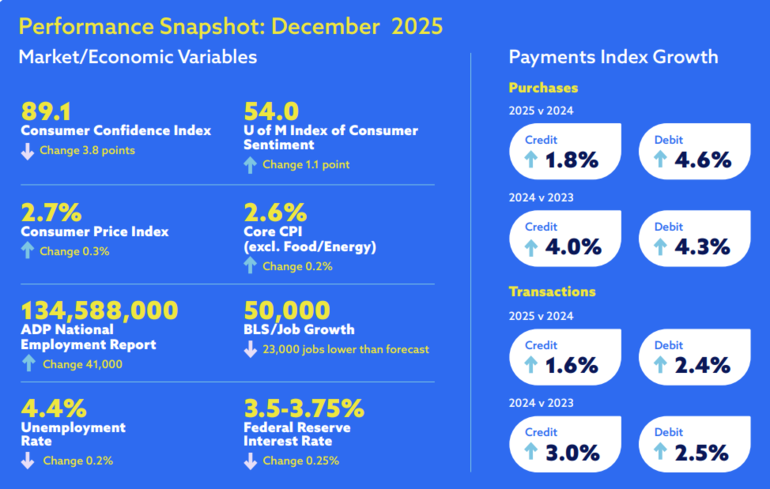
Key takeaways for December include:
- December closed out the year with growth rates similar to those seen for much of 2025, as debit activity growth outpaced credit activity growth. Debit purchases increased by 4.6%, with the Money Services and Services sectors accounting for 80% of the growth. Credit purchases were up 1.8%, with the Service sector accounting for two-thirds of the entire increase. For December, debit transactions were up 2.4% and credit transactions rose by 1.6%.
- For the cumulative three-month holiday period (October-December), growth in spending during the 2025 season surpassed results for the same period in 2024. Debit purchases were up 6.8% and credit purchases were up 1.7% year over year. For growth among the three large retailers during the same period, Amazon, Walmart and Target finished first, second and third, respectively, mirroring 2024.
- Average credit card account balances closed out December 2025 at a yearly high of $3,029, a modest 0.6% (or $18) increase year over year. Credit card balance growth throughout 2025 was moderate, rising 2.3% since January compared with the 3.3% pace in 2024.
- The 12-month rate of inflation through December remained unchanged at 2.7%. The largest contributing factor to the increase was shelter, followed by food/groceries and energy.
- BLS posted the first set of clean economic updates following the government shutdown, which ended on Nov. 12. The next FOMC meeting will conclude on Jan. 28, with the Fed facing lackluster job growth numbers for 2025. While there are expectations of interest rate cuts in 2026, it may be too soon for a cut to materialize in January, following the quarter-point reduction on Dec. 10 that took the federal funds target rate to 3.50%–3.75%.
The full report is available for download here.