

PHOENIX—That the average credit union is sitting on massive amounts of quantifiable consumer data that is the envy of many companies is no secret. Instead, the secret for many of those same CUs is how to unlock that data and do something with it.
One person here offered some strategies for doing just that.
Speaking to the MountainWest Credit Union Association annual meeting here, Anne Legg, a transformational business strategist and a long-time CU marketing executive, noted that “we do have a lot of transaction data, and other data about our members. We should be able to predict what they are going to do next.”
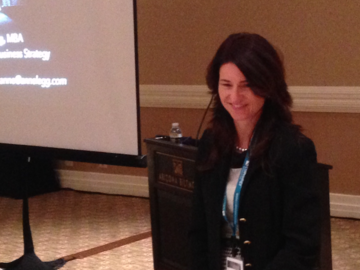
Anne Legg
That’s the critical issue in data today: not knowing what members behavior has been, but what that member behavior data indicate about what the member is looking to do.
Facebook, for instance, said Legg, uses relationship data to target advertising.
“What is it we could tell from our members about what their needs are, what they’re frustrated over, such as a job loss? What solutions can I provide to their pains? Or what if they are getting married? How can you be out there for them? Successful companies understand where their customer are, what they are doing and, more importantly, where they are going. Big data, when harnessed properly can help us make better business decisions, specifically in predicting behavior based on past trends.”
There are two types of data, said Legg: the structured data housed in every CU’s data processing system, and then the unstructured data to be had about members, such as that drawn from videos and social media. In-branch videos, for instance, can be used to create “hot maps” to show how members move about in a branch, meaning an opportunity to meet them where they are headed.
Talking SMAC
Talking some SMAC (for social, mobile, app and cloud), Legg said that data must be captured and understood by credit unions. “Monitoring SMAC allows you to get intimately close to your member, without a lot of effort. It tells us what our members care about, what they’re interested in, where their loyalties are.”
As an example of what a credit union could do with the data it already has, Legg said it could not just tell a member they have been approved for a $40,000 auto loan, but cite the kinds of vehicles the member is looking for in the preapproval messaging. Moreover, it could even offer to have some of the types of vehicles them member is interested in dropped off at the member’s house for test drives.
To build success with the data they have—or should have—Legg urged CUs to leverage the following strategic areas:
- Human capital (staff)
- 2. Performance landscape (financial/competitive/product/price). “Members are choosing to pay elsewhere? Have you looked at what some of those are and how you compare?,” Legg asked. “One of the most interesting things I have seen is how Paypal is creeping up (in member payment channel usage). That is our members telling us they want to use digital engagement.”
- Delivery channel (electronic and brick and mortar). “When members are asked if they could have just one delivery channel, they say it’s online. When you survey your staff and ask them, what do they say? The branch.”
- Member engagement (current member/new member usage). “The first 90 days with members are critical. This is a relationship. What can you do to move them? This is where you can use that data.”
When it comes to using organizational data (which includes product/service data, financial data, member data and operational data), Legg recommended CUs also lay some census data over the top of all of that. “We can build some really impressive models on our members and be proactive. ACH is a goldmine. It tells you so much about your members, especially who they have gone to for credit cards, auto loans and their mortgages.”
Get SMART
Finally, Legg urged credit unions to be “SMART” about their data:
S is for Strategy.
- What unanswered questions do you have?
- What are our organizational pains?
- What do you want to understand about your people, delivery, competition and or members? Define the key research objectives.
M is for Metrics.
- How are you going to leverage the answers to the questions?
- Define data collection method.
- Describe data volumes.
- Describe data veracity.
A is for Analytics
- Turn the data into insights.
- Harness those insights.
R is for Reporting Results
- How to translate the data into very simple and digestible visualizations, such as graphs and infographics.
T is for Transforming Your Business.
- Detailed insights on members. “You sere started to help people to get what they needed to achieve dreams. We still are the best solution to do that. You’re in the dream business.
- Improve business process
- Improve CU performance.
“The first thing you’re going to need is a home for all that data, but it can’t live in IT. They have a lot of other things to do. Need an enterprise data warehouse. You’re going to need data integration,” said Legg. “The second consideration is analysis. Who is going to do the business intelligence? Do you need business intelligence software? The third consideration is reporting. You need to have dashboards. Make it simple, and make sure it reaches the board, the executive team, all the departments and even individuals on the front line, so they know what they are doing is impacting people. And the fourth consideration is time. This needs respect. Do I purchase this or do I build it? Is there a steering committee in place. Need success metrics to know whether this is a win.”