

CHICAGO–As financial institutions look for new ways to promote financial inclusion efforts in the new year, a new TransUnion analysis underscores the importance of rent payments as an alternative credit data asset and how this information can provide greater insight into future consumer credit performance.
The analysis looked at the ability to predict a 90+ days past due (DPD) delinquency over the course of 12 months on any type of credit obligation (i.e. auto loan, credit card, personal loan, etc.) and found that when rental tradelines were included in the credit file, there was a 10+% improvement in the model’s ability to predict delinquencies within a one year period, compared to when rental payments were not included, according to TransUnion.
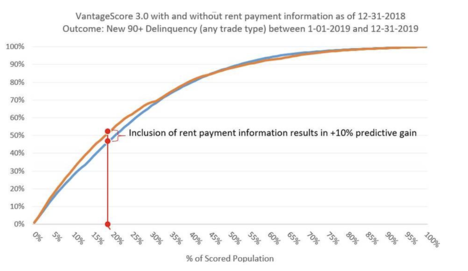
“Rent payments can provide valuable insight into a consumer’s future credit behaviors. This alternative credit data, however, has traditionally not been leveraged by lenders despite the predictive power of such information,” said Maitri Johnson, vice president of tenant and employment screening at TransUnion, in a statement. “Encouraging more landlords and property managers to conduct rent reporting is a key next step to making this data asset more accessible in the consumer credit market. It would also help millions of consumers build their credit history and bring them into the financial mainstream.”
‘Strong Predictive Power’
According to the analysis, rent payments possess strong predictive power into a consumer’s likelihood of making payments on other credit obligations due to the prioritization of this expense. TransUnion noted a recent survey it commissioned revealed rent was cited as the most important bill to pay out of 15 different expenses by 59% of consumers. Reasons consumers perceived the importance of this expense included the severity of consequence of missing a payment, the value of the expense and the normalcy of having the expense.
“TransUnion’s findings support Fannie Mae’s belief that if someone is paying rent consistently it’s likely they could pay their mortgage consistently, too,” said Steve Holden, VP-single-family analytics, Fannie Mae. “That’s why we recently updated our automated underwriting system to incorporate consumers’ rent payment history in the mortgage credit evaluation process, an important step forward in responsibly expanding mortgage credit access for thousands of renters. Wider consideration of rent payment history across the broader consumer reporting ecosystem could enable more financial institutions to similarly factor this type of credit data into their underwriting models. This is a win-win that demonstrates the potential of using technology and data to responsibly remove long-standing barriers to credit access, while helping to ensure consumers receive a more fair and inclusive credit eligibility assessment.”
For more info, go here.