

DES MOINES, Iowa–A supportive grandfather who was an early advocate has helped shape the career of Shazia Manus, CEO of TMG. That has led to a career in which Manus has also worked to be an advocate for others. Below, Ms. Manus shares her thoughts, insights and experiences on management and leadership as part of CUToday.info’s The Corner.

Shazia Manus of TMG.
CUToday.info: What intangible of leadership is most difficult to convey or prepare for?
Manus: As leaders, it is crucial to have confidence in our abilities to facilitate success. If we do not believe ourselves capable of rising to new challenges and strategic goals, those we lead will sense that. Vibrations of doubt, anxiety or apprehension are far-reaching and negatively impact those around us.
Confidence is not something we develop overnight, however. It takes time to cultivate. For me, developing confidence was a gradual process. I grew up with the understanding that my older brother was the smart one, the star of our family. That instilled in me a shadow of doubt about my abilities. Fortunately, my grandfather saw something in me and taught me not to give up quickly. He fostered my tenacity and sowed that vital seed of confidence.
The importance of having a strong support system when developing confidence cannot be overstated. My grandfather was the first to encourage me to pursue my dreams. Since then, I have taken an active role in establishing advocates who will go to bat for me. Knowing there are individuals ready to be your champions is crucial to success.
Being an advocate for others is equally important. If my story and experiences can help someone else gain the confidence to take on more challenging roles, I am happy to share them. It is my sincerest hope that I can provide the same mentorship and support to others as my grandfather gave to me.
CUToday.info: Is there any training for working with a board of directors, and what have you learned about this process?
Manus: Serving on the board of trustees for the Ames Public Library has certainly helped me develop the skills to lead a diverse group of individuals toward common goals. During my time on the board, the library underwent a $20-million renovation project while simultaneously experiencing a shift in leadership. Serving as a decision-maker in these instances gave me the opportunity to lead conscientious discussions and facilitate pivotal decisions that helped the library achieve its goals. Ultimately, working with a board of directors, or any team, involves leading with humanity. By being engaged, caring and listening to what each individual has to say, you demonstrate you’re paying attention and truly value the individual’s contributions.
CUToday.info: Are you a fan of a management book or books? If not, why not. If so, which have resonated with you and why?
Manus: I’m a huge proponent of management books. They offer new insights and help generate discussions among management teams. I often recommend books I’ve found valuable to other members of my team.
Of the books I’ve read, James Autry’s The Servant Leader has been particularly valuable.
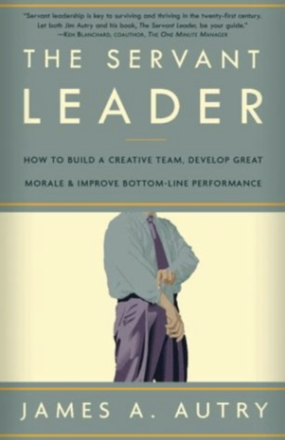
One of the chapters discusses work-life balance and how we shouldn’t try to separate one environment from the other but approach them as concentric circles. That principle has helped me establish intentions for each area of my life.
CUToday.info: Innovation: four syllables getting all the attention. Deservedly so? If so, can you really drive innovation? Or is it coming at the cost of implementation and delivery?
Manus: In the payments industry, innovation is the key to achieving market relevance. Our industry is Darwinian in nature. We must adapt our products and services to meet changing consumer needs or face extinction. Too often, however, industry leaders mistake innovation for invention. A white paper I authored, Reimagined Banking in the Age of the Consumer, explored this very subject.
Innovation does not require the creation of a completely new product or service. It simply requires that financial leaders identify gaps in current solutions and then reimagine those solutions to produce better alternatives. Companies that are intentional in leveraging their existing strengths while pushing for the discovery of new strengths will have a better chance of long-term success.
Ultimately, the focus of innovation should be on delivering real value to consumers. Without understanding consumers’ demands, behaviors and preferences, it is impossible to provide them with relevant innovations. To win consumer loyalty, we can turn to innovation.
CUToday.info: If you could go back and talk to You on the First Day on The Job, what advice do you share?
Manus: When I first took on the role of CEO at TMG, I had little knowledge of the payments industry. I knew banking, but payments was a different sort of animal. Going into this job I had the confidence to learn from my colleagues, who were more than willing to teach me the technical aspect of the business, and the urge to do so but at times wondered if that would be enough.
If I could go back, I would tell myself, “Yes, you can learn and you will learn. It will be enough.” TMG has more than tripled its revenue during my time with the company. Our staff and the number of clients we serve have also experienced tremendous growth and success. I could never imagine on my first day how much TMG would accomplish in such a short amount of time, thanks to the exceptional and passionate team I had by my side on this incredible journey.