

NEW YORK–The coronavirus pandemic has not only changed how many employees now work from home, but it’s also changing how many days per week those same employees are working.
“Several months into quarantine, some companies are discovering that going remote has also made another change possible,” reported Fast. Co. “They’re moving to four-day weeks, without losing productivity or hurting their sales.”
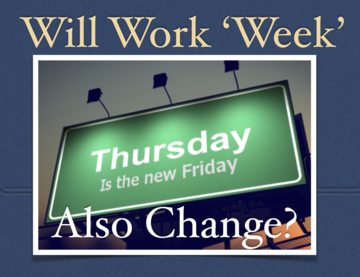
Companies in the U.S. that have made the move include social media app Buffer and social media accelerator Uncharted, as well as local governments in Colorado and West Virginia. Hundreds of companies around the world have made similar moves, Fast Co. reported.
“No one went into lockdown expecting to move to a four-day week. They were more concerned with helping employees set up offices at home, and surviving the next few months,” noted Fast Co. “Those who didn’t already have an online infrastructure that let them work and interact with customers remotely quickly discovered the importance of cloud-based tools such as Google Suite, Slack, and Amazon Web Services, as well as more specialized platforms such as project tracking system Jira, marketing and sales platform Hubspot, and accounting system Xero.”
Prepared for Worst, But…
While many companies prepared for the worst as a result of the move to remote workforces, they found not only was that not the case, they found employees had more time. At Target Publishing, “things that would take up quite a lot of time before are taking up considerably less time,” David Cann told Fast Co. “A meeting that would normally take an hour will take 15 minutes.”
This was all happening even while “errands are taking longer, families are stressed out, and kids are at home,” one executive was quoted as saying. “We couldn’t expect our team members to bring their whole selves to work while ignoring what was going around them. Team members definitely need a mental break.”
What Execs Are Saying
Among the points made to Fast Co. by executives at companies in the U.S. and Europe that have moved to a four-day week:
- “We got several magazines out on time, which made me think that actually the four-day week could work and that we could give something back to the employees.”
- “ Because of the pandemic, people are really assessing their priorities. If they’re asking, ‘What am I doing with my life?’ and you offer them a day off or another 30 euro a week, they’re going to choose the day off.”
- “I had been focused so long on salaries and staying competitive, and the four-day week has made us realize that that’s not the core driver. Employers need to think about what we can do to improve the quality of life of our employees.”
- “We know the systems work remotely, and we know that the team is pretty good at getting the job done. So if there’s a second wave, we’re pretty much ready for it.”
One Other Question
The Fast Co. analysis acknowledged some leaders will wonder: If the pessimists are right and we’re headed into a recession when people will be begging for work why should they offer workers a four-day week?
The response, according to Alex Soojung-Kim Pang is the author of “Shorter: Work Better, Smarter and Less—Here’s How,” and founder of the consulting company Strategy and Rest, said first companies that need to reopen their physical locations will still need to practice social distancing in the office and supporting a four-day week and flexible work will help offices prevent becoming virus hotspots. Second, smaller companies located outside major cities will soon be competing for talent with giants that have discovered an appetite for remote work, the author added.