

CHICAGO–Credit unions know all too well just how difficult the war for talent is in an extremely tight labor market. With competitive compensation packages no longer a sufficient carrot, many companies are pursuing a new strategy in recruiting and hiring, according to a former Amazon HR executive.
Writing on Inc.com, Michael Schneider, human capital specialist with Welltowe, said many companies have started to differentiate themselves by “consumerizing the employee experience.”
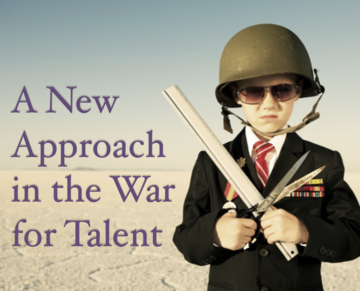
“The process of focusing on creating a favorable impression of your organization through the talent management process (recruiting, onboarding, performance, and development) is known as the employee experience -- and it's getting a lot of attention,” wrote Schneider.
What Does That Mean?
So, what does that mean? According to Schneider, in a nutshell, a great employee experience is one where the company has thoughtfully and deliberately curated a combination of human, technology, and environmental touchpoints that optimize employee performance and growth while creating a strong sense of inclusion, community and belonging.
Schneider shared three tips for achieving that as shared by Deena Fox, founder and CEO of Brightfox, and a formerHR executive at Amazon and Jet.com. In the time Fox worked for Jet.com, she helped grow the workforce from just under 100 when she started, to more than 3,000 in 18 months. She attributed the rapid growth to the success her team had in building great employee experiences.
Here are Fox’s three tips:
Work on Making it Tangible
Although the concept of employee experience is becoming more widely understood and accepted, people still have a hard time articulating it. In Fox's words, "it's because the term is often used superficially, aspirationally, and without clear alignment or definition among company leaders and employees,” wrote Schneider.
Schneider said the best way to transform employee experience from something that merely exists to an actual program in the workplace, according to Fox, "is to invest in it, conduct a thoughtful organizational exercise in evaluating and defining it, and create a degree of alignment in what people perceive and experience. If you haven't done that, then it isn't being optimized, and there is absolutely room for improvement."
“For example, my organization has a formal onboarding program for new employees,” Fox related. “Everyone goes through it. Although all we really need is their paperwork, we see onboarding as a strategic way to assimilate employees and reduce the time it takes for them to be productive, contributing members to the team. Having this clear direction allows us to survey and measure the employee's experience to ensure that we stay on track.”
Communicate It
Once you've done the heavy lifting and defined the desired experience, it's essential to clue key stakeholders in. Fox suggests leaders "design and implement a communication campaign to build awareness and alignment about your talent experience program among the company's executives, talent acquisition team, and employees."
“Speak it into reality. People can't help you maintain the experience if they don't know the endgame,” wrote Schneider. “If you're like me, communicating my plans to others also adds a layer of accountability and opens the door for future collaborations.”
Power It With the Right Technology
The employee experience is no longer what a company says it is, wrote Schneider. It's what employees tell each other it is. Thus, companies need to invest in the right technology that focuses and emphasizes the employee's experience, not HRs.
"It's critical to implement technology that seamlessly enables employees to take an active role in their own engagement, performance, growth, and development, as well as the ability to provide the company with valuable feedback and insights that shape company culture," said Fox. In addition, "companies that are not investing in employee facing technology (designed for employees, not for HR or recruiting), or are using a set of fragmented systems, are operating in the dark and creating a less than optimal, often frustrating and confusing experience for their people."
Fox noted that most organizations use up to eight different solutions to build their HR technology stack. Examples include applicant tracking, employee data, onboarding, performance management, and learning systems. Unfortunately, most are mutually exclusive and designed for the HR representatives using them. The results are a disjointed experience.