

WASHINGTON––If one person is right, hundreds of credit union leaders are leaving Washington with not just better body language but also the ability to be more “present.”
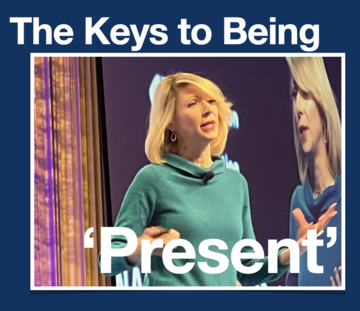
Speaking to CUNA’s GAC, Dr. Amy Cuddy, whose TED Talk, “Your Body Language May Shape Who You Are,” is the second most-viewed TED talk of all time, offered GAC attendees some simple techniques to help them harness the power of presence and perform with confidence, especially under stressful situations.
According to Cuddy, a social psychologist, author and Harvard lecturer, her research has found that “presence is the state where we modify how we see ourselves rather than thinking of the impressions we make on others.”
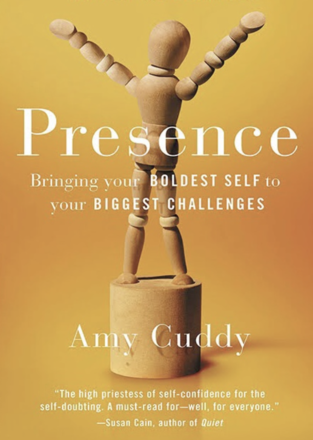
On her website, Cuddy describes her work as focusing on the “power of prejudice and stereotyping, nonverbal behavior, the delicate balance of trustworthiness and strength, and the ways in which people can affect their own thoughts, feelings, performance, and psychological and physical well-being.”
That focus, Cuddy said, can help people become more present, influential, compassionate, brave, and satisfied in our professional and personal lives.
“I want to ask you to think about what in your professional lives is your biggest challenge. What is the situation, the interactions you have that you are most likely to approach with a sense of dread?” she said. “Before it happens you have already decided it has gone wrong and that you will leave with regret. You feel you weren’t seen or understood, that you didn’t fully show up. That you’re not present in any of those stages.”
There are two situations where for many people that is often the case, according to Cuddy: When they are being socially judged and when the stakes are very high.
A Literal Elevator Pitch
As she moved through graduate school Cuddy said one advisor had urged her to prepare an elevator pitch that would always be at the ready so that should the opportunity present itself she could pitch herself for an academic position in her field.
And then at a conference she literally got into an elevator with “three giants in the field,” and she did so with a pitch she had practices “over and over again.” One of the giants actually said, “OK, we’re in an elevator, give us your pitch.”
“All I remember saying was ‘I study.’ My courage was gone. I was rambling. The words made no sense. I was making a Plan B to be a farmer in Vermont,” Cuddy said. “You’re probably thinking it wasn’t as bad as I thought. Well, I thought we had arrived at the 20th floor; it was the fourth.”
When the elevator stopped, two of the men had “run,” she said, while the third stepped across the threshold and as the elevator doors were closing said, “Well, that was the worst elevator pitch I’ve ever heard.” And the doors closed.
“We all experience these kinds of nervous system responses that make it hard to deal with people in certain moments,” said Cuddy. “So, how do we do that with composure, with calming confidence so that you are present. What stops us from being present? What stops us is that in these moments we lack power. Not formal power. Not social power. The difference between social power and personal power is important. Social power is power over other people, the ability to control other people’s states and behaviors. It is zero-sum.”
Cuddy said her favorite quote about power is “Power does not necessarily corrupt. But power always reveals.”
Personal Power

Amy Cuddy speaking to CUNA's GAC.
Personal power is different, she said. It’s the ability to control our own states and behaviors. It is infinite. The more personal power you have has nothing to do with how much personal power others have.”
According to Cuddy, power activates the approach system (an all-is-safe system), while powerlessness activates the inhibition system (an alarm-threat system)
“The approach system makes us see the challenges. I saw that elevator scenario as a threat—I was thinking ‘You are being chased by a tiger, get the hell out of here.’ I also saw the people in that elevator not as potential collaborators or allies who could help me, but as predators. I had a scarcity mentality. If I don’t impress these people, this is it. I felt defensive.”
The approach system, said Cuddy, allows people to be optimistic and open.
“It induces us to be creative and cognitively agile. You are able to be authentic. We don’t see people as predators,” she said, adding the result of the approach system is people are less stressed, are generous and ready to act.
“Presence is not some permanent, fixed state you reach at the end of your state if you’ve meditated enough,” she told the meeting. “It’s being attuned to and able to access and express your authentic best self. Presence is fleeting and that’s OK as long as we can harness it when we need it.”
Cuddy said the word “authentic,” which she said is thrown around a lot now, does not mean unfiltered. “This is the person you are in the moment when you feel the best. It sounds simple, but it’s not. We separate our personal lives from our professional lives.”
Three Qualities
According to Cuddy, presence reveals itself through three qualities:
- We believe our story
- We convey confidence without arrogance
- We communicate harmoniously.
“Confidence is a welcome gift. When you are working with clients they want you to be truly authentic in a grounded way. That is so reassuring. Arrogance is threatening and off-putting,” she said.
All of that leads to issues related to body language.
“What we convey through our body language is emotional information. The same with our words. When people are lying, those things fall apart,” Cuddy explained. “When people are lying, the best way to tell based on body language isn’t eye contact, as people say. Eye contact is not a good signal. There are differences in cultures and personalities and how people are raised. What is useful is looking for what we call non-verbal leaks, the moments when the words do not match the body language.”
A Lesson from Shark Tank
According to Cuddy, people are good with words, “OK” with the facial expressions, but “terrible with the lower body language.”
“A great place to look for all these things is the show Shark Tank. When you look for these three things you will become much better at predicting who does well,” she said. “We want to invest in people who are passionate and confidence and tell us a story we don’t believe. They don’t have to be slick. You absolutely have to have the language, but the way you present it matters.”
Presence, said Cuddy, begets presence.
“You can’t build trust. Trust is the conduit of influence. Not ideas, trust. Trust is the medium through which ideas travel,” she said.