

PLANO, Texas–It’s no longer about the individual transaction with the member—instead, success lies in the “forever transaction.”

Robbie Kellman Baxter
Robbie Kellman Baxter said credit unions may have been among the pioneers of membership organizations in the U.S., but a new world of membership models and subscription plans has emerged in ways CUs must give attention.
A former Netflix executive and author of several books, Kellman Baxter shared her insights as part of Catalyst Corporate’s Forum.
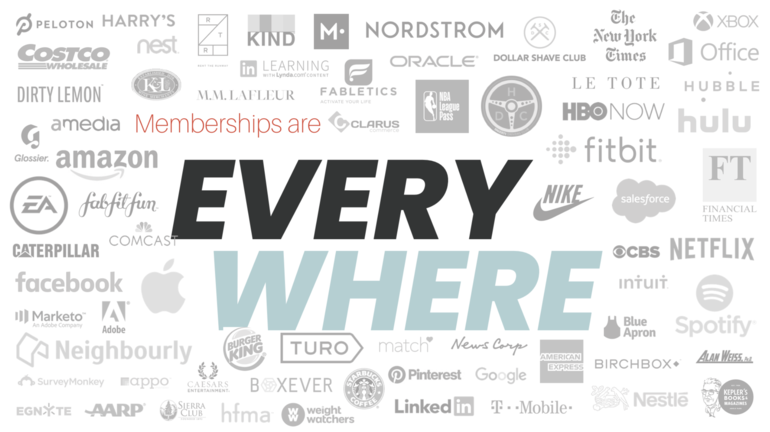
It isn’t just Amazon and Walmart offering subscription plans, such as Amazon Prime, but companies that include CVS, Apple, HBO, Disney, LinkedIn, Zoom and more.
That includes subscription plans offered by some companies long entrenched in traditional business models, including Caterpillar, which offers customers a subscription to heavy equipment rather than ownership, and Burger King, which offers a $5 a month subscription for coffee. The idea, she said, to help consumers make a habit of getting breakfast at the fast food restaurant chain..
“This is something virtually every corner, every segment of industry is investing in,” said Kellman Baxter.
The chart below shows the companies that offer subscription-based services in some way.
Kellman Baxter said one commonality Netflix and credit unions share is having an “ongoing relationship” with their respective members, and a perception of providing quality to the consumer.
“Everybody wants to Netflix it,” said Kellman Baxter. “There is a massive transformation going on. Every organization is shifting their attention from being product-centric to customer-centric, from quarterly revenue to lifetime revenue, from one-way communication to a conversation, including a conversation among the members themselves under the brand of the organization.”
Kellman Baxter noted that five years ago she had to take time to explain the subscription model. That is no longer necessary.
“What I hear now is movement from the what and the why to how to build the model,” she said.
Membership Economy
Kellman Baxter calls the new reality a “membership economy.”
“At the heart of the membership economy is what I call the forever transaction. This is a new world and things are changing, including for organizations,” she said.
Kellman Baxter said the appeal of the model and consumer acceptance are the reasons there are so many new entrants.
“The good news is people understand what a member organization is. They are willing to put on a hat and stop looking for alternatives,” she said. “The bad news is there is so much going on in the world of subscriptions that consumers are weary and picky. They want the user experience of Amazon. They want you 24/7. They want to know, ‘Why can’t you read my mind about what some of the big tech firms are doing?’”
Kellman Baxter said credit union leaders must understand what is going on in the world around them, and they often need look no further than their own experiences. All of it is creating “subscription fatigue,” according to Kellman Baxter.
Three Reasons for Fatigue
There are three reasons for subscription fatigue, she said.
Lack of Product Market Fit
“It’s about providing them with an ongoing suite of benefits that justifies their loyalty to you,” Kellman Baxter told the meeting. “But it’s not just at the moment of transaction and what you promised to get them in the front door; it’s what you deliver on an ongoing basis.”
Kellman Baxter said it’s impossible to make the experience good for everyone. But what is possible is what is also necessary: specializing and focusing and not just on the moment of acquisition.
Subscription Overwhelm
Consumers often feel overwhelmed by subscription options. “It’s where people don’t understand it. They feel bad about themselves because they are not using the benefits they are paying for and they want to cancel,” said Kellman Baxter. “I’ve seen this happen with meal kits.”
Hiding the Cancel Button
Kellman Baxter called hiding the “cancel button” preventable and the worst sin of businesses with memberships. These are the businesses that make it easy to join, but hard to leave, she said, observing, “This does allow you to hit a quarterly number, but what it also does is it gives you a bad reputation and damages your brand equity.”
Getting Inoculated
So, how can a credit union inoculate members so they aren’t thinking about leaving and instead want to stay?
According to Kellman Baxter, there are three ways, all of which fall under the broader umbrella of Launch, Scale and Lead.
Launch/The Forever Promise
“This is about understanding who are your members and who are not your members,” said Kellman Baxter. “It says for this group of people, ‘I promise to help you achieve your goals and promise to improve on ways to do that. You gather resources, set expectations, define a forever promise, and identify your best members.”
Scale/Transformation Across the Organization
Kellman Baxter said she has seen some organizations that have always been membership based, but the business is all about the product.
“They ask, ‘How many credit cards do we have?,’ as opposed to metrics around ‘How fully are we solving ongoing problems for each member.’ It’s not just about the transaction, it’s about the predictability of their ongoing behavior.”
Lead/Play the Long Game
Metrics must be used to play the long game, according to Kellman Baxter.
“Don’t add a small fee to hit a goal,” she said.
Instead, this approach is about having trusted relationships, especially with the more loyal members.
“Resist shortcuts. Stay forever young. Inoculate yourself from subscription fatigue by keeping a global perspective,” she advised. “Use your microscope and your telescope.”
Onboarding
In response to numerous questions related to onboarding by Catalyst Forum attendees, Kellman Baxter said getting onboarding right requires an understanding of what happens in the seconds, minutes and days after joining an organization.
“What’s interesting to me about the onboarding experience is often the people who are most difficult to onboard are the ones most seriously considering what it’s going to be like to do business with you,” she said. “It’s in this moment when they are really enthusiastic that they can seem really difficult, but it’s because they are trying to make your products and services part of their experience going forward.
“Look at your best members, the ones that joined with one service and now have more services and have brought in their children,” she continued. “Figure out who are your best members vs. your not-best members. What conclusions can I draw about the differences between those two groups. If I leave you with one thing it is the secret to this forever transaction is loving your members and their mission. It’s not just your product, people and process.”