

MEMPHIS, Tenn. – A long-time credit union CEO who retired and now works for a firm that helps CUs renegotiate contracts to save money, is sharing his interesting vision on the CU movement now that he has a new perspective.
Frank Berrish, who was with Visions FCU for nearly four decades, responded to CUToday.info’s questions as part of The Corner, including his thoughts on the “womb to tomb” philosophy of his former credit union, and what he sees happening with the “people helping people” philosophy of the movement.
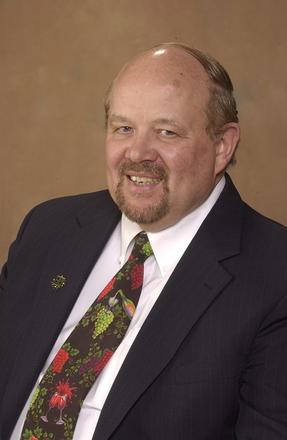
Frank Berrish
CUToday.info: How did you come to be involved in the credit union community, and why have you stayed involved?
Berrish: I was with a large bank and was solicited by Visions Federal Credit Union to serve as its chief financial officer. Visions was much smaller, but I saw an opportunity for growth and a deeper involvement with the institution. When I started at Visions its only location was in the basement at IBM, but we soon opened our first branch in a regional mall. This was the beginning of a great era of growth for the credit union. When I retired from Visions it was a $3.1 billion financial institution, making it one of the largest in upstate New York. I didn’t know it when I walked in, but I would spend the next 38 years of my life with Visions, ultimately leading the helm as president and CEO for 32 years. During my tenure, I had the pleasure of serving on the board at NAFCU, CUNA and state leagues, all of which I still am very active with. I’ve built lifetime relationships and my credit union family will always be close to my heart. Working on the board at SRM allows me to stay involved in the movement and continue to play a role in its progression.
CUToday.info: Has your perspective changed on credit unions since retirement? What do you see now that you didn’t perhaps fully see while at Visions?
Berrish: I wouldn’t say that my perspective has changed, but the context I live in certainly has. I believe this is the stage in my life where I should give back. So, I have stayed involved with NAFCU and CUNA, helping with education efforts and speaking engagements. On the other hand, I have found it difficult to find a credit union that I feel carries out the vision that is so important to what makes credit unions unique.
Our philosophy at Visions was driven by helping members “from the womb to tomb.” We were there for their entire lifecycle. Now that I’ve taken a step back, I have realized that a lot of credit unions fall short of this vision; many are just focused on lending and that is disappointing. I knew this was happening, but to see if first-hand was jarring. The industry needs to make a more concentrated effort to help members save and meet their other financial needs more proactively.
CUToday.info: What lessons in managing and leading a credit union did you take away from your career, and what advice do you have for new CEOs?
Berrish: My era began in the 70’s, when it was all about people helping people. That service-oriented view has been lost for many credit unions; there is a Wells Fargo Syndrome sneaking into the cultures of credit unions around the country. Branch managers are at risk of being fired for missing their sales quota. What these credit unions neglect to see is that managing human emotion and member service can be much more impactful than sales quotas.
Institutions that continue to put too much stock into sales will lose the ability to build a long-term member base that returns value to the credit union as a whole. I’ve come across credit unions that are growing in accounts but are losing members year over year. Bringing in new accounts is great, but doing so at the sacrifice of longstanding member relationships is a very nearsighted strategy.
My service philosophy has always been threefold, in this order: first, take care of your members; secondly, offer your staff a great environment and benefits; and then worry about your profits. If you do one and two correctly, the third will come automatically.
As an example, credit unions should leverage tax advantages to pay dividends higher than their competitors, offer the lowest loan rates and maintain a lean staffing of stellar, well-educated employees whom they compensate well.
CUToday.info: You are currently doing work with SRM, a firm that helps credit unions optimize their vendor contracts. What does that involve, and why is it important?
Berrish: When I was a CEO, I thought I knew everything when it came to making deals. I now realize that I was more of a comparison shopper. I would choose the lowest bid out of two or three vendors and would even haggle sometimes. I was doing the best I could with my limited knowledge, but I never knew just how much money I left on the table.
This is still the case for many executives today. To no fault of their own, a credit union executive’s high-touch role simply does not allow enough time to amass the market data required to manage vendor contracts. Once SRM steps in to identify where savings might be, it’s practically a treasure map. The best part is, if SRM doesn’t perform, they don’t get paid. I sometimes have to argue with executives who feel like it’s somehow the admission of a personal flaw to involve outside firms. It isn’t.
The job of a credit union executive is to focus resources where they deliver best value to the members. Finding a firm of experts who can deliver savings and revenue enhancement opportunities shows you are doing your job well, not otherwise. This all ties back into the original credit union philosophy of people helping people. SRM’s goal is to help credit unions lower expenses, allowing them to do more for members – that’s what it’s all about.
CUToday.info: What is your view on the future of credit unions, if there is to be one?
Berrish: I worry that credit unions are getting too big for their britches and I hope that industry leaders can help pull them back down to reality. Credit unions need to focus on serving a well-defined community. They cannot be all things to all people across every geography. They can, however, provide the lowest loan rates, the highest dividends and consistent charitable involvement within their own communities. This is what will set them apart from their competition, even with regional banks. If the industry fails to focus on meeting banking needs for the everyday person, we risk going the way of mutual savings banks and S&Ls.
Lastly, directors need to be educated. I have seen a lot of directors burnout due to a lack of proper training. You can’t afford to not have the time or not be at your best. Continuing education is a necessity regardless of how long someone has been on the board. You owe it to your members. I have stayed involved with NAFCU and CUNA, helping with education efforts and speaking engagements. I believe that this is the stage in my life to give back.