

CAMBRIDGE, Mass.–Gene Foley, the well-known and longtime leader of Harvard University Employees Credit Union, has announced his retirement effective this month, and is offering some parting wisdom on lessons learned during his career and more. Foley has been CEO of the credit union for the past 25 years, and first joined HUECU as a teller in 1979.
During his career, Foley oversaw growth from less than $90 million in assets, to more than $1.3 billion in assets under management.
When Foley first announced his retirement, the credit union issued a statement saying, “His dedication, innovation and leadership have been key to driving this nearly 10‐fold growth over the past 25 years. Constantly leading the credit union to diversify, grow and evolve, Gene looked for the financial pain points in the lives of our members and the institutions we serve; he then developed innovative and equitable products and solutions to best meet these needs….Gene Foley exemplifies passion and dedication."
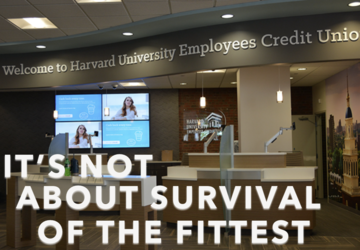
Below, Foley shares his thoughts with CUToday.info as part of an Exit Interview in which we capture some of the insights and lessons learned by retiring CU leaders.
CUToday.info: How did you come to be involved in credit unions?
Foley: I graduated from Boston University in 1978 at the height of the energy crisis, high unemployment and stagflation. I was lucky enough to land a management training job at a local community bank. I was miserable, but intended to stay just long enough to make money to return to the New York City area where I grew up and attend law school. The bank was then sold and the atmosphere became really toxic, so I decided to find another job.
I settled for a teller position at the Harvard University Employees Credit Union thinking I would only stay there for a year. I had no idea what a credit union was, but I thought this would be a good opportunity for me to fool some Harvard professor into writing me a recommendation for law school. HUECU had about $20 million in assets then and was small enough for me to get involved in every aspect of the operation. Within two years, I worked my way up to the number two position.
I totally embraced the credit union mission. Instead of moving to NYC and getting a law degree, I met my wife and earned my MBA. It was the best career decision I ever made and, ultimately, I did get that graduate school letter of recommendation from a Harvard economics professor who then went on to become a Nobel Laureate.
CUToday.info: What have you learned about driving and managing growth during your career?
Foley: HUECU has enjoyed double-digit growth year over year for most of the past decade. I have actively pursued getting larger as a robust indicator of our competitiveness, but always shunned growth just for growth’s sake. It has to be well-planned and strategic growth for it to be healthy, and once you build that engine it just starts to feed on itself.
As CEO, I have taken this organization from $90 million to over $1.3 billion in assets under management without ever doing a merger or changing our charter. My strategy has been to find the pain points in the lives of our members and the organizations we serve and then develop customized products to meet those needs. Serving the Harvard community is paramount for us and I have dug this institution deeply into the veins of that brand. Gaining the ability to add students and alumni to our field of membership was difficult and took a long time, but ultimately this cemented us squarely in the life of the University and became the major contributor toward almost tripling our membership.
The most difficult aspect of driving growth has been in managing the impact it has on your culture. Over my career, I have learned that in order to be successful you have to create an environment that will attract talented people and then focus the organization on employee engagement, while ensuring that every employee is held accountable for our success.
CUToday.info: What have you learned about managing people, and has that changed or evolved?
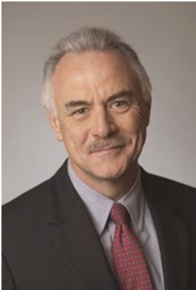
Gene Foley
Foley: I was 38 years old and only had about 25 employees when I became a CEO; so I have had a pretty steep learning curve regarding managing people. Add to this that our workforce has become significantly more higher educated, ethnically and culturally diverse, talented and demanding over time. I feel that managing people is a leadership skill that is constantly evolving and no matter how good you are at doing it, you’re going to make mistakes along the way. It is also the most challenging aspect of any job.
In addition to constantly honing your personal skills as a manager, you have to reconcile the changing cultural work ethic in society with the culture you’ve created as the leader of an organization.
For example, the concept of “work / life balance” didn’t really exist when I was coming up, whereas now it is more normative and the culture of the organization needs to reflect that new work ethic in order to stay competitive.
In my own journey, I feel the lesson I have learned is to concentrate on people’s strengths instead of their weaknesses and try to put them in the best position possible to leverage these strengths and excel.
CUToday.info: If you could go back and offer yourself some advice on day one as CEO, what would it be?
Foley: In my case, it would have been “have patience”; change is scary and hard for people and you are not leading if no one else is following. I was so anxious to make my mark and imprint a fresh vision on the organization that I neglected to win the confidence and trust of all constituents first.
The credit union was somewhat lazy, dusty and tired when I took over; our loan-to-asset ratio was under 25% and I tried to change everything at once; our organizational structure, our physical space and our business model.
Luckily I didn’t do any real damage, but I was unreasonable in thinking that you can change the culture of an organization overnight as long as you have compelling ideas. It takes a long time to affect meaningful cultural change and it goes a lot easier if you take some early wins by picking the low hanging fruit first. I would have saved myself and others a lot of frustration if I were more patient in those early days.
Ultimately we have enjoyed incredible growth and profitability over the 25 years I’ve been CEO. Not only have we made a positive return every single one of those years, but in over 300 plus consecutive months, I have never had to report a loss to our board.
CUToday.info: What is your view on the future of credit unions, if there is to be one?
Foley: First, this global pandemic has cut deeply across every artery in the economy, credit unions included. The next few years will be seminal in defining the industry’s future. I remember reading that there is a common misinterpretation of “Social Darwinism.” The theory is not “survival of the fittest,” but rather survival of the species most adaptive to changes in the environment. I believe this holds true for our credit union model as well.
Credit unions will need to be unique and meaningful in the marketplace in order to thrive; it won’t be enough for us to just be “better than a bank.” We need to win the heart of the consumer and creatively develop and customize products and services that fintechs and other financial service providers wouldn’t touch.
While each credit union is unique and largely successful in its own strategy and market, I feel that the future of the industry and our charter is contingent upon leveraging our cooperative structure collectively to address the most pressing economic issues in our society; homelessness, crushing student debt, financial elder abuse, identity theft, lack of financial literacy, economic inclusion and escalating wealth disparity as some examples.
We are bright, innovative and caring people and we have been doing some of this, but we need to do a better job collectively by leveraging our trade organizations and CUSOs to create sufficient scale and position credit unions as a truly differentiated provider in the financial services marketplace.