

EL SEGUNDO, Calif.–A former credit union CEO who is now the current chair of the Global Women’s Leadership Network has a written a new book and also has a message: “Men, we’re talking to you.”
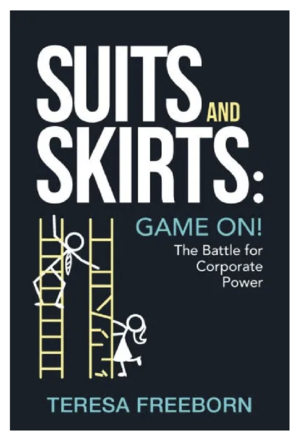
Teresa Freeborn, who was president/CEO of Xceed Financial CU before it merged into Kinecta FCU, where she served as president until year-end 2021, has published a new book, “Suits and Skirts: Game On! The Battle for Corporate Power.”
“There is a battle for power at all levels within corporations throughout the world. This battle is between men, ‘the suits,’ and women, ‘the skirts’,” a synopsis of the book states. “Unlike the Sharks and Jets, who battled for neighborhood territory in West Side Story, the Suits and the Skirts are battling for power in the workplace. For a chance to move up the corporate ladder. For a chance at the boardroom table. For the same opportunities and positions of power that men already have—and are determined to keep for themselves.
“Women make up nearly half of the workforce yet hold only a small fraction of the positions of power and leadership,” the book description continues. “Women have spent decades fighting for equality in the workplace, and the needle hasn’t moved in any significant way. Women tried playing nice and that didn’t work; now, they’re not going to be playing so nice anymore. They are demanding what they are due and parity is long overdue.”
According to Freeborn, the book offers insights into:
- Why men fear women in leadership roles (needlessly)
- How men block women from these leadership positions
- What businesses need to do right now to create equity, parity, and equality in the workplace
- Why these changes will put more money in everyone’s pockets.
Below Freeborn shares her thoughts on what led to the book and more in this CUToday Q&A:
CUToday.info: How did this book project come about?
Freeborn: I have spent my career in credit unions both in Canada and the U.S., and while I was doing my day job I was always a champion of advancing women in leadership. To take a phrase out of the old movie Network – “I’m mad as hell and I am not going to take it anymore!” I am seriously tired of hearing the statistics that clearly lay out the lack of progress. Women have been seeking power equity for decades – to no avail.
My thesis is, that it is men who are keeping women from attaining powerful c-suite and board position to the detriment of corporate bottom lines. The reasons vary, but the results do not. Just do the math. No matter how you spin it, women are still highly underrepresented in leadership roles.
I specifically directed this book to men, quite frankly, because I didn’t see any other books out there that did. There are plenty of books directed at women, plenty of conferences, articles, symposiums, all designed to help women advance in corporate leadership. But I believe it is time we talk to the men who are the real reasons women aren’t advancing at the rate they should.
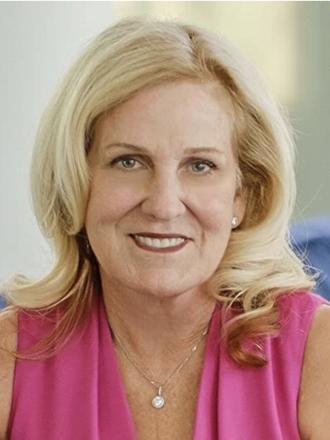
Teresa Freeborn
So, I am calling out men to look at the hard facts, demanding that men re-evaluate and acknowledge their behavior and become women’s advocates instead of adversaries. It’s about change that only men can control.
CUToday.info: Have you written any prior books?
Freeborn: No. holding down a CEO job while raising a family and managing a household, immersing myself in my industry’s initiatives, issues, and causes, championing women’s advancement, and mentoring young women, never left much time to put pen to paper to communicate what I had been longing to for decades.
CUToday.info: How much time was involved in the project?
Freeborn: It took about 10 months to write it and then another eight months to edit and polish it. I also conducted some primary research. I wanted to make sure that the men reading this book understood that what I discuss in the book is based on fact and not just my opinion. This ishappening and the data proves it is happening.
CUToday.info: What messages do you hope both men and women come away from this book with, and how do those messages differ?
Freeborn: For women, I hope this book helps them find their voice as well as agitate them to get as fed up as I am about the lack of progress. The feedback that young women who have read the book give me is that although they know it is written for men, they view it as a playbook. After reading it, they feel they can better respond to the atrocities they witness in the workplace–still.
For men, I view it as a disruptive challenge. This ‘woman problem’ is a serious issue and believing there isn’t a problem is just nonsense. It’s a mindset that men have to alter. Women are your equal and you have to know it, believe it, and behave like they already are your equal. You must think it and continue to think it every minute you are in the office.
Having the right mindset, for all the reasons I meticulously spell out in the book will help them become advocates instead of adversaries. They have the power, and they have to use it to make space for talented women even if that includes stepping down, stepping back, or stepping sideways.
CUToday.info: What do men misunderstand about the message you are seeking to convey?
Freeborn: First of all, the most critical misunderstanding is not believing there is a problem. Just start counting the women represented in your management ranks and at your board table. Ask the women you work with if they think your credit union has gender parity. And do not think for a moment that it is something that can be quickly fixed with a DEI program.
That men fully acknowledge that they are the credit union’s ultimate gatekeepers, the guardians, and the bottlenecks--that in itself, doesn’t seem like a problem to them, but the truth is, leaving women out of senior positions puts their credit union at a significant disadvantage. When you only have men weighing in on decision making, you are not getting the best ideas or the best results. Fact: more gender balance in a corporation boosts business and profits.
CUToday.info: What do women misunderstand about the message you are seeking to convey?
Freeborn: Some women aren’t comfortable with men stepping down or aside to make room for women in positions of power. They tell me that they don’t want to get the job/position because a man got out of the way. That they want to earn it. Well, my response is that they have earned it, they’re just not getting it. This isn’t entitlement I’m talking about - it’s about roadblocks and fossilized beliefs about women, it’s about the boy’s network – no girls allowed.
CUToday.info: What do you think will most “ruffle people’s feathers” about this book?
Freeborn: I wanted to write a leadership book that would get the attention of my reader. Even the title might piss-off someone. I wanted the reader to get emotional about what I am saying – even if they vehemently oppose my statements and conclusions. Because it is emotion that will create the change that is so required. So, I felt committed to present my views in a no-holds-barred fashion – knowing full well, that some would not agree with I am saying.
The “battle for power” is a dominant theme underlying the book’s message. “Power” can almost imply a ruthlessness and empowerment of the individual at the expense of others and the organization, and could be interpreted as running counter to cultures in which teamwork is emphasized. CUToday.info: How do you respond to those who might see this as advising a “rise to the top at all costs” mentality?
Freeborn: That it is simply not true. I think of the word “power” as being a male word. Since men are my audience, they might just pick the book up because of the title. Interesting, but I consider your words “a ruthlessness and empowerment of the individual at the expense of others and the organization” to describe the attributes of a lot of corporate male leaders today. I am actually suggesting leadership can be much different – more collaborative, more empathetic, more inclusive with gender parity. Read the book – you’ll see!
CUToday.info: You’ve spent your career in credit unions and are obviously best known for your role at Xceed/Kinecta. In your view, when it comes to this power imbalance, are credit unions different than other organizations? If so, why?
Freeborn: I don’t think they are different. Let’s face it, the majority of credit union employees are women but as you move up through the ranks to the more increasingly responsible executive roles, the percentage of women drops--like a rock. My view is that the percentage of women in management roles should represent the percentage of women in the workplace.
And, further, although the majority of credit unions are run by women, the larger the credit union, the more likely you are to see men at the most senior levels. Although I truly respect the amazing work that those women CEOs of smaller credit unions do, men simply won’t work for the corresponding pay rates at the smaller institutions.
CUToday.info: Do you have an anecdote or two to share from your time in credit unions where you witnessed the kinds of things you’re talking about taking place?
Freeborn: Although we would all like to believe that the kinds of behaviors and that take place in corporations don't exist in credit unions, unfortunately, they do. The book gives many of my own real-life experiences in confronting the fossilized and stubbornly harbored myths that men hold about women, the outright sabotaging, the misogyny, discrimination, chauvinism and a solid workplace culture still ingrained with all of the institutional biases and sexism that keep women from advancing in the senior leadership ranks.
The research that I conducted and referenced in this book proves that all of these things still exist. The struggle is real. Just ask the women. They'll tell you.
CUToday.info: What is your advice for any young leader, male or female, who may be beginning in credit unions?
Freeborn: That a career in credit unions is gratifying and noble work. Stick with it, as it will not only allow you to achieve career success, it will give you the enviable opportunity to help people solve their financial problems and place you firmly in the community the credit union operates in.
I do advise that young women and men pay attention to the solid fact that there is a corporate problem of inequality, even if they don't think so. Men consciously or unconsciously hold women back and that to ensure the business is as successful as it can be, they need to be a large part of changing this corporate culture. Take note of the gender representation at your credit union, accept the fact that men hold the power and therefore have the responsibility to develop the necessary strategies to make the change required.
Champion the change by advocating for gender parity in decision-making roles. Simple fact - more gender balance, better decision making. Better decisions - more success.
CUToday.info: Do you have any other points we might have missed?
Freeborn: The book gives some real tangible advice on how men can fix this 'woman problem.’ And the book is about recognizing the situation we are in and strategizing how to effect meaningful, quantifiable change. And we need men to play a much bigger role in making that happen.
CUToday.info: In a slight topic change, could you share an update on your work, what is taking place with Global Women’s Leadership Network?
Freeborn: GWLN was one of the first women's leadership networks to surface in our industry. I am astounded by the number of sister societies that have been created, not just in the U.S., but throughout the world wide credit union movement. The need for these network is apparent; women are struggling to attain their rightful place in the leadership of our industry and they have embraced the opportunity to immerse themselves in all that GWLN provides to learn and develop the relationships that will help them in their journey.
CUToday.info: Are the issues you raise in the book discussion points within GWLN, or did discussions inside GWLN contribute in any way to the book?
Freeborn: My involvement in GWLN has shaped my thinking and my thesis of the book. The many conversations I have had with my colleagues around the world have validated a significant amount of the conclusions and strategies I present in the book.
CUToday.info: How does one order the book?
Freeborn: Amazon.com, Barnes and Noble, and other book sellers