

MADISON, Wis. – There aren’t many people who in the course of their credit union career have been chased by monkeys or had a Molotov cocktail thrown at them. But Lois Kitsch has.
Kitsch, whose diverse career has included credit union-related work in more than 40 countries, including in war-torn areas, has announced plans to retire from the National Credit Union Foundation on May 1. Tributes to Kitsch when she announced her retirement can be found here.

Known for her work with the World Council and the Foundation’s Development Education (DE) Program, Kitsch was named a winner of credit unions’ highest honor, the Herb Wegner Award for Lifetime Achievement.
Before Kitsch departs from the Foundation (although she won’t be leaving credit unions), she shared some of her experiences, insights and lessons learned in this CUToday.info Q&A.
CUToday.info: How did you come to be involved in credit unions, and then transition or move into the role you have played with the Foundation?
Kitsch: I became involved in my first credit union in North Dakota in 1980. I had been a bank teller and my former father-in-law suggested I reach out to my local credit union. He was a strong supporter of credit unions and believed that I was a good fit. In the 38 years since that time I have worked with four credit unions, the World Council of Credit Unions, the Filene Research Institute and the Foundation. I came to the Foundation when a Filene program which I was leading – REAL Solutions - was transferred to the Foundation.
CUToday.info: Talk about some of the roles you have played at the Foundation (outside of international assignments, which is the next question)?
Kitsch: At the Foundation I have primarily worked on programs and grants. These programs have included REAL Solutions, now absorbed by the Foundation; experiential learning programs, such as life simulations, retirement and reality fairs, and the DE program. I think closet to my heart is the DE program. There is something very powerful about putting 48 excited credit union professionals together for six days of intensive training. Our DEs call the experience transformational from both a personal and professional perspective. It is a truly inspiring to watch this transformation happen with people from varied backgrounds, countries, ages and ethnicities.
CUToday.info: How many countries have you travelled to on behalf of credit unions, why, what do you recall most from those experiences, and what would surprise CU folks in the U.S. most about credit unions/co-ops there?
Kitsch: My last count of countries is around 55 visited and about 40 of them have been for doing some kind of credit union work. What is so gratifying to me is the similarities of problems, life goals and financial struggles of members and the work that credit unions are doing to bring about positive change.
I think what would surprise Americans is how far ahead of us developing countries are in payment systems, in building development projects and running progressive credit unions. For example, people in the Philippines were using text messaging years ahead of us in the states. In Kenya and other African countries, MPESA is a payment system that happens through cell phones is a huge part of the financial system there. One can pay for groceries, gas and transfer money to friends through cell phones – and this has been working for more than 10 years.
Credit unions are trusted partners within their communities and are providing answers to difficult development issues. I think people would also be surprised in the similarities between credit unions in the global movement. In Africa, credit unions are called Saccos, in Romania they are called Cars, and in the Philippines they are called Credit Cooperatives. They all share the global operating principles and a desire to improve the lives of members.
CUToday.info: What might strike most people most is your work in Afghanistan? What did you do there, what was that like, what were your security concerns, and is the work you did still in operation today?
Kitsch: Afghanistan is a beautiful country. I loved my time there, but it was the most difficult place I have ever been. I was sent there to secure funding to build a credit union system within a war-torn country where 95% of the people had little or no access to banking services. The funding was secured and the World Council went on to build a strong cooperative network there.
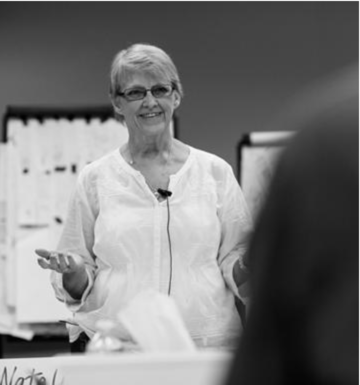
Lois Kitsch.
Today the credit unions built there are still growing and providing financial services to people who really need them.
During the last 20 years I have dodged land mines in Afghanistan, been chased by monkeys in Kenya, I have been on two airplanes where engines failed on take-off and had a Molotav cocktail thrown at me in Haiti. I have seen a president be impeached in the Philippines all while working with credit unions. Yet, in all of these years, I have never been afraid in my travels. While in Afghanistan I traveled with between four and eight armed guards who became my brothers. I was careful to follow local traditions and customs, but trusted that they would keep me safe from harm. And they did, even when I unwittingly put myself in danger.
CUToday.info: What is your view on the future of credit unions, if there is to be one?
Kitsch: I think the future of credit unions is very strong – especially for those that recognize the business opportunities in living our mission. When I think of credit unions, I think of a pendulum that swings gently between social and business opportunities – if the pendulum swings too far to the social side, financial failure is likely. If the pendulum swings too far to the business side, we lose the competitive advantage we have in living our mission. So if credit unions live their mission and do the right thing they will flourish.
CUToday.info: Tell us about your new endeavor.
Kitsch: I am very bittersweet about leaving the Foundation. The Foundation has been extremely good to me and I believe in the value that the Foundation brings to the movement in so many ways. The Foundation is a catalyst for change in so many ways. I love my work here and leaving was a hard decision to make.
However, after many years I am ready to take on new things. I also recognize that change is good for any organization and excited that our new DE Director – Chad Helminak - will bring new talent and energy to expand the reach of the DE program.
My second professional love – beyond DE – is international development. I plan to do far more international work. In fact, I am leaving my first day away from the Foundation to work with ACOSSCA in Kenya and Ethiopia. I am also very excited to be a co-founder of a credit union business enterprise to work with my friend Mark Lynch. We will be providing training, facilitation and coaching programs for credit union organizations interested in working with us