

Editor’s Note: This interview was conducted by Mitchell Stankovic and Associates with editing by CUToday.info
IRWINDALE, Calif.–Dan Rader believes the cooperative model remains a differentiator for credit unions.
After 24 years at the $936-million SCE Federal Credit Union in Irwindale, Calif., the finish line is in sight for Rader, whose career is culminating after five years as CEO and with the credit union experiencing unprecedented growth.
“Our members trust us, and the diversity of our field of membership is allowing us to serve people within the community,” he said. “Our founding select employer group, SCE, provides an incredible opportunity to fulfill our mission ‘To improve the lives of our members, communities and team’ from Los Angeles to Las Vegas.”

The SCE board has been working with Rader on a leadership transition plan over the last year, knowing that he would be announcing his retirement for second quarter 2022.
“Dan will be tough to replace and we value all that he has done for our members,” said Chairman Patrick McCloskey, Working together, the Board is ready and considers this transition their highest priority. Susan Mitchell, CEO of Mitchell, Stankovic and Associates is a valued strategic advisor for SCE,” noted Patrick McCloskey, Chair. “She and her firm have been working with us for many years, so they know us, our culture and what will be needed in our new CEO to position us as a billion-dollar credit union in the near future.”
Mitchell, Stankovic & Associates is handling the search for a successor.
Under Rader’s leadership, SCE has become a force as a low-income designated dredit union and a community development credit union affecting communities from Boyle Heights to North Las Vegas market areas. SCE FCU has retained its strong net worth despite the huge increase in assets.
“The next leader of SCE FCU will have a strong foundation to build upon that includes the executive leadership, strategically focused board and well defined market area with potential to increase member impact,” said Mitchell.
SCE has insurance and mortgage CUSOs, wealth management service, financial counseling, and a foundation that gives back to the membership through scholarship and extensive youth educational initiatives. “This will be a wonderful opportunity for the right leader,” Mitchell added.
Reformed Banker
A “reformed banker,” Rader has worked at just three financial institutions during his lengthy career, starting with Citizens Bank of Pasadena in 1983, where he rose to vice president and controller. In 1987, he became chief financial officer for First Professional Bank in Santa Monica, Calif., and in 1997 he joined the credit union movement as SCE FCU’s CFO. He was tapped to be CEO when Dennis Huber retired in 2016.
Over those nearly four decades in the financial services industry, Rader has seen numerous changes and has had to help guide his institutions through stretches of devastating economic turmoil, including the housing crisis and Great Recession of 2008-09, and the coronavirus pandemic of 2020-21. Through it all, Rader has kept his sense of humor and has continued to learn every day.
Rader said one of his biggest lessons about the credit union world came early after his transition from a bank to a CU. He began his credit union career just as fields of membership were expanding and regulators were making mergers easier. But what really stood out to Rader was the willingness of CUs to share what seemed to his then-banker’s mindset to be proprietary information.
“The cooperative nature of credit unions sharing best practices was the first thing I noticed,” he recalled. “It took me a while to get used to that attitude, but it was really nice to have other credit unions available to be resources. With the expansion of fields of membership, credit unions did move down the path toward competing with each other.”
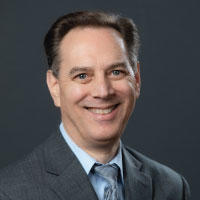
Dan Rader
Putting Things In ‘Perspective’
Rader credits the trade associations and the leagues for stressing the need for credit unions to continue to work together.
“They emphasized the fact credit unions were a small part of the financial services industry,” he noted. “I didn’t know much about credit unions, other than they had good rates on loans and I presumed they were difficult to join. But the trades and the leagues pointed out all credit unions put together did not equal the largest bank. That put things into perspective for me, and why credit unions need to work together as much as they can. The market was so big, there was enough for all of us.”
In Rader’s mind, that concept is still true today, and he pointed to the many occasions when credit union CEOs get together and share their challenges or lessons learned.
“There are a lot of forums for an exchange of information. The leagues get people together to ask how they addressed a challenge. I am in an area that now has a lot of overlap, but I have never felt as if other credit unions wouldn’t share information with me. There are plenty of credit union resources for other credit unions.”
Consolidation in the financial services world has been an issue for years. When Rader joined the CU community there were approximately 15,000 credit unions in the U.S.; today that number is roughly 5,000, and the movement continues to lose 2% to 3% of CUs each year.
Navigating Recessions, Pandemics
The housing crisis and Great Recession took place more than a decade ago, but the pain of those times is still fresh in Rader’s mind. He said the lessons learned from that era helped him navigate the response to the coronavirus pandemic that has turned the world upside down over the past 13 months.
“I was CFO of SCE FCU during the Great Recession. It was different from other recessions because of the housing crisis,” he said. “We took a big hit from the failure of WesCorp. I remember having concerns about WesCorp’s balance sheet and the investments they had so we moved out some cash, but when it failed our capital investment in WesCorp was wiped out.”
SCE FCU did have one factor working in its favor during the Great Recession: it did not have any stated income loans or any mortgages with “crazy underwriting standards,” Rader reported. “The credit union operated a mortgage CUSO and we had to make decisions on which ones to keep or sell to FNMA.”
Another memory that remains fresh in Rader’s mind some 15 years later is the significant discussion during the mid-2000s about credit unions being “overcapitalized.” In response to this notion that excess capital was “a waste,” a number of credit unions reduced their capital ratios to 7%. After the recession hit, those credit unions were “scrambling to survive,” Rader said.
“Some of them saw their capital decline to 5%, or even 4%. They had to close branches and cut services,” he said. “We were still at 11%-12% capital. We took the hit from WesCorp and had to do a lot of work restructuring mortgages. Luckily, rates were zero, so there was not a lot of lost opportunity cost. There were a lot of dead assets on our books, but we never got below 8%. We didn’t have to stop trying to grow, and we actually had a lot of growth. Eventually, a lot of those assets came back.”
One Big Unknown
The current slowdown, which was triggered by the pandemic, is “entirely different,” Rader assessed. “We may get back sooner than during the Great Recession, but a lot still has to play out.”
For example: A big unknown remains that many borrowers are in forbearance, meaning lenders still face uncertainty.
“The pandemic made us figure out how to serve members while keeping staff and members safe. From what I have seen, credit unions have all done a great job,” Rader said. “We had 90% of our non-branch staff working from home in less than a month. We had to scramble to acquire hardware, cameras and multiple monitors. The first two months were about getting everyone home, then we worked on making working from home better.”
Other accommodations to the new normal have included making changes to hours of operation, helping staffers who needed childcare, and retrofitting branches with plexiglass shields and instituting cleaning and sanitation protocols.
“The efforts have worked,” he said. “Knock on wood, we have not had any internal transmission. We have had people test positive, but it traced back to other sources. All of our branches are open now and our people have been great. They have been constantly wiping down surfaces, wearing masks, and limiting numbers of visitors inside the branch.”
Rader believes the rapid adoption of remote working is here to stay. Approximately 72% of SCE FCU’s employees responded to a recent survey by saying they want to work from home three or more days a week; 25% want to work remotely every day.
“I see this as a positive, because it will allow employers to draw from a larger pool when the potential employees don’t have to worry about commute time,” he said.
Banker to CU Lifer
Rader is far from the only reformed banker who has made the switch to the credit union side, but he says the perspective he gained has given him great insight.
“Banks in general have a drive for profit,” he began. “There was a time credit unions felt they needed to be more like a bank – they needed to look toward profitability, charging some fees. The OCC was ahead of the NCUA in making banks look closely at the makeup of the balance sheet. This has changed today, as the Call Report has expanded. When I started, the credit union Call Report was significantly shorter than the bank Call Report.”
One possible trend Rader foresees in the future is credit unions working more with community banks, they value service and relationships.
“This will create a challenge for the trade associations, especially the banking trade associations, who spend a lot of time talking about taxing credit unions. Years ago I said at a group discussion of credit union CEOs I would trade taxation for an open field of membership. Banks should be careful what they ask for. If they tax credit unions, then there is no reason why we should be limited to a field of membership.”
Looking into the Crystal Ball
Rader is generally optimistic about the future of the credit union movement, but he is certain there will continue to be consolidation.
“This is true of all businesses. It is part of capitalism to have continued consolidation,” he assessed. “Frankly, I am amazed small credit unions are able to compete given the increased complexity and regulation. I think they will need to be subsidized through government grants or a company providing space. How does a credit union under $50 million survive? That is a concern. There is a place for them, but they need assistance.”
Rader said his optimism for CUs going forward is based on the fact the cooperative model is a “differentiator” from banks.
“Banks need to derive profit to return to shareholders, so there is external pressure on banks. For credit unions, pressure is internal – ‘How do we grow?’ That is something that will not go away. It is our competitive advantage that we are not in it for the money. People trust us.”
Long-Awaited Vacation
Assuming Rader does indeed stop working on April Fool’s Day 2022, the plan is for he and his wife to take a vacation in Italy that May. Rader is a bit gun shy talking about that trip, as it has been postponed twice by the pandemic.
“We also plan to go to Hawaii in December 2022. After that, we will drive across the country to visit family and friends we have not seen in a long time. We will take our time and really experience the country.”
Rader is not sure if he will stay involved in the CU movement. He noted he has spent years reading about leadership, strategic planning, industry trends, how to be a better CFO/CEO, and how to build culture, which could lead him down the path of being a consultant or sitting on a board, but he has no firm plans as of yet.
“I will read and travel, and I don’t know what I will do next.”