

MEMPHIS, Tenn.— A credit union CEO who during his career helped turn around a troubled CU and built it into one of the state’s largest, and who during his tenure also moved the credit union into a former Wonder Bread factory, is sharing his thoughts as retirement approaches.
Daniel Weickenand, president and CEO of Orion Federal Credit Union, has announced plans to retire at year end.
During Weickenand’s tenure, Orion FCU said it has grown to be the largest credit union in west Tennessee with more than 70,000 members and $1.2 billion in assets. Weickenand began as president and CEO in 2010 of what was then Memphis Area Teachers Credit Union (MATCU), which was under financial hardship and close to failing.

Daniel Weickenand
In 2019, Weickenand moved Orion’s headquarters to the former Wonder Bread facility, left vacant since 2013. OFCU said Weickenand recognized an opportunity to address long-term blight and drive economic development by rebuilding the Edge neighborhood connecting Downtown to the Medical District.
During his career, Weickenand served on the board of NAFCU, on an advisory board for Corelation, and testified before Congress.
Below he shares his insights as part of this CUToday.info Exit Interview:
CUToday.info: How did you to be involved in credit unions?
Weickenand: I started auditing out of college working with financial institutions.
CUToday.info: What lessons have you learned about driving and managing growth during your career, and has that evolved or changed?
Weickenand: Growth is great when it is managed, meaning everyone needs growth in some way shape or form. However, if your institution hasn’t planned for that growth, it may feel like drinking out of a firehose. Planning for growth is a strategic initiative and includes thinking through all aspects from efficiency to risk, including software, infrastructure, customer service, personnel, policies, procedures, asset and liability management, and operations.
The make or break point is knowing whether your institution is poised and ready for that growth.
CUToday.info: What lessons have you learned about managing people during your career, and has that evolved or changed?
Weickenand: My perspective of managing people has never changed: Treat them with respect, set out clear expectations, and provide them with the tools and benefits they need to succeed.
CUToday.info: When you took over a struggling credit union, how did you start tackling the challenges, and what advice you might have for others who are encountering the same?
Weickenand: Taking over troubled institutions seemed to be a theme throughout my career. I always started with an assessment to identify the biggest threats to the ongoing operation. From there, I defined a clear list of priorities.
I worked with my teams to address the largest concerns with the most effort, and at the same time triaged other issues. It’s a natural flow, because all areas of a financial institution are connected, and changes will impact affiliated factors. Changes cannot be made in a vacuum, and you should expect applied overlap.
My advice for anyone in a challenging situation is to keep a positive attitude, set clear expectations of the objectives and timelines, hold people accountable and deliver on your responsibilities and promises.
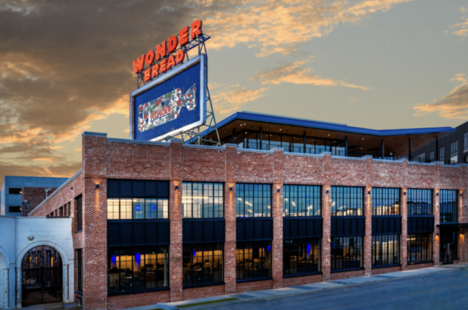
The former Wonder Bread factory that is now credit union's headquarters.
CUToday.info: The credit union moved into an iconic building in Memphis. For readers unfamiliar with it, could you share a few details, how it came to be and what the experience has been like since then?
Weickenand: We were looking into moving our headquarters from the suburbs into downtown and were approached by a real estate group owned by a very influential Memphian who was trying to address blight in a small area between Downtown and the Medical District.
At the time, there was very little activity besides crime in the area around the former Wonder Bread factory, which was over 100 years old and extended the entire city block. With no windows on the outside, it looked like a prison, except for the large neon Wonder Bread at the top of the building.
On our initial walk through there was old, abandoned equipment, the smell of yeast, water leaking, and the copper wire had been stripped from the entire building. It was a sight to behold for sure. You should have seen the eyes of my EVP, Jason, looking at me as we toured the abandoned building. In the end, we decided to invest in the area and our community in a big way.
Now, the Edge District is one of the most active areas in the city with many needed businesses, including non-profits and offices, breweries, restaurants, retail, high-end apartments, and an art gallery. We are happy to report the Orion headquarters has won many architectural awards, but we are even more proud that our headquarters move served as a catalyst for activating a forgotten, blighted neighborhood and connected downtown with the medical district area.
A strong city core creates a ripple effect for development and energy throughout the region.
CUToday.info: What is your view on the future of credit unions, if there is to be one?
Weickenand: The future of credit unions is an interesting question. I believe some credit unions will continue due to their forward-thinking leadership and boards. However, I believe there are a significant number of credit unions that have leadership who are not willing to take calculated risk. They feel safe saying—well, our capital and earnings are strong, why change? Meanwhile, the average age of their membership is increasing every year, earnings are dependent on negative fees, and the depth of their executive talent is very thin.
Running a credit union today is a world apart from when I first started, not just in regulations and technology, but the threat that is the hardest to crack is generational changes and preferences and how quickly it’s happening.
I believe there is a future for credit unions, unless an institution isn’t clear on communicating the value they bring to the table, by value I mean things beyond the obvious of rates and fees.