

TOTOWA, N.J.–The long-time leader of North Jersey FCU who has been called a “trailblazer on inclusivity” has announced plans to retire. The credit union said a search for a replacement is now underway.
Lourdes Cortez plans to step down as CEO of the $240-million North Jersey FCU on Dec. 31, 2020. Cortez joined the credit union in 1984 as a teller, and during her career was promoted thorugh a number of positions in different departments, including collections, lending and electronic services. In 2005, after serving as VP of operations and lending, she was named CEO.
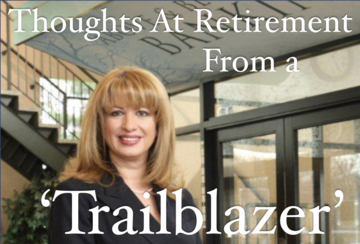
During her career Cortez has been recognized with a number of industry honors, including the Dora Maxwell Award for Community Involvement, recognition from the Statewide Hispanic Chamber of Commerce of New Jersey, the 2015 “Hope Saves the Day Award” for her efforts in the autistic community, to the 2019 Jefferson Award from the Governor of New Jersey for her public service, and as NAFCU’s 2020 “CEO of the Year” in the CU’s asset size.
Most recently, Cortez has just been named CEO of the Year in her CU's asset size category by NAFCU.
“If you surround yourself with the best, it makes everything easier,” Cortez said.
While CEO Cortez oversaw asset growth from $161 million to $240-million, and also achieved a number of other firsts in its markets, including developing a bilingual website (English and Spanish versions), creating a branch on wheels (called the “Green Machine”), hosting first-time home-buyers seminars, and opening a student-run branch at a local high school.
Mentors Play Role
Cortez said she has had several influential mentors during her professional career, but the first was her mother. Her parents were born and raised in Puerto Rico and moved to the United States when they were 18. Her father was manager of distribution at a local paper mill, and was rarely home on weekdays, leaving her mom to take care of the children. Cortez has a brother who was nine years older, and two years after she was born, her parents had triplet girls.
“My mom was really like a single mom, managing the whole house,” Cortez recalled. “She always believed in giving your best, doing your best and being true to yourself. She was a great role model. Seeing her in action gave me perspective about hard work. That molded me to be who I am today.”
Cortez grew up in Paterson, N.J., her first job in a jewelry store when she was 14, doing sales, customer service and office duties.
“We were one of the first jewelry stores that offered a credit card. This was in 1975, before many people had plastic cards,” she recalled.
While still in high school, Cortez added a second job at the Paterson Board of Education, working in the payroll department and handling payroll deductions for the credit union – which became her introduction to the CU movement.
“I always worked two or three jobs in my younger days. Out of high school I realized I did not have the financial means to continue my education, so I continued to work until I had enough to go to Montclair State.”
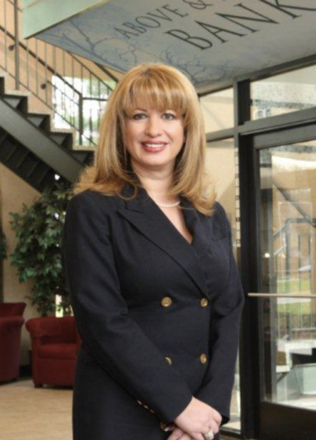
Lourdes Cortez
In addition to her mother, Cortez cited two significant influences early in her career: Eleanor Gallagher, a vice president at the credit union, and Dr. Ruth Lugo-Alvarez, a chancellor at Montclair State who happened to be a member of the CU.
Cortez said Gallagher, who passed away decades ago, was one of the first managers who took Cortez under her wing (“She inspired me to continue to grow”), while Lugo-Alvarez and Cortez struck up a friendship while Cortez was a teller.
“She was one of my biggest supporters and mentors, and we are still friends today. She encouraged me to continue my education. She was Latina, female, and had a position of responsibility at the university, so I wanted to be like her.”
Cortez also credited her predecessor as CEO of North Jersey FCU, Richard Block, for giving her “a lot more responsibility” than the previous people in her position as VP of operations and lending.
“He trusted me to carry on if he was out of the office,” she said of Block. “That experience is why I have been successful in the last 16 years running the credit union.”
One of the biggest challenges Cortez said she had to overcome after becoming CEO stemmed from having been promoted from within. She said the dynamic of suddenly being in charge of colleagues – people that worked with you now work for you – was odd.
“I also had to prove myself to the board. I had to prove that I could do the job, that I had what it took to get us to the next level.”
An Employee-Friendly Workplace
According to an statement accompanying her retirement announcement, Cortez was the first Latina CEO of a major credit union in New Jersey, and “she demonstrated from the beginning her feelings on the importance of diversity and inclusion.”
In addition to its bilingual website, North Jersey FCU hired bilingual employees to work in its branches, and joined the “Juntos Avanzamos” (Spanish for “Together We Advance”) program. The credit union was one of the first businesses of any type in the Garden State to roll out medical benefits for same-sex partners for its employees, part of what she termed creating a “LGBTQ+ friendly” workplace.
“I have always felt strongly that diversity and inclusiveness are so important. I wanted to not just speak about it, but reflect it in how we ran the credit union.”
When Cortez first presented the concept of benefits for partners to the board, she said “I was very passionate about making the workplace LGBTQ+ friendly. Some were skeptical at first, but I felt it needed to be done. So what if we are the first to offer some benefit – that is what makes us stand out. It has worked.”
Later, North Jersey FCU became one of the first credit unions to offer Islamic banking, for the simple reason: “It needed to be done,” Cortez said.
“And there has been a great a demand for it [Islamic banking],” Cortez said. “It is all in how we speak to differences. I do not regret any of the initiatives we have moved forward with. We did some things that were outside the box, but it shows our credit union serves people in all walks of life. Members are not a number; it is a relationship that we have with everyone to better their financial status. And we better our employees’ financial opportunities.”
From 2005 to 2020, Cortez said the biggest changes in running a credit union are led by technology, the products and services, and how credit unions make money. On the technology side, she said her CU is offering members many self-service options that would not have even been thought of 15 years ago. She added credit union today are forced to “think outside the box” to develop ways to make money given narrower margins.
Future Concerns
Cortez has some fear as to the future of the credit union movement – and it has nothing to do with credit unions themselves.
“With regulations changing and new regulations constantly coming into play, it is very challenging to run a credit union,” she said. “Part of me says credit unions will always exist, but I worry many will not be able to make it. We will see small credit unions continue to merge and only larger credit unions will survive.”
Credit unions have both strengths and weaknesses, Cortez continued, saying makes the movement strong is the trade associations that are representing its interests in Washington. In addition, she said those who are aware of CUs know credit unions do a lot more for members than for-profit financial institutions do for their customers.
“We look at each member as an individual,” she said. “We do things that other financial institutions would not even consider doing because it would not be profitable. We build relationships.”
But Cortez said among credit union weaknesses is being not-for-profit, which makes it difficult for them to compete.
“We have a small slice of the pie, and we don’t have the funds to dive into marketing and business development,” she said. “We need the resources to get the word out there. The trade associations are doing a great job of helping address that.”
Be Bold and True
Although her official retirement date is Dec. 31, Cortez said she expects to remain available to her still-unnamed successor into January. The credit union said several candidates have been identified and are in the interview process.
“I will stay until the new CEO gets on board and we go through the transition.”
And what advice does Cortez plan to give her successor?
“Be true to yourself, be bold, be member- and employee-centric,” she said. “There is so much advice I received when I became CEO, and much of it was great advice, but sometimes when you put theory into practice it doesn’t always work. You have to go through the process to determine what type of leadership is going to work for you and the team.”
When she finally turns over the reins, Cortez said she is going to do “a little bit of everything” in retirement: travel, play golf, volunteer and designing jewelry. In addition, she will continue to “enjoy her real passion, spending time volunteering and helping to mentor young women for new trailblazing positions out in the world.”
“I have always wanted to design jewelry, but have never had the time, and now I will have all the time in the world.”