

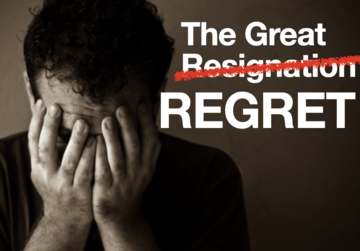
NEW YORK–Credit unions and CUSOs have been as affected as any employer when it comes to the so-called “Great Resignation” of the past few years, but one new survey reveals that for many workers it has led to the great regret.
The survey found that a majority of U.S. workers who have changed jobs as part of the Great Resignation actually regret quitting and even feel a sense of buyer's remorse, according to one analysis.
Seventy-two percent of those who left their jobs admitted that they were surprised to learn that their new roles or companies were different from what they were led to believe during the interview process, according to the survey of more than 2,500 Millennial and Gen Z job seekers by The Muse.
Kathryn Minshew, CEO of The Muse described the trend to FOX Business as "shift shock."
"They'll join a new company thinking it's their dream job and then there's a reality check," Minshew told the news outlet.
According to Minshew, in some cases job seekers don't ask the right questions during an interview process, while at other times it's because a recruiter misrepresented the role or was overly optimistic about the company in an effort to get them to join, she told FOX Business.
In fairness, she added, it's "hard to assess the culture of a new company through Zoom."
‘Damaging Phenomenon’
Regardless, "it's this really damaging phenomenon where people are brand new in our role, and they suddenly realize it's not at all as advertised," she told FOX Business..
As a result, Minshew told the news outlet more people are quitting rather than sticking it out.
"It used to be that if you started a new job and didn't like it, you needed to stay for one or two years to avoid a black mark on your resume," she was quoted as saying. "But we've seen this really interesting shift in perceptions."
The Muse survey found about 80% of Millennials and Generation Z workers say it's OK to leave a new job in six months if it's not as advertised.
Additional Findings
The survey further found about one-in-five job-seekers even admitted they would quit within a month if it's not as expected, and 41% say they would give it between two and six months. Just under half of job seekers — 48% — would actually try to get their old job back, according to the data cited by FOX Business.
To change this pattern, Minshew suggested employers need to be more upfront because it could help retain workers who aren't totally satisfied but could be over time.