

CHICAGO–While many have expressed gratitude that 2016 is behind us, the year didn’t come without some positive lessons in leadership. Carmine Gallo, writing on Forbes.com, has culled a list from the year’s best-sellers that he says can “set you up for success in 2017.”
Here are his reading recommendations (all the text below is drawn from Gallo’s writing on Forbes.com). His full article can be found here.
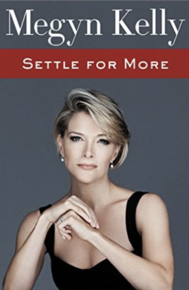
Megyn Kelly, Settle for More
Fox News anchor Megyn Kelly reminds us that pursuing one’s passion does not always follow a straight line. In high school, public-speaking was her favorite course, but she didn’t have a clear plan on what to do with it. She entered the legal profession where years of 18-hour days left her near a nervous breakdown. One day she heard Dr. Phil say: “The only difference between you and someone you envy is, you settled for less.” Kelly decided to settle for more at the age of thirty-two.
Angela Duckworth, Grit
The power of passion is also a theme for University of Pennsylvania psychology professor, Angela Duckworth. In Grit, she reveals the following formula for turning your talent into achievement:
Talent x effort = skill
Skill x effort = achievement
Here’s the key. Passion and talent alone are not enough to achieve success.
Phil Knight, Shoe Dog
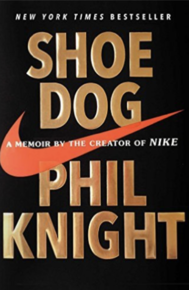
Nike founder Phil Knight is certainly a “paragon of grit” and a leader with a strong work ethic. He also reminds us to pursue “crazy ideas.” At the age of 24, Knight realized that one dream— to be a world-class runner—simply wasn’t in the cards. Fate, he writes, had made him good, not great. Knight turned his attention to a bigger dream, one that was “prodigious” and “improbable” and chased it with “an athlete’s single-minded dedication and purpose.”
Thomas Friedman, Thank You For Being Late
The New York Times columnist, Thomas Friedman, beautifully synthesizes and connects complex ideas in his books. Although Thank You For Being Late traces the exponential growth and disruption of the age we’re living in, Friedman also tackles the issue of how to communicate such trends. Friedman’s approach to writing benefits any leader who delivers presentations or writes blogs and insights.
Bruce Springsteen, Born To Run
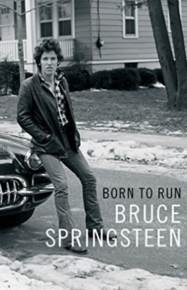
Speaking of writing, if you like the way rocker Bruce Springsteen crafts lyrics, you will thoroughly enjoy all 508 pages of his autobiography. Springsteen reminds us that it’s the words that ultimately carry a song into our hearts, and the best words are often rooted in personal stories. “I wanted my music grounded in my life, in the life of my family and in the blood and lives of the people I'd known. Most of my writing is emotionally autobiographical. I've learned you've got to pull up the things that mean something to you in order for them to mean anything to your audience.”
Adam Grant, Originals
“After you spot a promising idea, the next step is to communicate it effectively,” writes Wharton professor Adam Grant.
Grant argues that leaders and entrepreneurs often under-communicate their vision, mission or ideas. “If we want people to accept our original ideas, we need to speak up about them, then rinse and repeat…an unfamiliar idea requires more effort to understand. The more we see, hear, and touch it, the more comfortable we become with it, and the less threatening it is.”
Ken Segall, Think Simple
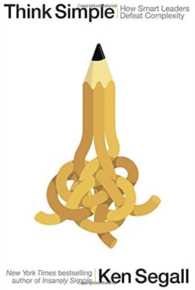
Simplicity is hard work and, according to former Apple adman Ken Segall, the most potent weapon in business. Segall led the team behind Apple’s legendary Think Different marketing campaign and worked closely with Steve Jobs for 14 years. Segall even started the ‘i-thing’ in Apple’s product names. Although the book is primarily about simplicity in business and product design, I consider it one of the best communication books of the year.
Robert Cialdini, Pre-Suasion
Cialdini, a marketing professor and bestselling author in influence and persuasion, identifies what “savvy communicators” do before delivering a message to get accepted.
In one section of the book he takes us through the six concepts that make up influence: Reciprocity, liking, social proof, authority, scarcity and consistency. Each one applies to public-speaking and leadership communication.
Joel Osteen, Think Better Live Better
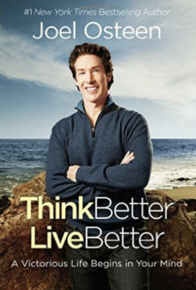
Every year I read several books by people of faith, especially by excellent communicators such as Rabbi Jonathan Sacks or Pope Francis. Osteen is certainly one of the best Christian speakers of our time. In Think Better Live Better Osteen says a victorious life begins in your mind. He uses his own journey as a public-speaker to remind readers that the stories they tell themselves—the words they use in their own head—can either hold them back or set them on a path to success in their chosen field of expertise.
Duncan Clark, Alibaba
Self-made billionaire and founder of China’s Alibaba Group, Jack Ma, has an inspiring life story as told by Duncan Clark, who worked as a consultant for the e-commerce giant in its early years. What caught my attention was that Ma, an English teacher turned businessman, used teaching methods to communicate his company’s value proposition.