

SAN DIEGO–It’s not about the shoes. Or the website. And what that means for credit unions is that it’s not about the products or the website, either.
The lesson about the shoes has been put into practice to great effect—and profits—by Zappos, the online shoe retailers that is renowned more for its service than the shoes themselves. And in that is a key lesson for credit unions, according to Jon Wolske, a culture evangelist for the company.
Indeed, Wolske is a living example of the culture inside the company. He joined Zappos eight years ago as a call center agent in large part to get health insurance. With a background in training, he was tapped on the shoulder one day and told he would be leading tours at the company. That eventually lead to his current, admittedly plum role, which is to travel around and talk about Zappos, which was bought by Amazon in 2009.
“Zappos put me on stage to talk organizational culture and customer service,” Wolske told CU Direct’s DRIVE 16 meeting. “My goal is to inspire somebody in this room to make a small change in the right direction and to change the way business is done in the world!”
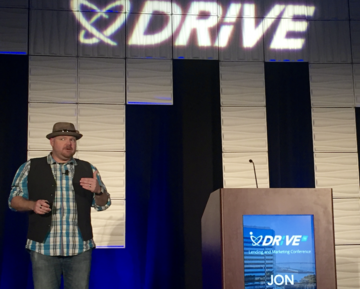
Jon Wolske at CU Direct meeting.
As Wolske would make clear later, that world change must occur in very small pieces.
When it comes to customer service, said Wolske, the “hard truth is that most businesses just absolutely don’t care, as long as business is good. If business is good, we’re done. What do they really care about? Is it about HOW you get to the dollars and sense? Most don’t care. Most don’t are about high turnover or employee morale.”
And yet businesses operating with that mindset actually have it all backward, said Wolske. It isn’t that profits might allow for good customer service, it’s that good customer service can really drive better ROI and higher net income.
“You should care a lot,” said Wolske. “You can achieve less burnout, lower turnover, more productivity and higher profitability. When a rock star employee leaves, it affects the people around them. Why did they leave? I thought this was a great fit for them. Maybe it’s not a great fit for me.”
Zappos, which has created enthusiastic fandom among shoe shoppers, was created in San Francisco when its founder couldn’t find a pair of shoes he was looking for. It eventually moved its headquarters to Las Vegas in order to make life more affordable for its employees, and has also built its fulfillment center near Louisville, Ky., where UPS is located, ensuring guaranteed shipping within days.
The Main Focus Can Be Seen on Tour
Its culture of customer service has achieved such fame that among Las Vegas’ tourist attractions are tours of the company’s headquarters, which are located in the former City Hall near downtown, not far from Fremont Street.
“We’re still selling shoes and making money,” said Wolske. “But we decided something was more important than that, and that is deciding who we are. The culture in our company has been our main focus since 2005. When you’re hiring 400 new people, it could change your culture. But if you know what your culture is, it can’t change. Your people align to the culture.”
Culture is among the over-discussed topics at conferences, as Wolske noted, and he agreed it’s hard to “put a pin into” exactly how to define the word in a corporate context.
He said his own definition is this: “It’s the attitudes, feelings, values and behaviors that characterize and inform a group and its members. “

Zappos call center agents.
Core values is something Zappos has spent some time on, and after quite a bit of work, it has narrowed its own core values to a 10-point list. The list comes with a caveat, according to Wolske: “There is no such thing as perfect culture. It has to be right for your brand and people.”
Zappos’ 10 points of Culture:
- Deliver Wow through service. “Go above and beyond what people expect from you. How hard is that? Not very. People don’t expect much.”
- Embrace and drive change. “We don’t just want to embrace change, we want to drive it, we want to seek it. Who should drive change in your company? Everyone. Ask why we do things?”
- Create fun and a little weirdness. “We know you are here for eight hours plus every day. Work hard, but not too hard. A little weirdness can just mean be yourself, especially for people in a call center all reading from a script created 10 years ago.”
- Be adventurous, creative and open-minded. “Just because someone else has an idea and you do, too, doesn’t mean both aren’t valuable. See if you can get onboard with the project.”
- Pursue growth and learning. “I started in the call center and loved what I was doing every day, but they said we feel you have passion and skills in this area. Now I cannot imagine not being a public speaker. I love possibly changing the way you think.”
- Build open and honest relationships with communication. Relationship, said Wolske, is actually the key in that phrase and recognizing that everyone is in the company together.
- Build a positive team and family spirit.
- Do more with less. “Deliver wow through great service. But let’s take care of Zappos, too. This says ‘Let’s be responsible.’”
- Be passionate and determined. “You have to know what the goal is.”
- Be humble. “The best example is our CEO is willing to get on the phones and take calls. Everyone takes 10 hours on the phones during the holidays Not one person at Zappos is above doing what we do.”
'Culture Defines Who You Are, Not What You Do'
Wolske stressed that “culture defines who you are, not what you do. It’s who you are as a brand. There are tons of places to buy shoes. Why are we growing? Because we know who we are.”
Wolske noted that Zappos’ slogan is “We are a service company, not a shoe company.” Its mission statement is a simple, “To live and deliver WOW!”
In a comment that will likely resonate with highly regulated CUs, Wolske said “When you make rules for every exception, you stop the experience from being exceptional. Without a rule on it, our average call time is between four and five minutes. And it can be a great experience. There is not one customer service department at Zappos, there is a customer service team. And that is the whole company”
Wolske urged credit unions to really think about the member experiences they deliver, and to further think about why they do what they do.
In the meantime, when it comes to changing the world, he said the only way to bring that about is to start small.
“If you go back to your company and say we have all this stuff to change, what will happen? Nothing. You need to find your 1%. Make small changes. Talk about purpose,” he advised.